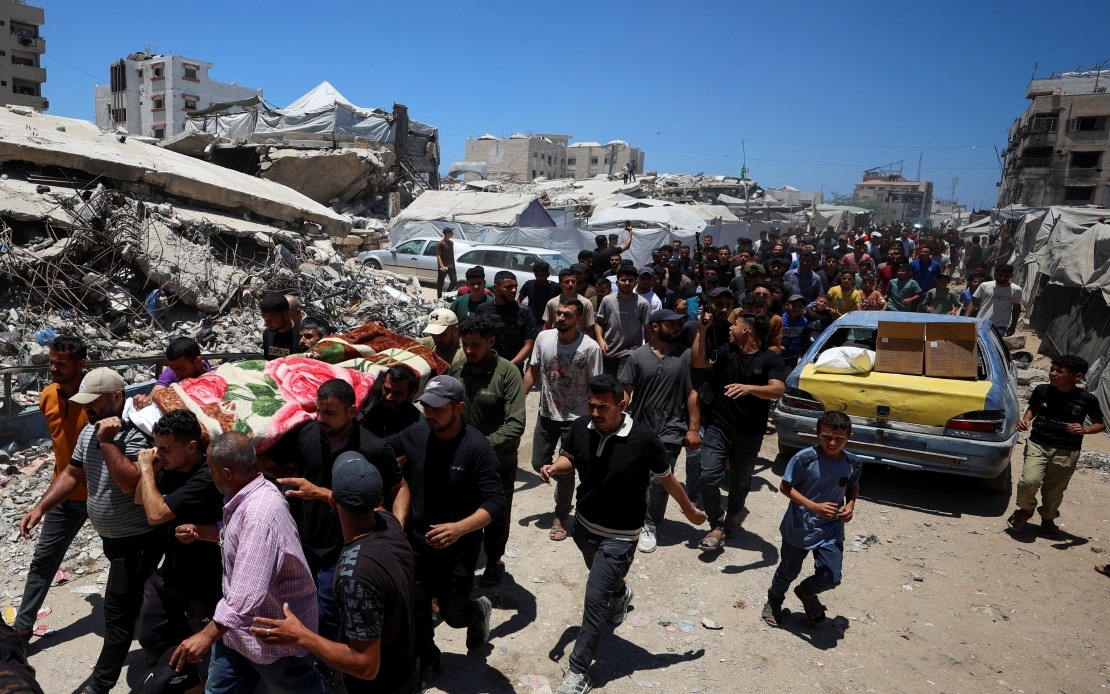
The humanitarian catastrophe unfolding in Gaza continues to deepen despite the implementation of a ceasefire, with Israeli military operations responsible for killing 1,021 Palestinians since the truce began, according to figures released Tuesday by the Palestinian Prime Minister's Office. This toll brings the cumulative death count across the enclave since October 2023 to 73,032, a staggering figure that underscores the scale of devastation that has gripped the territory over the past eight months.
Conditions on the ground present a grim picture for the civilian population struggling to survive amid the persistent conflict. The Government Communication Centre's latest assessment reveals that humanitarian circumstances have continued their downward trajectory, driven by relentless Israeli bombardments and systematic constraints on the flow of aid into Gaza. The enclave faces an acute shortage of potable water, forcing the vast majority of residents to depend entirely on whatever humanitarian assistance manages to reach them—a fragile lifeline that remains vulnerable to further disruption.
The scale of physical destruction has rendered hundreds of thousands homeless or displaced. Nearly one million Palestinians now live in temporary tent settlements after Israeli military operations destroyed or severely damaged approximately 76.6 percent of Gaza's residential housing. This systematic destruction of civilian infrastructure has compounded by restrictions that continue to impede humanitarian operations across the territory, creating cascading crises in sanitation, healthcare delivery, and basic services.
Recent military strikes have inflicted additional casualties and deteriorated conditions further. Air and drone attacks in Nuseirat, Al-Mawasi, Khan Younis and Gaza City during the past week have added to the civilian toll and worsened the already dire living situation. The sustained nature of these operations suggests that despite the ceasefire agreement, military engagement has not fundamentally ceased but rather continues under different parameters.
Children have proven particularly vulnerable in this conflict. United Nations Children's Fund data indicates that 265 Palestinian children have been killed and more than 400 others injured since the ceasefire announcement. These figures highlight how the youngest generation bears a disproportionate burden of the violence. International humanitarian organisations including Oxfam have raised alarm at the United Nations Security Council about how Israeli restrictions continue to block access routes and prevent the delivery of critical assistance needed to sustain life across Gaza.
Beyond Gaza's borders, the occupied West Bank presents another dimension of Palestinian suffering. The United Nations High Commissioner for Human Rights has documented a significant escalation in forced displacement of Palestinians across the West Bank, including East Jerusalem, driven by settler violence, home demolitions, movement checkpoints, and forced evictions. This displacement represents a concurrent crisis occurring in parallel to the Gaza conflict, demonstrating how Israeli-Palestinian tensions manifest across multiple territories.
Agricultural livelihoods have also become casualties of the broader conflict. The Palestinian Ministry of Agriculture has documented the destruction of 7,258 trees, including 1,270 ancient olive trees, with total crop and agricultural losses estimated at approximately US$5.17 million. Israeli settlers and occupation forces have been responsible for these agricultural destructions, which devastate Palestinian farming communities already struggling to feed themselves. Additionally, two mosques in the villages of Jiljilya and Mazra' al-Nubani fell victim to arson attacks, further eroding Palestinian cultural and religious infrastructure.
Refugee camps have become flashpoints for displacement and instability. Israeli military operations concentrated in the Jenin, Tulkarem and Nour Shams refugee camps have displaced more than 33,000 Palestinians since January 2025 alone, suggesting an intensification of military activity in these densely populated areas. Simultaneously, human rights monitors have raised concerns about conditions within Israeli detention facilities, where overcrowding, disease transmission, and deteriorating conditions plague Palestinian prisoners held in custody.
Despite the overwhelming challenges confronting Palestinian society, educational continuity remains a priority. The Palestinian government has completed preparations for this year's General Secondary Education Examination, which will be administered to approximately 91,000 students across Palestinian territories, including roughly 37,000 students in Gaza. For the third consecutive year, Gaza-based students will sit their examinations electronically, adapting to wartime conditions while attempting to preserve educational opportunities for a generation whose development has been profoundly disrupted by conflict.
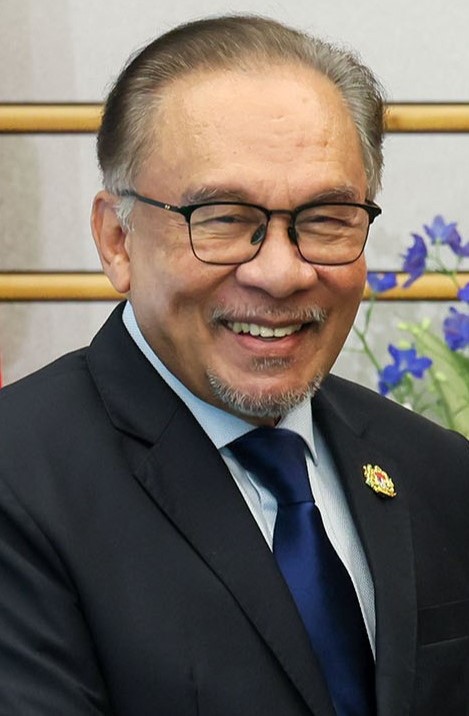
For Malaysian observers and policymakers, this crisis carries several implications. Southeast Asia's significant Palestinian diaspora and historical commitment to supporting disadvantaged populations means these developments resonate domestically. The humanitarian dimensions of this conflict underscore the importance of regional and international mechanisms for civilian protection, conflict resolution, and reconstruction. Malaysia's role in multilateral forums provides opportunities to advocate for enhanced humanitarian access and civilian safeguards, issues increasingly central to international discourse on the Israeli-Palestinian situation.