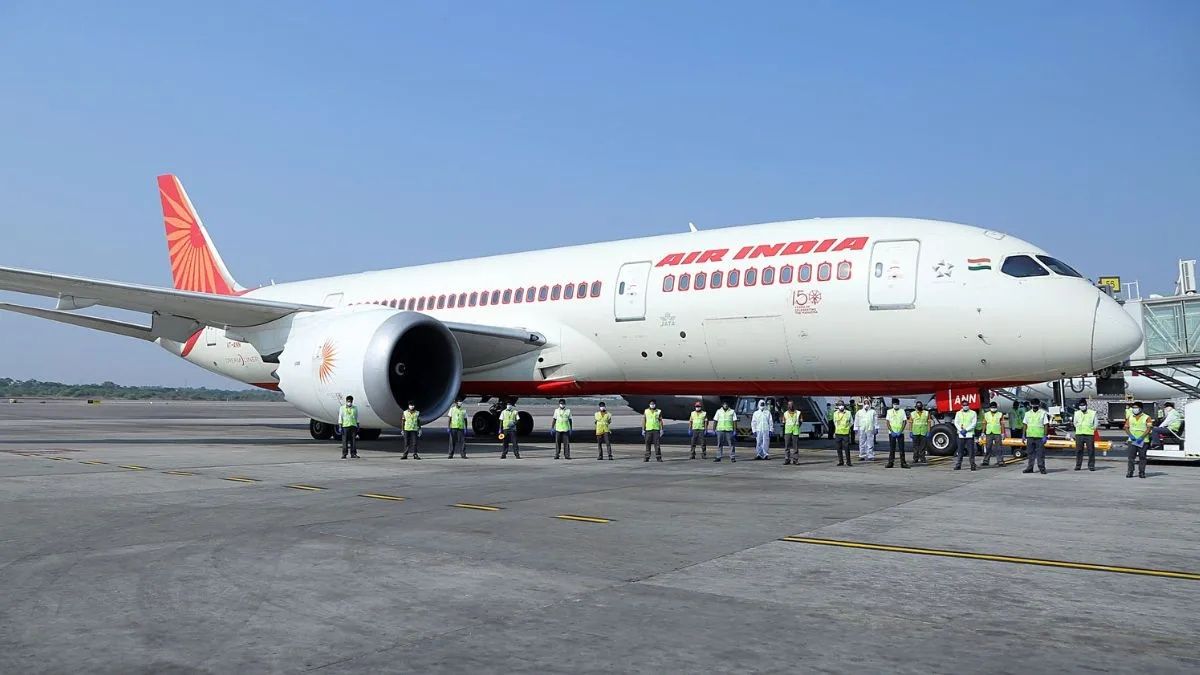
A navigation malfunction aboard Air India Flight AI-463 triggered an unintended incursion into Pakistani airspace on Monday night, marking another instance of aviation complications along the sensitive India-Pakistan border. The Airbus A321 aircraft departed from New Delhi's Indira Gandhi International Airport at 9:18pm on June 22, bound for Amritsar in Punjab. Shortly after takeoff, the onboard navigation equipment malfunctioned, causing the flight path to veer westward and inadvertently cross the International Border into Pakistani territory—a development that carries significant implications given the heightened security sensitivities surrounding aerial operations near the frontier.
Pakistani air traffic authorities detected the deviation and immediately coordinated with the flight crew to notify them of the airspace breach. The pilots responded swiftly, correcting their course and steering the aircraft back across the border into Indian airspace without incident. The prompt coordination between Pakistani and Indian air traffic control systems in this instance underscores the critical importance of communication protocols that exist to prevent accidental intrusions, even amid broader bilateral tensions. The incident highlights how technical failures, rather than deliberate actions, can trigger complex cross-border situations that require immediate professional intervention from both nations' aviation authorities.
The complications arising from this navigation failure, however, extended well beyond the initial airspace deviation. As the Airbus A321 approached Sri Guru Ram Dass Jee International Airport in Amritsar around 10:30pm, the airport was managing substantial air traffic congestion. With no immediate landing slot available and given the operational constraints the airport was facing at that hour, air traffic controllers made the decision to divert the flight. Rather than circle in a holding pattern awaiting clearance, the aircraft was instructed to return to Delhi for both safety reasons and to resolve the technical issues that had prompted the navigation failure.
Back at Indira Gandhi International Airport, the aircraft underwent mandatory technical inspections to diagnose and address the navigation system malfunction. Aviation maintenance personnel conducted thorough checks to ensure the equipment was functioning properly before the flight could resume operations. Following successful completion of these inspections and receipt of necessary operational clearances from aviation authorities, the flight was cleared for departure once again. The aircraft took off again bound for Amritsar, finally touching down safely at approximately 2:20am on Tuesday—nearly four hours behind its originally scheduled arrival time.
Neither Air India nor the Directorate General of Civil Aviation (DGCA) has released detailed technical specifications regarding the nature of the navigation system failure. The lack of immediate official disclosure is not unusual, as aviation authorities typically conduct comprehensive investigations before issuing public statements about technical incidents. The investigation process typically involves detailed examination of flight data recorders, maintenance logs, and component diagnostics to establish the precise cause of the malfunction. Such thorough investigation is essential for preventing similar incidents and maintaining the integrity of India's aviation safety record.
The incident carries relevance for regional aviation safety considerations, particularly for airlines operating along India's western corridor where proximity to Pakistani airspace presents operational complexities. Navigation equipment failures, while rare in modern commercial aviation, represent a category of technical issues that demand rigorous maintenance protocols and redundancy systems. Airlines operating in this region must maintain heightened awareness of how equipment malfunctions could interact with airspace management responsibilities. The incident also underscores why border-adjacent airports require sophisticated air traffic management systems capable of handling unexpected route deviations.
This occurrence arrives merely weeks after a comparable incident involving Pakistan International Airlines (PIA), when a PIA flight briefly entered Indian airspace during adverse weather conditions. Indian air traffic controllers guided that aircraft back to its designated route, demonstrating that such cross-border deviations, while rare, occur occasionally due to various operational factors rather than deliberate intrusions. These sequential incidents have prompted aviation professionals to emphasize the effectiveness of established communication channels and coordination mechanisms between Indian and Pakistani air traffic authorities. Despite political tensions between the two nations, aviation safety protocols remain one of the few areas where immediate, professional cooperation takes precedence.
For Malaysian and broader Southeast Asian aviation operators, this incident illustrates the complex operational environment facing airlines in regions with sensitive international borders. While Malaysia operates primarily in relatively unconstrained airspace, the situation demonstrates how technical failures can cascade into multi-hour operational disruptions when combined with airspace management challenges. Airlines across the region rely on sophisticated navigation systems and must maintain rigorous maintenance standards. The incident also highlights the importance of clear protocols and trained personnel capable of managing unexpected situations with professionalism and safety as paramount considerations.
The broader implications extend to questions about aviation infrastructure resilience and redundancy systems. Modern commercial aircraft typically incorporate multiple navigation systems operating on different technologies—GPS, inertial measurement units, ground-based navigation aids—specifically to prevent scenarios where a single failure could compromise flight safety. The fact that this aircraft experienced a navigation system malfunction sufficiently severe to cause course deviation suggests either a multiple-system failure or degradation in backup systems. Such failures, while uncommon, warrant detailed investigation to ensure airlines and manufacturers address any systemic issues that could affect similar aircraft types.
Looking forward, aviation authorities across South Asia will likely implement additional procedural refinements based on these incidents. Enhanced communication protocols, improved real-time monitoring of aircraft positions relative to international boundaries, and refined emergency procedures represent areas where technical and operational improvements could enhance safety margins. For passengers and operators, these incidents, while concerning, ultimately demonstrate that modern aviation safety systems—despite occasional technical challenges—function as designed when coordinated response mechanisms activate appropriately. The safe resolution of Air India Flight AI-463's situation reflects the maturity of aviation safety cultures that prioritize professional protocols over political considerations during emergencies.