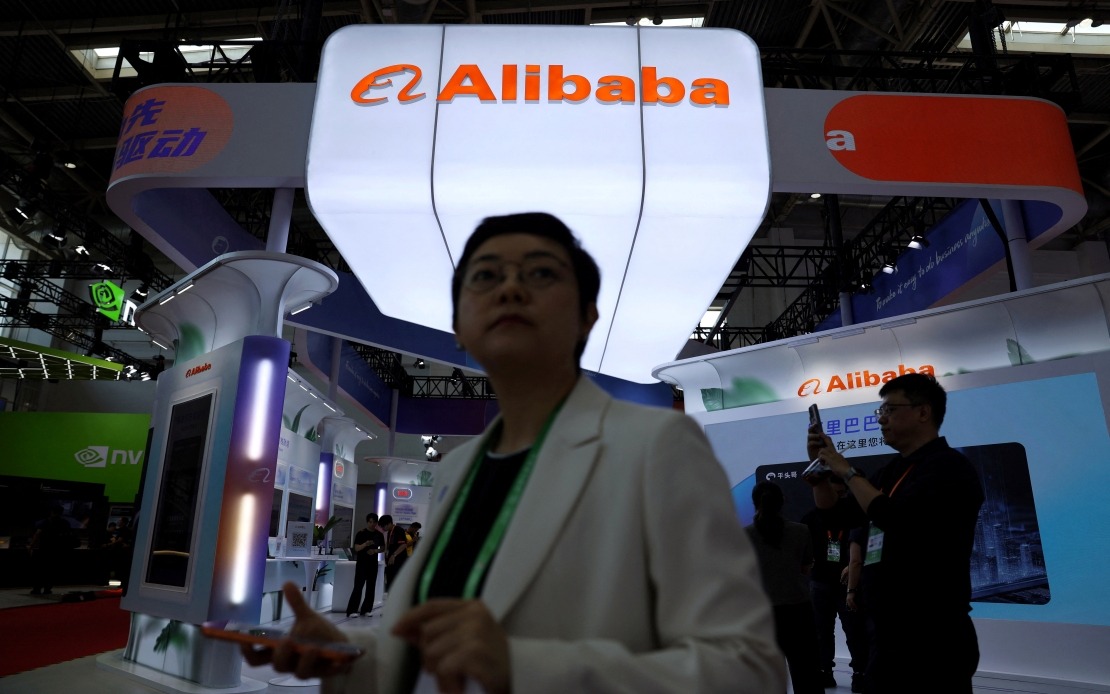
Alibaba has escalated its dispute with the United States government by launching a formal legal challenge to the Pentagon's controversial military company designation. The filing, which became public on Tuesday, represents the Chinese technology conglomerate's most direct response to Washington's effort to isolate it from the American market and restrict its international operations. This legal action underscores the intensifying friction between Beijing and Washington over technology companies, a friction that carries significant implications for Southeast Asian businesses navigating between these superpowers.
The lawsuit directly contests the Pentagon's factual and legal grounds for the military company classification, contending that no evidence supports such a designation. Alibaba's attorneys emphasize that the company maintains governance through an independent board of directors, none of whom possess any military connections or affiliations. This argument attempts to establish separation between Alibaba's civilian leadership and any state military apparatus, a crucial distinction in American law governing foreign investment and trade restrictions. The company's assertion challenges the Pentagon's approach of casting wide nets over Chinese technology firms without demonstrating direct military involvement.
Alibaba's defence centres on its explicit operational focus on strictly civilian activities. The company maintains that its entire product and service portfolio—spanning retail e-commerce, logistics networks, and enterprise software systems—serves only commercial purposes with no dual-use military applications. This distinction matters significantly under US sanctions and export control regimes, which generally permit companies with purely civilian operations to continue limited engagement with American markets. By framing itself as a consumer-facing business conglomerate rather than a defence-adjacent technology provider, Alibaba attempts to separate itself from companies that genuinely manufacture components or systems with military relevance.
The litigation also highlights contractual and compliance safeguards Alibaba claims to have implemented. According to the company's court filings, its standard contracts explicitly forbid customers from deploying its services for military purposes, and the firm maintains rigorous compliance protocols to enforce these restrictions. Additionally, Alibaba notes that it holds no military certifications or government defence contracts—documentation that would be inevitable if the company genuinely operated within China's military-industrial ecosystem. These contractual and administrative barriers represent the company's argument that it has taken reasonable precautions to prevent military application of its platforms.
The Pentagon's broader action in June added 188 Chinese companies to its military-linked entities list, a sweeping move that fundamentally altered the landscape for Chinese technology firms seeking American business connections. Among those designated alongside Alibaba were fellow technology giants Tencent and automotive manufacturer BYD, demonstrating that the Pentagon's net extended well beyond traditional defence contractors. This expansion of the military company list reflects Washington's strategic approach of constraining China's access to US capital, technology, and markets by attacking companies across multiple sectors. For Alibaba specifically, the designation threatens partnerships, investments, and operational relationships that depend on American supplier networks or customer bases.
The timing and scope of these designations reflect deeper American concerns about technology supply chains and data security. Rather than targeting only companies with transparent defence contracts, the Pentagon's approach assumes potential national security risks from major technology platforms that handle vast consumer data or control critical infrastructure. This expansionist interpretation troubles both Chinese companies and international businesses that depend on supply chain flexibility. For Southeast Asian technology firms and investors, the implications are substantial: major regional companies increasingly depend on partnerships with either American or Chinese platforms, and American restrictions on Chinese firms force difficult choices about which technology ecosystem to prioritise.
Alibaba's legal challenge faces an uphill battle within American jurisprudence. US courts have historically granted executive branches wide discretion in national security matters, and previous challenges to military company designations have succeeded only rarely and on narrow procedural grounds. The company would need to demonstrate either factual errors in the Pentagon's determination or that the designation violated procedural requirements. Simply showing civilian operations, while important for public relations, may not suffice legally if the Pentagon can articulate a national security rationale for the designation. The judicial standard applied to such cases typically favours government security judgements over company rebuttals.
Beyond the courtroom, Alibaba's lawsuit serves a signalling purpose within China's business community and government. The action demonstrates that Chinese companies will contest American restrictions rather than accept them passively, potentially influencing Beijing's own retaliatory measures against American technology companies operating in China. This tit-for-tat cycle has already damaged numerous American firms' operations in mainland China, and an Alibaba defeat could prompt further Chinese restrictions. For regional observers, the dispute represents a broader technological decoupling between American and Chinese ecosystems, with profound consequences for companies trying to maintain operations across both markets.
The practical impact of the military designation extends far beyond Alibaba's American operations, which remain limited anyway due to the company's primary focus on Asian markets. More significantly, the label complicates Alibaba's international expansion plans and its ability to partner with technology companies dependent on American components or standards. Financial institutions that might otherwise invest in Alibaba or provide capital for its ventures often avoid entities on Pentagon military company lists due to regulatory exposure. These secondary effects accumulate quickly, making the designation genuinely damaging even if direct American market access was never crucial to Alibaba's business model.
For Malaysian and Southeast Asian observers, Alibaba's predicament illustrates the growing difficulty facing technology companies in remaining neutral in the US-China strategic competition. Many regional firms utilise Alibaba's cloud computing, logistics, and payment platforms as essential infrastructure components. Restrictions on Alibaba's operations could disrupt these supply chains, forcing regional companies to develop alternative solutions or diversify their technology dependencies. Additionally, if the Pentagon continues designating major Chinese technology platforms as military entities, Southeast Asian governments may face pressure to restrict or limit these services, a prospect that regional businesses view with concern given their integration into these ecosystems.
The lawsuit also underscores how American national security policy increasingly treats commercial technology infrastructure as a strategic asset requiring control. This doctrine, while justified by US officials through security concerns, represents a fundamental shift from earlier eras when American government distinguished more clearly between military and civilian technology sectors. As this boundary blurs further, Chinese technology companies operating globally will face mounting restrictions, pushing them to restructure operations or develop alternative global networks less dependent on American markets and suppliers. Alibaba's legal challenge represents one company's effort to reverse this trend, though broader structural factors favour continued American restriction of Chinese technology firms regardless of individual court outcomes.