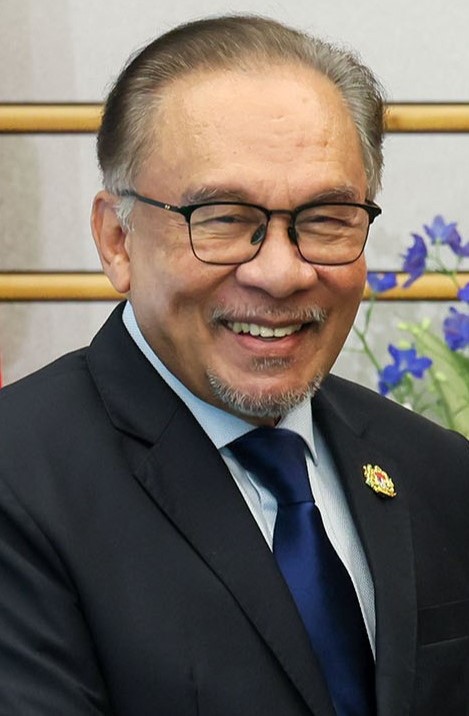
Prime Minister Anwar Ibrahim held talks with Johor Regent Tunku Ismail Sultan Ibrahim in Kuala Lumpur, underscoring the national leadership's priority in maintaining harmonious ties with one of Malaysia's most economically significant states. The audience, initiated at the federal level, signals continued high-level engagement between Putrajaya and Johor's palace, a relationship that carries considerable weight in Malaysia's federal structure.
The meeting reflects the ongoing importance of bilateral understanding between the federal government and Johor, a state that serves as an economic powerhouse for the country and maintains distinct administrative and constitutional prerogatives. Johor's position as a major contributor to Malaysia's GDP and its strategic location along the Strait of Johor make state-federal coordination particularly consequential for national policy implementation and economic planning. The regent's role as constitutional head of the state government means that direct engagement at this level carries symbolic and practical significance for governance.
Such high-level interactions typically address matters spanning infrastructure development, resource allocation, taxation arrangements, and the division of powers outlined in Malaysia's federal constitution. For Johor specifically, these discussions often involve critical areas such as port operations, land development, and coordination on national initiatives that require state-level participation. The willingness of both parties to reaffirm cooperative principles suggests an effort to forestall any jurisdictional tensions that could emerge between state and federal authorities.
The timing of this meeting occurs within a broader context of Malaysia's federal governance dynamics, where state governments have demonstrated increasing assertiveness in recent years. Various state administrations have sought greater autonomy and resource control, sometimes leading to friction with federal authorities over policy implementation and revenue sharing. By proactively engaging with Johor's regent, Anwar's administration appears intent on demonstrating that collaborative federalism remains the operating principle for managing centre-state relations.
For Malaysian investors and businesses operating at scale, state-federal coordination is fundamental to project implementation. Infrastructure initiatives, regulatory frameworks, and commercial licensing often require alignment between both levels of government. Johor's economic importance means that any deterioration in state-federal relations could create complications for development projects and business operations within the state. The commitment to preserving good relations thus carries practical implications for Malaysia's investment climate and regional competitiveness.
The meeting also reflects the protocol and respect accorded to traditional institutions in Malaysia's political system. The regent's position as an elected constitutional monarch within Johor's framework means that direct prime ministerial engagement acknowledges both the formal constitutional role and the political influence wielded by the palace. This type of engagement demonstrates recognition of the historical and constitutional significance of Johor's monarchy in Malaysia's federal arrangement.
Regional observers note that Malaysia's federal system requires constant maintenance and dialogue to function effectively, particularly given the differing political compositions that can exist between state and federal governments. When ruling coalitions differ at state and federal levels, as has occurred periodically in recent electoral cycles, the need for structured engagement becomes even more acute. The reaffirmation of commitment to good relations serves as a foundation for managing any potential differences that may arise.
For stakeholders in Johor, including the state government, business communities, and civil society, this meeting indicates continuity in federal engagement and suggests that policy frameworks will continue to evolve through consultation rather than confrontation. The diplomatic language around preserving relations typically precedes collaborative discussions on specific policy matters, budget allocations, or special economic initiatives that may benefit the state.
Looking forward, such engagement mechanisms become increasingly important as Malaysia confronts shared challenges spanning economic recovery, infrastructure development, and regional positioning in Southeast Asia. Johor's role as a gateway state between Malaysia and Singapore, and its significance in regional supply chains and logistics, means that federal-state coordination directly influences Malaysia's broader economic and strategic interests. Prime ministerial engagement at this level signals that the administration views collaborative federalism as essential to achieving national objectives.
The commitment articulated in this meeting also carries implications for other state governments, potentially setting a tone for how the federal administration intends to manage centre-state relations more broadly. By emphasizing dialogue and the preservation of good relations, the federal leadership indicates a preference for negotiated solutions over unilateral imposition of federal authority, a principle that Malaysian federalism requires to function sustainably across all thirteen states and three federal territories.