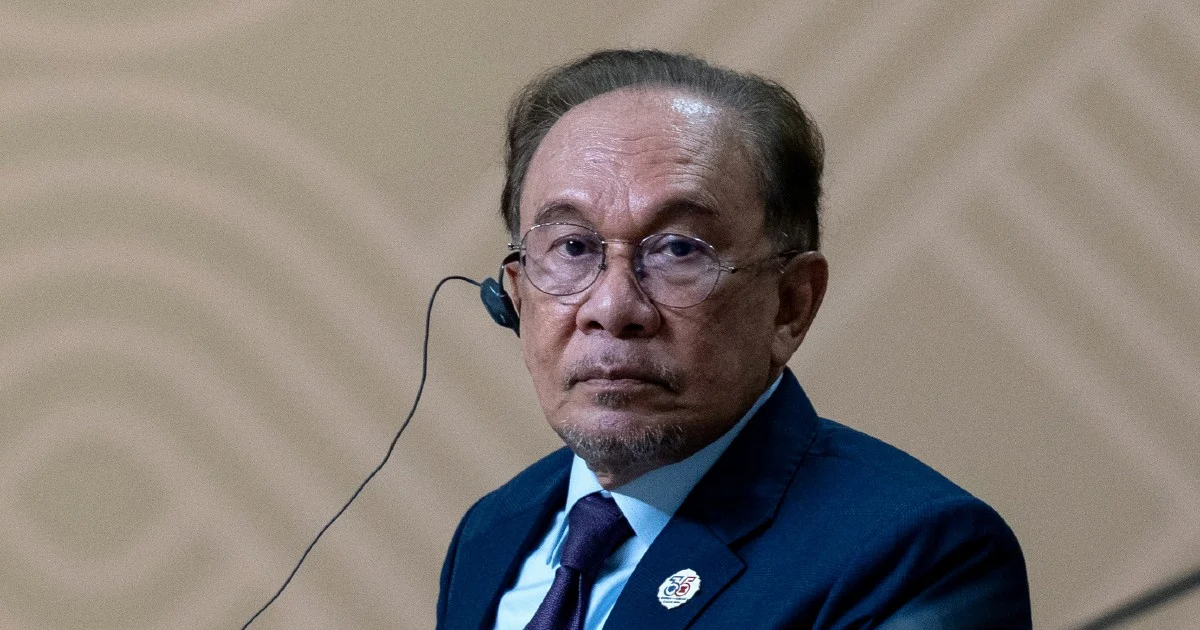
The High Court in Kuala Lumpur has granted Prime Minister Datuk Seri Anwar Ibrahim's application to be excused from appearing as a subpoenaed witness in a RM30 million civil dispute, marking a significant legal development in a case involving prominent businessman Vinod Sekhar.
The decision underscores the ongoing tension between judicial requirements for public testimony and the practical demands placed on Malaysia's highest elected official. Court proceedings often rely on witness testimony to establish facts and support legal arguments, yet the duties incumbent upon a sitting Prime Minister create genuine obstacles to participation in extended trial proceedings.
Anwar's legal team had contended that his position as head of government creates exceptional circumstances warranting relief from the ordinary witness subpoena process. The argument reflects broader jurisprudence across common law jurisdictions regarding the immunity and protection afforded to serving heads of state and government. Such individuals typically face heightened constraints on their availability for routine court appearances, particularly where their absence might impede critical state functions.
The RM30 million civil action represents a substantial commercial dispute with potentially significant implications for the parties involved. Civil litigation of this magnitude often involves multiple stakeholders and complex factual matrices requiring extensive witness examination. Typically, such cases demand considerable court time and preparation from participants, a burden that becomes particularly acute when applied to individuals bearing executive responsibility for national governance.
For Malaysia's legal system, this decision reinforces established principles governing witness obligations and executive privilege. Courts must continually calibrate their requirement for complete testimony against practical realities facing sitting government officials. The balance struck here reflects judicial recognition that while the integrity of legal proceedings demands evidence, the functioning of government itself constitutes a countervailing public interest.
The Vinod Sekhar matter has previously attracted public attention given the businessman's profile within Malaysian commercial circles and his involvement in various business ventures. Questions surrounding the dispute's origins and the specific allegations at issue remain matters of ongoing legal contention, though details have been limited in public disclosures regarding the precise nature of claims in the action.
From a regional perspective, similar questions regarding witness obligations for senior government figures have periodically emerged across Southeast Asia. The approach taken by Malaysia's courts aligns broadly with common law precedent, particularly in Commonwealth jurisdictions where judicial systems must negotiate between the supremacy of law and practical governance considerations. Singapore, for instance, maintains comparable jurisprudence on the availability of senior officials for witness testimony.
The ruling creates important implications for future civil litigation involving witness testimony from top government personnel. Establishing precedent that sitting Prime Ministers may seek relief from subpoenas based on their official capacities could influence how Malaysian courts approach similar applications from other government executives. This principle, while potentially limiting some litigants' access to desired testimony, serves a broader interest in preserving unimpeded government function.
The decision also highlights the evolving relationship between Malaysia's executive and judicial branches during Anwar's tenure as Prime Minister. Since assuming office in late 2022, his government has undergone multiple court proceedings touching on various matters. Legal observers have monitored how courts balance respect for executive authority against their independent mandate to administer justice.
For civil claimants in future disputes, the ruling suggests that expecting testimony from a sitting Prime Minister faces substantial legal hurdles. Those engaged in litigation involving potential testimony from top officials may need to consider alternative evidence-gathering strategies, including obtaining statements through interrogatories or relying on documentary evidence rather than direct examination. This shift in litigation strategy becomes increasingly relevant in Malaysia's complex business environment where executives sometimes occupy governmental positions or have close working relationships with government officials.
The substantive merits of the underlying dispute between the plaintiff and Vinod Sekhar appear unaffected by the Prime Minister's excusal from testifying. The case itself will presumably proceed through normal legal channels, with other witnesses potentially providing relevant testimony regarding the contested RM30 million claim. Courts retain full capacity to render judgment based on evidence presented by parties not shielded from witness obligations.
Anwar's successful application demonstrates that Malaysian courts will recognize the distinctive position occupied by a Prime Minister when genuinely material constraints on availability exist. The decision reflects judicial maturity in understanding that some practical accommodations for executive officials serve both rule of law and effective governance, provided such accommodations remain grounded in legitimate operational necessity rather than abuse.
Moving forward, this precedent will likely influence how Malaysian legal practitioners approach subpoenaing senior government figures. The ruling establishes that formal application to set aside such subpoenas represents a viable path, encouraging judges to develop consistent principles governing when such relief proves appropriate versus when witness attendance remains mandatorily required regardless of official status.