%22%2F%3E%3C%2Fpattern%3E%3C%2Fdefs%3E%3Crect%20width%3D%22100%25%22%20height%3D%22100%25%22%20fill%3D%22url(%23ph2ole2g)%22%2F%3E%3Crect%20width%3D%22100%25%22%20height%3D%22100%25%22%20fill%3D%22url(%23ph2ole2p)%22%2F%3E%3Ctext%20x%3D%2250%25%22%20y%3D%2250%25%22%20text-anchor%3D%22middle%22%20dominant-baseline%3D%22central%22%20fill%3D%22rgba(255%2C255%2C255%2C0.95)%22%20font-family%3D%22Georgia%2C%20'Times%20New%20Roman'%2C%20serif%22%20font-weight%3D%22700%22%20font-size%3D%22272%22%20letter-spacing%3D%22-0.02em%22%3EAnwar%3C%2Ftext%3E%3C%2Fsvg%3E)
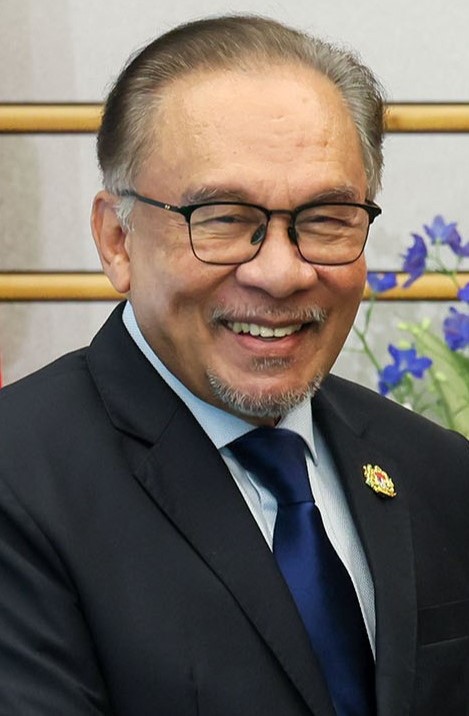
Prime Minister Datuk Seri Anwar Ibrahim is returning to Johor for the second time within a three-day window, signalling an aggressive federal push to shape the outcome of the state's forthcoming electoral contest. The repeated visits highlight how critical both Kuala Lumpur and the ruling coalition view the peninsular state's political direction, with Anwar himself taking the lead in articulating the federal government's policy agenda and mobilising grassroots support.
Johor remains one of Malaysia's largest and most economically significant states, home to over 4 million residents and accounting for substantial industrial output, port activity, and cross-border commerce with Singapore. Control of the state government carries implications for federal-state coordination on infrastructure, economic development, and social policy. The ruling coalition's focus on Johor therefore reflects both the state's demographic weight and its strategic importance to national governance and economic planning.
The scheduling of multiple leadership visits within a compressed timeframe is characteristic of modern Malaysian election campaigns, where senior figures seek to energise party workers, reinforce messaging discipline, and demonstrate government commitment to swing constituencies. By appearing frequently, Anwar seeks to embody federal backing for his coalition's candidates while managing narrative control over policy announcements and political framing. Each visit typically includes rallies, meet-and-greets with community leaders, and media engagements designed to generate coverage and reinforce campaign themes.
For Malaysian voters unfamiliar with Johor politics, the state has historically alternated between different political coalitions, reflecting broader national electoral trends whilst also responding to localised concerns around employment, cost of living, and development priorities. The state's significant non-urban populations and expanding metropolitan regions around Johor Bahru create distinct voter blocs with different preferences and sensitivities. Federal leaders must calibrate messaging to address both traditional rural constituencies and increasingly urbanised electoral segments.
Anwar's personal involvement in the Johor campaign underscores the government's recognition that state-level contests increasingly influence federal political standing. A strong performance in Johor would provide the Prime Minister with validation of his coalition's broader appeal and electoral resilience. Conversely, setbacks could embolden opposition narratives questioning federal governance and create momentum for opposition advancement ahead of the next national election.
The frequency of such visits also reflects resource allocation decisions by the ruling coalition. Deploying the Prime Minister signals that competing demands on his time—international engagements, cabinet management, crisis response—are secondary to Johor's electoral outcome. This concentration of federal political capital demonstrates how much Kuala Lumpur values the state contest and suggests internal coalition assessment that the result remains contested and winnable.
Regionally, Johor's election carries implications for Southeast Asia's largest federal democracy. A coalition victory would affirm the current government's command of electoral machinery and public opinion, potentially influencing how regional counterparts view Malaysian political stability and bilateral engagement. Strong federal performance also affects Malaysia's internal investment climate and investor confidence in policy continuity.
The opposition will undoubtedly attempt to use Anwar's multiple visits to argue that the federal government lacks confidence in local candidates or fears losing ground. This counter-narrative, if effectively amplified through opposition media and grassroots messaging, could frame federal intervention as desperation rather than strength. How both coalitions manage these competing interpretations will shape the broader campaign narrative.
Campaign dynamics in Johor also reflect the evolution of Malaysian electoral competition itself. The use of social media, data-driven voter targeting, and rapid-response communications has compressed traditional campaign calendars. Events that might once have unfolded over months now accelerate to weeks, with senior leaders expected to maintain visible presence and direct engagement. This intensity tests both the government's organisational capacity and its ability to sustain messaging coherence across multiple constituencies.
For ordinary Johoreans, the electoral stakes centre on tangible governance outcomes: whether roads will be repaired, whether schools receive adequate funding, whether job creation matches population growth, and whether development benefits are distributed equitably across districts. National leaders' campaign visits tend to emphasise broad rhetorical appeals, but voters ultimately evaluate performance based on local service delivery and economic circumstances in their immediate surroundings.
The timing of Anwar's repeated Johor visits, set against the backdrop of rising political temperature in the state, suggests the campaign is entering its most intensive phase. Multiple visits within a short period typically precede the final election push, indicating the polling date may be approaching. The concentration of leadership attention also signals internal coalition polling suggesting the race remains competitive and the outcome uncertain enough to justify maximal effort allocation.
As Malaysian democracy continues to mature and electoral competition becomes more sophisticated, state elections increasingly function as barometers of national political health. Johor's forthcoming contest will be scrutinised not only by local voters but by political analysts, business interests, and international observers seeking to understand the current state of Malaysian governance and the direction of federal power.