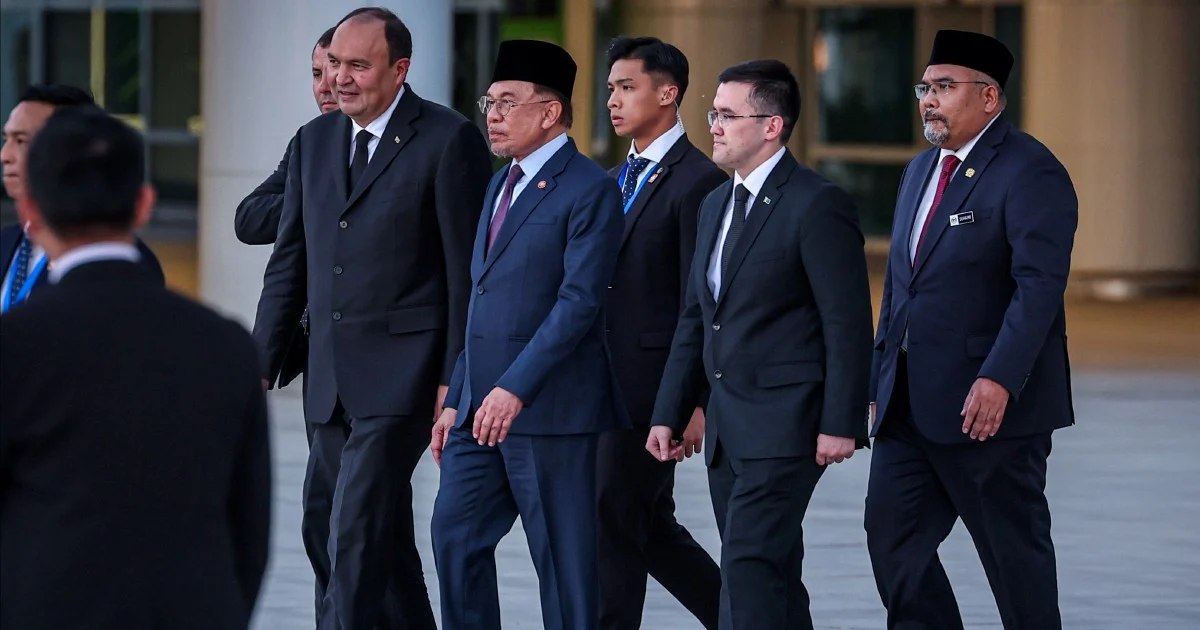
Prime Minister Datuk Seri Anwar Ibrahim is using the final day of his official visit to Turkmenistan to engage in a series of high-level diplomatic and economic discussions aimed at strengthening bilateral ties between Malaysia and the Central Asian nation. The intensive schedule of meetings underscores the Malaysian government's strategic focus on expanding commercial relationships beyond Southeast Asia, particularly in energy-rich regions that offer long-term growth potential.
Turkmenistan's geographic positioning on the eastern shore of the Caspian Sea makes it a significant player in Central Asian geopolitics and energy markets. The nation controls substantial natural gas reserves and sits at the crossroads of major transport corridors connecting Asia, Europe, and the Middle East. For Malaysia, establishing stronger economic partnerships with Turkmenistan opens opportunities to diversify trade relationships and participate in regional infrastructure projects that could benefit Malaysian businesses and investors.
The bilateral engagement reflects a broader Malaysian foreign policy objective of cultivating relationships with emerging economies across multiple continents. Rather than limiting economic ties to traditional markets in Southeast Asia, the European Union, or Northeast Asia, Malaysia under Anwar's leadership has shown willingness to explore partnership opportunities in less conventional markets. Turkmenistan, despite its geographic distance, represents a potential avenue for Malaysian companies seeking to establish footholds in Central Asia, particularly in energy, construction, and technology sectors.
Trade between Malaysia and Turkmenistan has historically remained modest compared to Malaysia's commerce with larger Asian economies. However, the prime minister's official visit suggests recognition by the Malaysian government that this relationship has untapped potential. Central Asian nations have increasingly sought to diversify their international partnerships beyond traditional relationships with Russia, China, and Europe. This shifting geopolitical landscape creates openings for middle powers like Malaysia to establish mutually beneficial commercial arrangements.
Investment flows represent another dimension of the bilateral discussions. Malaysian firms have demonstrated competence in sectors including petrochemicals, telecommunications, financial services, and construction—areas where Turkmenistan has expressed interest in modernisation and expansion. The high-level nature of Anwar's visit suggests that formal investment frameworks or bilateral agreements may be negotiated, potentially facilitating smoother market entry for Malaysian enterprises and providing Turkmenistan with access to Malaysian expertise and capital.
The timing of this engagement is noteworthy given global energy market dynamics. As nations worldwide reassess energy security and supply chain resilience following recent international disruptions, gas-producing nations like Turkmenistan have become focal points for countries seeking to diversify energy partnerships. While Malaysia itself is not primarily energy-dependent on Central Asia, involvement in regional energy projects could provide Malaysian companies with profitable business opportunities and enhance the country's international standing in global energy discussions.
Diplomatically, the visit sends a signal about Malaysia's independent foreign policy approach. Rather than following traditional post-colonial alignment patterns or limiting engagement to Western-aligned nations, Malaysia has cultivated relationships across ideological and geographic divides. This balanced approach strengthens Malaysia's position as a non-aligned nation capable of engaging constructively with diverse international partners from different regions and political systems.
The prime minister's presence in Ashgabat also addresses potential connectivity between Southeast Asian and Central Asian regional organisations. As Malaysia seeks to leverage its position within ASEAN and its broader Asian identity, connections to Central Asian nations through bilateral relationships can facilitate wider regional cooperation. This layered approach to international relations—working simultaneously through multilateral organisations and direct bilateral channels—maximises Malaysia's diplomatic influence and economic opportunities.
For Malaysian investors and businesses, the visibility of the prime minister's engagement with Turkmenistan's leadership provides important signals about government backing for commercial ventures in the region. High-level political support frequently translates into practical advantages, including facilitation of regulatory approvals, participation in government procurement, and access to preferential investment conditions. Companies considering entry into the Central Asian market can cite the prime minister's visit as evidence of strengthened bilateral relations and government commitment to deepening economic ties.
The discussions likely encompass not only direct bilateral trade but also participation in regional initiatives and projects. Central Asia has witnessed increased investment in transport infrastructure, including railway and road networks linking the region to China, Russia, and potentially Southeast Asia. Malaysian involvement in such projects could generate significant value while advancing broader Asian connectivity objectives that align with Malaysian strategic interests.
Moving forward, the success of Anwar's visit will be measured by tangible outcomes including signed agreements, established investment frameworks, and concrete business partnerships. The Malaysian government's investment in high-level engagement suggests confidence that valuable long-term opportunities exist in Turkmenistan, despite historical trade volumes being relatively limited. As global economic patterns continue shifting and nations reassess strategic partnerships, Malaysia's proactive engagement with Central Asian partners positions the country favourably in emerging supply chains and investment networks that will characterise the next phase of international commerce.

%22%2F%3E%3C%2Fpattern%3E%3C%2Fdefs%3E%3Crect%20width%3D%22100%25%22%20height%3D%22100%25%22%20fill%3D%22url(%23ph4itmfg)%22%2F%3E%3Crect%20width%3D%22100%25%22%20height%3D%22100%25%22%20fill%3D%22url(%23ph4itmfp)%22%2F%3E%3Ctext%20x%3D%2250%25%22%20y%3D%2250%25%22%20text-anchor%3D%22middle%22%20dominant-baseline%3D%22central%22%20fill%3D%22rgba(255%2C255%2C255%2C0.95)%22%20font-family%3D%22Georgia%2C%20'Times%20New%20Roman'%2C%20serif%22%20font-weight%3D%22700%22%20font-size%3D%22136%22%20letter-spacing%3D%22-0.02em%22%3EDeveloping%3C%2Ftext%3E%3C%2Fsvg%3E)