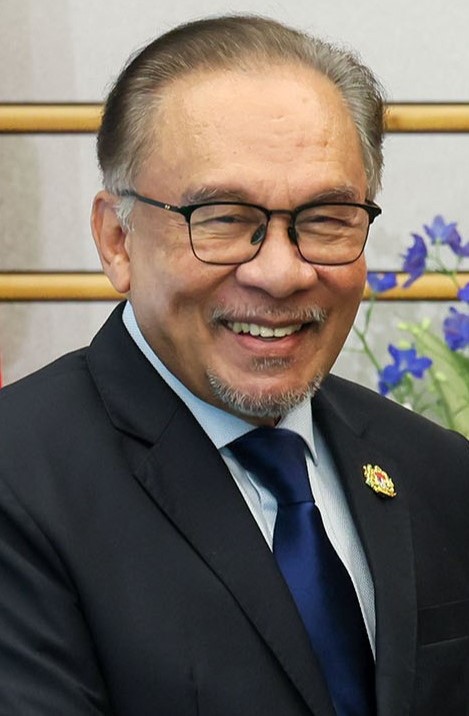
Prime Minister Datuk Seri Anwar Ibrahim is set to reveal the full complement of 56 Pakatan Harapan candidates contesting the 16th Johor State Election at an event this evening, marking the final stage of the opposition coalition's campaign preparations for the crucial state ballot. The candidate announcement ceremony will take place at 8 pm at Bukit Gambir Extreme Park field in Johor Bahru, bringing together the coalition's senior leadership and grassroots supporters in a show of unified strength as the election enters its critical final phase.
The timing of tonight's unveiling represents a carefully choreographed political manoeuvre by Anwar and his lieutenants. With the Election Commission having set June 27 as nomination day, the completion of PH's candidate roster before that deadline provides the coalition with a clear organisational advantage. The announcement allows the party machinery to immediately pivot to campaigning without the distraction of outstanding candidate disputes, a luxury that opposition movements in Malaysia have historically lacked during election cycles.
Anthony Loke, the DAP secretary-general, and Amanah president Datuk Seri Mohamad Sabu are among the top-tier party figures scheduled to attend tonight's event, underscoring the significance of the occasion within PH's political calendar. The presence of these senior coalition leaders signals internal party cohesion at a moment when such unity is essential for electoral success. In Malaysian politics, the ability of multi-party coalitions to present a united front during candidate announcements often translates into voter confidence and volunteer mobilisation.
The Democratic Action Party has already made five candidate selections public, revealing a diverse slate that reflects DAP's effort to broaden its appeal across different constituencies and demographic groups. Lawyer Chu Poh Yee will contest Mengkibol, while Nor Zulaila Abd Ghani, currently serving as private secretary to the Deputy Finance Minister, has been fielded in Tiram. Lee Wern Yiing, who leads DAPSY or Johor DAP Socialist Youth, will represent Johor Jaya, positioning the party's youth movement at the frontline of campaign efforts. Former incumbent Wong Bor Yang returns to contest Senai, lending experience to what will undoubtedly be a fiercely contested seat, whilst Mohamad Shafwan Ani, attached to the Kulai Member of Parliament's office, will contest Bukit Permai.
PKR, the People's Justice Party component of the coalition, has also declared its intentions through the candidacy of Arthur Chiong Sen Sern, who will seek to retain the Bukit Batu state seat. This nomination underscores PKR's determination to consolidate its existing parliamentary and state assembly presence in Johor, a state where the party has struggled historically compared to its performance in other regions. The retention strategy adopted by PKR suggests confidence in Chiong's local standing and organisational groundwork.
Anwar's recent messaging on social media has framed the Johor election as a referendum on governance standards and developmental vision. He has emphasised that the state requires leadership grounded in integrity, credibility, and demonstrable commitment to advancing public welfare—a rhetorical positioning designed to contrast implicitly with the incumbent administration. Such messaging, while common in Malaysian election campaigns, carries particular weight in Johor given the state's historical significance as the traditional stronghold of the Barisan Nasional and the complex dynamics between federal and state-level political allegiances.
The electoral calendar established by the Election Commission provides all competing coalitions with a compressed but manageable timeline. Nomination day on June 27 will formalise all candidacies and formally trigger the election machinery. Early voting on July 7 will facilitate those unable to vote on the main polling day, particularly essential workers, security personnel, and others with legitimate reasons for early participation. The main polling day of July 11 will then determine the composition of the 56-seat Johor State Assembly and consequently the state government's political complexion for the next five years.
For Malaysian observers and particularly those in Johor, tonight's candidate announcement carries implications extending well beyond the ceremonial. The composition of PH's slate will reveal how the coalition has balanced ideological representation, demographic inclusivity, youth versus experience, and regional power-sharing between its component parties. The calibre and background of announced candidates will offer insights into how seriously PH regards specific constituencies and whether the coalition believes it can expand its electoral footprint or merely consolidate existing support bases.
The broader Southeast Asian context matters here too. Malaysia's electoral cycles are increasingly scrutinised by regional analysts as indicators of whether opposition coalitions can effectively challenge entrenched political establishments. The viability of PH as a governing alternative remains under testing, and state elections like Johor's function as important barometers of coalition strength, internal cohesion, and public appetite for political change. Success in Johor would constitute a significant symbolic and practical victory, whilst setback would raise fresh questions about PH's electoral prospects in future national contests.
Campaigning between now and July 11 will test the depth of PH's organisational capacity and the resonance of its messaging with Johor voters. The coalition must navigate complex local issues—from economic development priorities to religious and cultural sensitivities—whilst maintaining internal discipline across three distinct parties with sometimes divergent policy preferences. Tonight's candidate announcement represents the coalitional foundation upon which all subsequent campaign activities will be constructed, making the event far more consequential than the ceremonial venue and timing might suggest.