%22%2F%3E%3C%2Fpattern%3E%3C%2Fdefs%3E%3Crect%20width%3D%22100%25%22%20height%3D%22100%25%22%20fill%3D%22url(%23phri2pg)%22%2F%3E%3Crect%20width%3D%22100%25%22%20height%3D%22100%25%22%20fill%3D%22url(%23phri2pp)%22%2F%3E%3Ctext%20x%3D%2250%25%22%20y%3D%2250%25%22%20text-anchor%3D%22middle%22%20dominant-baseline%3D%22central%22%20fill%3D%22rgba(255%2C255%2C255%2C0.95)%22%20font-family%3D%22Georgia%2C%20'Times%20New%20Roman'%2C%20serif%22%20font-weight%3D%22700%22%20font-size%3D%22272%22%20letter-spacing%3D%22-0.02em%22%3EAnwar%3C%2Ftext%3E%3C%2Fsvg%3E)
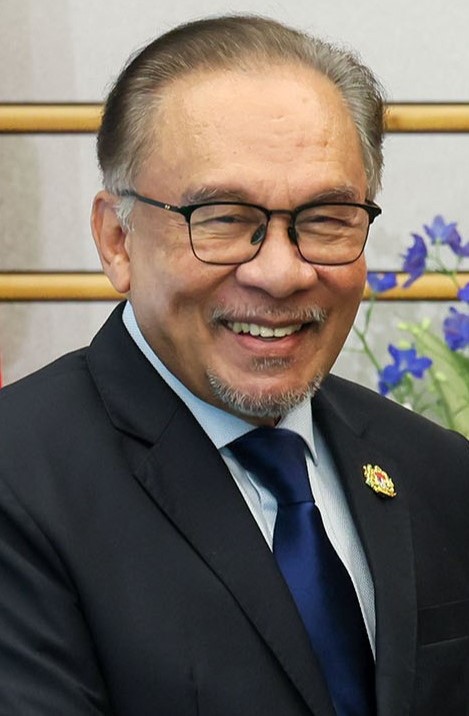
Prime Minister Anwar Ibrahim presided over Pakatan Harapan's candidate announcement ceremony for the 16th Johor State Election on 22 June 2026, formally introducing the coalition's comprehensive lineup for all state constituencies. The event, held at Padang Bukit Gambir Extreme Park at 8:00 PM, marked a significant moment for the opposition alliance as it prepared its electoral machinery for a crucial battle in one of Malaysia's most politically consequential states. The gathering showcased PH's determination to maintain momentum in Johor, a state where federal and state dynamics have shifted considerably in recent political cycles.
The ceremony reflected PH's broader messaging strategy around principled governance and accountable leadership. Anwar articulated a vision of politics fundamentally oriented toward addressing public welfare rather than serving narrow factional or personal interests. His articulation stressed that political engagement must ultimately produce tangible improvements in citizens' lives—from generating meaningful employment opportunities for the youth demographic to fostering a business environment conducive to enterprise and entrepreneurship. The Prime Minister's remarks positioned PH as a coalition committed to lifting living standards across the Johor electorate through governance rooted in transparency and ethical conduct.
Unity emerged as a central thematic pillar throughout the proceedings. For Pakatan Harapan, maintaining cohesion among its constituent parties remains perpetually challenging, given divergent ideological foundations and competing organizational interests. By emphasizing unity as a cornerstone value, party leaders attempted to project an image of a coalition functioning as an integrated political force rather than a collection of separate entities pursuing distinct agendas. This messaging carried particular weight in Johor, where electoral competition remains ferociously contested and voter perceptions of coalition stability directly influence their electoral calculations.
Integrity formed the second pillar of PH's stated platform. The emphasis on principled conduct and honest governance resonates with Malaysian voters increasingly concerned about corruption and institutional credibility. For a coalition that has experienced both spectacular electoral triumph and devastating defeat in recent years, reasserting commitment to ethical governance serves as both a substantive policy position and a rhetorical response to criticisms leveled by opponents. Johor voters, having witnessed various political transitions and leadership transitions at both state and federal levels, possess intimate familiarity with governance performance and its consequences for service delivery.
Compassion, positioned as the third pillar, underscored PH's focus on inclusive policymaking attentive to vulnerable populations and marginalized communities. This framing suggested an administration sensitive to socioeconomic disparities and committed to redistributive mechanisms benefiting lower-income Johor residents. Given Malaysia's persistent inequality and demographic pressures on urban centers like Johor Bahru, compassionate governance messaging carries genuine electoral resonance, particularly among younger voters and economically squeezed middle-income households.
Progress constituted the final thematic element, projecting forward momentum and developmental aspiration. The term encapsulates PH's implicit comparison with incumbent administration, suggesting that voting for the coalition would unlock accelerated progress across infrastructure, economic diversification, and institutional modernization. For Johor specifically, which possesses significant industrial capacity, port facilities, and geographical proximity to Singapore, developmental narratives carry particular weight as voters assess which leadership configuration would maximize the state's economic potential.
The Malaysia Madani vision, PH's overarching governance framework, provided the philosophical umbrella beneath which these four pillars functioned. Malaysia Madani represents the coalition's attempt to articulate a coherent national development model emphasizing civilizational advancement, institutional resilience, and inclusive prosperity. For Johor voters, the question becomes whether Malaysia Madani principles translate into practical benefits at the state level, where governance directly affects healthcare delivery, educational quality, infrastructure maintenance, and employment generation.
The comprehensive announcement of candidates across all Johor state constituencies represented an organizational achievement, reflecting months of internal negotiation, vetting, and consensus-building among PH's constituent parties. The mechanics of selecting 56 candidates across diverse constituencies involves balancing geographic representation, demographic considerations, incumbency, factional interests within parties, and perceived electability metrics. The fact that PH successfully navigated these complexities sufficiently to execute a coordinated public announcement suggests the coalition possessed adequate organizational discipline and internal consensus to present a unified electoral front.
Johor's political significance within Malaysia's broader landscape cannot be understated. As the nation's second-most populous state and a crucial swing territory where federal and state electoral dynamics frequently diverge, Johor outcomes often foreshadow broader national trends while simultaneously reflecting state-specific concerns. The coalition's investment in a high-profile announcement event featuring the Prime Minister underscored the territory's electoral importance and PH's commitment to competitive engagement in Johor rather than conceding the state to rivals.
The timing of the announcement, positioned well ahead of the anticipated election date, afforded PH months to conduct ground campaigning, refine messaging, and cultivate voter relationships through its candidate network. Unlike rushed electoral campaigns beginning immediately after dissolution declarations, this early announcement enabled the coalition to engage in deliberate, sustained engagement with constituencies. For candidates themselves, early introduction to voters provides opportunity to build personal brand recognition, establish community connections, and develop issues-specific policy expertise relevant to their constituencies.
Anwar's personal attendance and visible leadership of the announcement ceremony carried symbolic weight beyond the immediate event. As Prime Minister, Anwar's prominent involvement signaled federal-level commitment to Johor's electoral outcome and suggested that state results would influence federal political dynamics. This framing elevated what might otherwise be a routine state election into a referendum partly on federal government performance and Anwar's personal political leadership.
The gathering's emphasis on values—unity, integrity, compassion, and progress—rather than specific policy announcements reflected PH's strategic calculation that affective appeals to governance quality and ethical standards might prove more persuasive with Johor voters than detailed policy platforms. This approach assumes that voters prioritize leadership character and institutional reliability above granular policy differences, a reasonable assumption given voter frustration with perceived corruption and institutional dysfunction.
As PH candidates embarked on their electoral journey following the announcement, they carried both opportunity and burden. The coalition's explicit commitment to principled governance meant that candidate conduct during the campaign period would face heightened scrutiny, with any ethical lapses or unprincipled behavior potentially undermining the core messaging platform. Conversely, successful demonstration of integrity, community engagement, and policy competence throughout the campaign could reinforce PH's broader positioning and translate rhetorical commitments into demonstrated behavioral change.