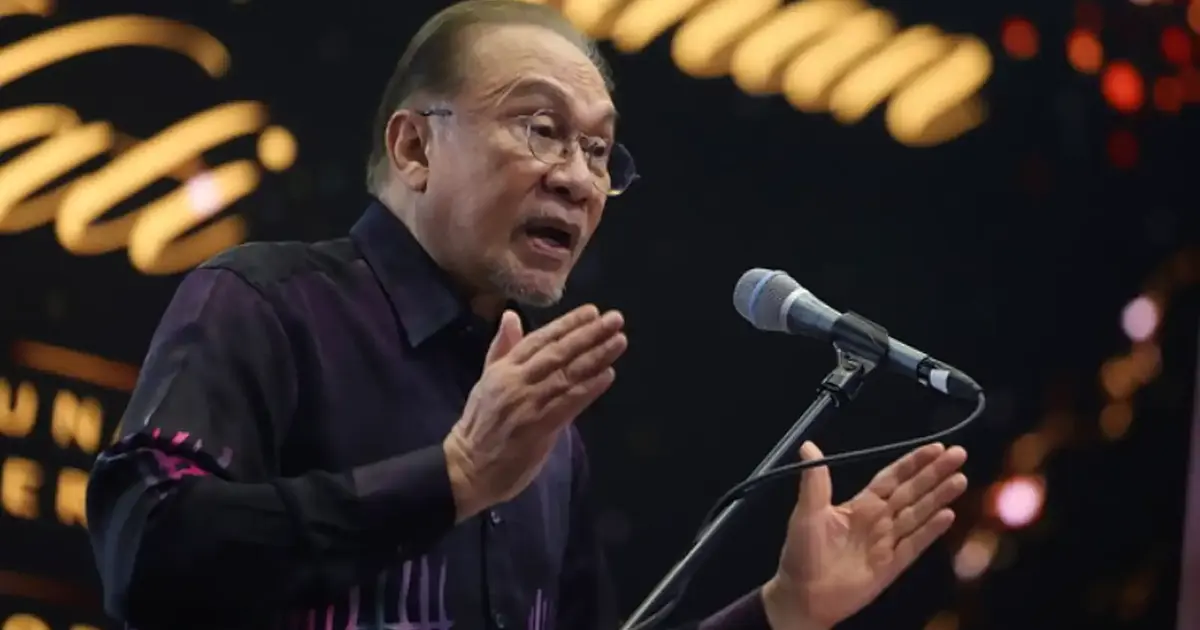
Prime Minister Anwar Ibrahim has issued a forthright appeal to the Malaysian public to transcend divisive rhetoric being propagated by particular political leaders, positioning ethnic pluralism as integral to the nation's competitive advantage and social stability. Speaking to the underlying tensions that occasionally surface in Malaysia's political discourse, Anwar framed the country's multicultural composition not as a liability or source of friction, but as a fundamental asset that distinguishes Malaysia regionally and globally.
Anwar's remarks arrive amid an evolving political landscape where competing visions of national identity have occasionally been weaponised by various stakeholders seeking to mobilise voter constituencies. The Prime Minister's intervention suggests a deliberate attempt to steer public conversation away from inflammatory messaging and toward a more constructive engagement with the reality of Malaysia's demographic makeup. By characterising diversity as a strength rather than a challenge, Anwar positions himself within a tradition of Malaysian leadership that emphasises communal harmony as prerequisite for prosperity and development.
The timing of such a statement carries particular significance given the complex interplay between religious, ethnic, and regional identities that animate Malaysian politics. Unlike many developing democracies, Malaysia has largely maintained social cohesion despite its religious and cultural heterogeneity, a achievement that reflects deliberate constitutional arrangements and long-standing political norms. Anwar's emphasis on this achievement suggests concern that normalising inflammatory rhetoric could erode the institutional and social guardrails that have historically maintained this equilibrium.
Malaysia's position as a predominantly Muslim-majority nation with significant Chinese, Indian, and indigenous populations creates a unique context for political messaging. The success of the national project depends substantially on leaders maintaining confidence that no single community faces systematic marginalisation or threat from state institutions. When political actors resort to hate speech or divisive framing, they risk undermining this confidence and triggering cycles of mutual suspicion that can overwhelm normal democratic processes.
Anwar's call to rise above hate-peddling rhetoric also reflects pragmatic recognition that Malaysia's economic competitiveness depends on social stability and inclusive governance. Foreign investors, multinational corporations, and international talent flows respond negatively to signals of internal discord or communal tension. A nation perceived as fractious or unstable faces higher borrowing costs, reduced foreign direct investment, and brain drain among skilled professionals. By defending pluralism, Anwar effectively defends the material interests that sustain Malaysia's development trajectory.
The specific framing of diversity as a strength echoes arguments made by business leaders, academic institutions, and civil society organisations across Southeast Asia. This perspective emphasises that multicultural societies generate broader problem-solving capacity, greater cultural creativity, and more resilient economies capable of adapting to technological and market disruptions. In an era of rapid globalisation, monoethnic or monotheistic messaging may appeal to particular voter segments but ultimately constrains national potential.
Anwar's intervention also positions Malaysia within broader regional and global conversations about populism, identity politics, and democratic resilience. Across the Asia-Pacific region, leaders have experimented with divisive messaging as a mobilisation strategy, with mixed long-term results. Some nations have experienced increased polarisation without corresponding electoral gains for the practitioners of such rhetoric, while others have seen institutional decay and reduced governability. Malaysia's relative stability suggests that hate-peddling carries higher political and social costs than proponents sometimes recognise.
The Prime Minister's emphasis on rejecting divisiveness does not necessarily imply that all ethnic or religious concerns should be dismissed as mere hate-mongering. Rather, it suggests that legitimate differences can be negotiated within frameworks that affirm mutual respect and constitutional arrangements protecting minority rights. This distinction matters for maintaining democratic legitimacy while preventing political competition from devolving into zero-sum communal conflict.
For ordinary Malaysians navigating an increasingly complex political environment, Anwar's message offers a reminder that leadership choices have consequences extending far beyond electoral cycles. The normalisation of hate speech in any direction—whether targeting religious minorities, ethnic majorities, or immigrant communities—erodes the social capital upon which multicultural societies depend. Conversely, leadership that actively resists such rhetoric, even when politically convenient, contributes to institutional robustness and intergenerational trust.
The broader implication of Anwar's stance is that Malaysia's future prosperity and stability depend on political leaders resisting the short-term temptation of divisive messaging in favour of longer-term commitment to inclusive governance. This represents a particular challenge in the current media environment, where inflammatory content generates disproportionate engagement and attention. Leaders willing to prioritise nation-building over narrow electoral advantage must work against powerful incentive structures encouraging sensationalism and polarisation.
Moving forward, the test of Anwar's convictions will lie in consistent action reinforcing his rhetorical commitment to pluralism. This includes ensuring that government institutions treat all communities equitably, that educational curricula promote intercommunal understanding, and that law enforcement responds swiftly to hate speech regardless of its source or target. Statements alone, however eloquent, cannot substitute for institutional practices that demonstrate commitment to the inclusive vision Anwar has articulated.
%22%2F%3E%3C%2Fpattern%3E%3C%2Fdefs%3E%3Crect%20width%3D%22100%25%22%20height%3D%22100%25%22%20fill%3D%22url(%23ph22lrcg)%22%2F%3E%3Crect%20width%3D%22100%25%22%20height%3D%22100%25%22%20fill%3D%22url(%23ph22lrcp)%22%2F%3E%3Ctext%20x%3D%2250%25%22%20y%3D%2250%25%22%20text-anchor%3D%22middle%22%20dominant-baseline%3D%22central%22%20fill%3D%22rgba(255%2C255%2C255%2C0.95)%22%20font-family%3D%22Georgia%2C%20'Times%20New%20Roman'%2C%20serif%22%20font-weight%3D%22700%22%20font-size%3D%22226%22%20letter-spacing%3D%22-0.02em%22%3ENearly%3C%2Ftext%3E%3C%2Fsvg%3E)
%22%2F%3E%3C%2Fpattern%3E%3C%2Fdefs%3E%3Crect%20width%3D%22100%25%22%20height%3D%22100%25%22%20fill%3D%22url(%23phpz2bg)%22%2F%3E%3Crect%20width%3D%22100%25%22%20height%3D%22100%25%22%20fill%3D%22url(%23phpz2bp)%22%2F%3E%3Ctext%20x%3D%2250%25%22%20y%3D%2250%25%22%20text-anchor%3D%22middle%22%20dominant-baseline%3D%22central%22%20fill%3D%22rgba(255%2C255%2C255%2C0.95)%22%20font-family%3D%22Georgia%2C%20'Times%20New%20Roman'%2C%20serif%22%20font-weight%3D%22700%22%20font-size%3D%22226%22%20letter-spacing%3D%22-0.02em%22%3ESevere%3C%2Ftext%3E%3C%2Fsvg%3E)
%22%2F%3E%3C%2Fpattern%3E%3C%2Fdefs%3E%3Crect%20width%3D%22100%25%22%20height%3D%22100%25%22%20fill%3D%22url(%23phzxjeg)%22%2F%3E%3Crect%20width%3D%22100%25%22%20height%3D%22100%25%22%20fill%3D%22url(%23phzxjep)%22%2F%3E%3Ctext%20x%3D%2250%25%22%20y%3D%2250%25%22%20text-anchor%3D%22middle%22%20dominant-baseline%3D%22central%22%20fill%3D%22rgba(255%2C255%2C255%2C0.95)%22%20font-family%3D%22Georgia%2C%20'Times%20New%20Roman'%2C%20serif%22%20font-weight%3D%22700%22%20font-size%3D%22194%22%20letter-spacing%3D%22-0.02em%22%3EBolivia%3C%2Ftext%3E%3C%2Fsvg%3E)