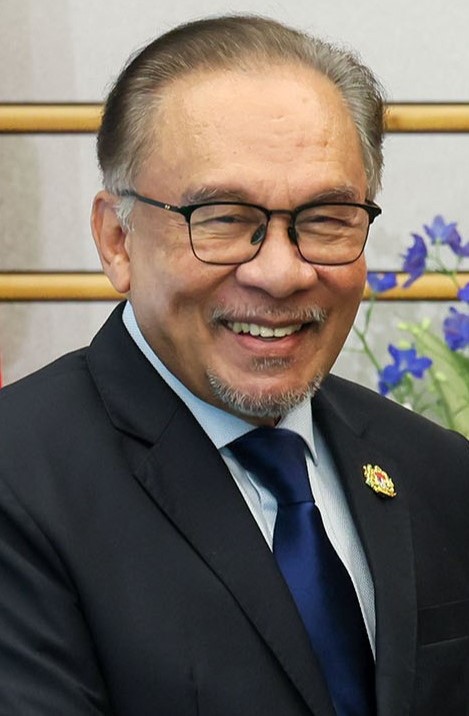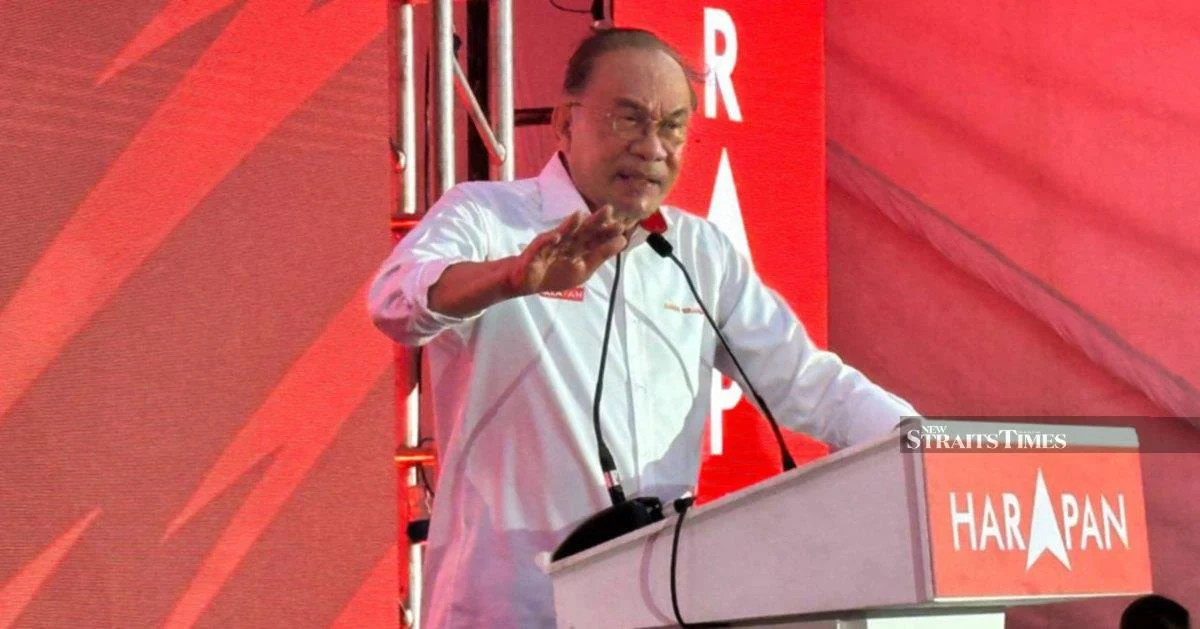
Pakatan Harapan faces a critical moment in Johor as coalition chairman Datuk Seri Anwar Ibrahim has called for a renewed focus on organisational discipline and strategic restraint among party members and leaders operating in the state. Speaking in Tangkak, the Prime Minister stressed the importance of concentrating efforts on constructive campaigning rather than engaging in counterproductive disputes with political allies who currently hold federal office.
The warning reflects growing concerns within the opposition coalition about potential divisions that could undermine electoral prospects. Johor, a state with significant demographic and economic influence, remains strategically important for both the federal government and Pakatan Harapan's political calculations. The coalition's performance in the southern state during any future elections could substantially affect the broader political landscape across the peninsula.
Anwar's intervention suggests internal discussions within Pakatan Harapan about disciplining wayward members and maintaining a united public face. Coalition politics in Malaysia has historically suffered from personality clashes and competing interests between member parties and their leadership, and maintaining cohesion becomes particularly challenging during election cycles when individual parties jostle for candidate positions and campaign resources.
The prohibition against bickering with federal government partners carries particular significance given Malaysia's complex political architecture. As Prime Minister, Anwar leads a coalition government that includes parties both within and outside the Pakatan Harapan framework. This broader ruling coalition includes components that historically competed against the opposition, making internal messaging discipline essential to avoid appearing fractious or incapable of governance to the electorate.
Johor's political dynamics have shifted substantially over recent years. The state that once represented a stronghold for certain political forces has become increasingly competitive, with varying levels of support for different coalitions across different communities and constituencies. Both Pakatan Harapan and the federal government have invested significant effort in strengthening their ground presence and voter outreach capabilities in the state.
Anwar's call to concentrate on substantive work—presumably referring to addressing local constituents' concerns, strengthening party structures, and engaging in positive community-based campaigning—represents a time-tested strategy for opposition and ruling coalitions alike. Effective ground organisation, particularly in states like Johor where urban and rural constituencies coexist with diverse demographic composition, often determines electoral outcomes more decisively than high-profile political disputes.
The coalition's machinery in Johor encompasses various layers of party workers, from senior leaders responsible for strategic decisions to grassroots volunteers who interact directly with voters. Coordinating these disparate groups toward consistent messaging and unified approach requires constant reinforcement of party discipline, particularly when external pressures create temptation to deviate from agreed strategies.
For Malaysian voters in Johor, the significance of Anwar's remarks extends beyond mere party management. A cohesive Pakatan Harapan offers voters a clearer alternative platform and governance vision compared to a coalition marked by visible internal tensions. Conversely, voters sceptical of opposition politics may interpret coalition discipline as merely masking underlying disagreements that would resurface once elections concluded.
The emphasis on avoiding disputes with federal government allies deserves particular scrutiny. This positioning suggests Pakatan Harapan intends to contest future elections primarily on policy differentiation and governance alternatives rather than on personal attacks against individual federal ministers or on amplifying splits within the government coalition. Such a strategy could prove either prudent or limiting, depending on whether policy differences prove sufficiently compelling to convince undecided voters.
Johor's historical importance in Malaysian politics—as a state that has undergone significant political realignment in recent years—means that electoral performance here carries symbolic weight beyond its seat count. A strong showing would validate Anwar's leadership and coalition management; disappointing results might intensify existing criticism about opposition effectiveness and unity.
The timing of Anwar's message matters considerably. As Malaysia progresses toward the next scheduled state elections in several states and contemplates the eventual federal election due by 2028, coalitions across the political spectrum face mounting pressure to demonstrate both unity and electoral viability. Johor, as a significant component of this electoral mathematics, demands particular attention from the Prime Minister and his coalition partners.
Moving forward, the effectiveness of Anwar's directive will depend substantially on whether party members at all levels embrace the discipline he advocates. Avoiding unnecessary confrontation while simultaneously maintaining distinct political identity requires sophisticated messaging and strong internal communication systems. For Pakatan Harapan in Johor, this balance will determine whether the coalition can consolidate support and expand its political influence in one of Malaysia's most pivotal states.