Prime Minister Datuk Seri Anwar Ibrahim's working visit to Kazan has delivered a landmark achievement for Malaysia's energy security, with Russia committing to supply petrol, oil, and gas under long-term framework agreements rather than the conventional annual or seasonal arrangements that have characterised bilateral trade. The two-day mission, which included participation in the 35th ASEAN-Russia Commemorative Summit, represented a significant recalibration of Malaysia-Russia relations as both countries moved beyond traditional trade corridors to establish deeper cooperation in energy, investment, technology, and tourism.
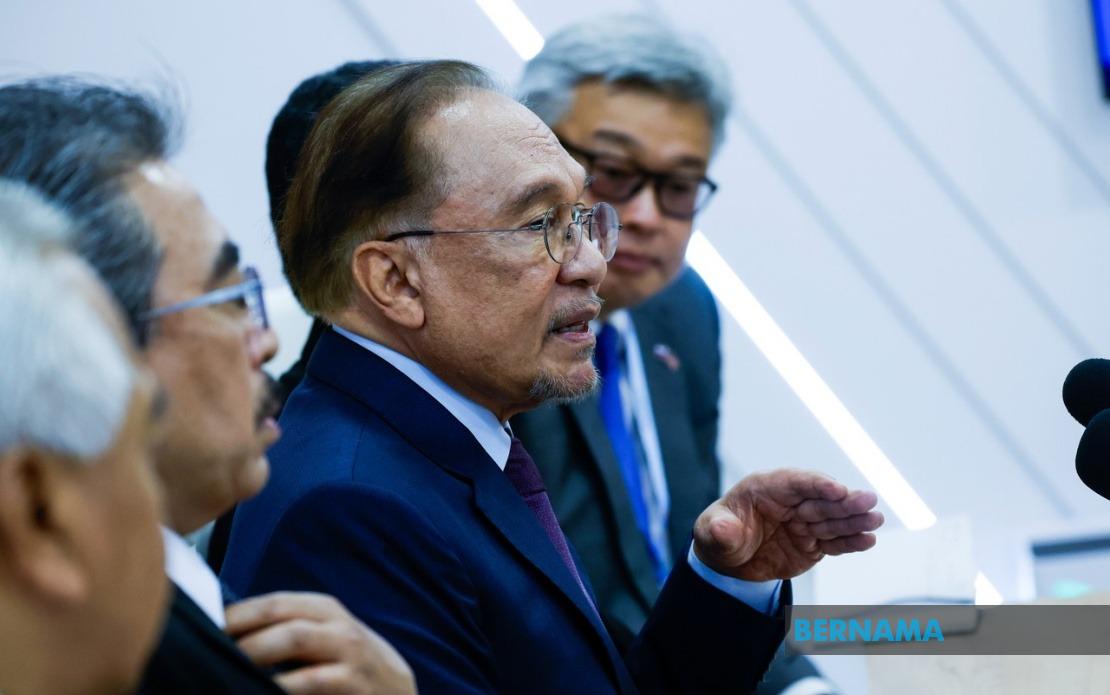
The centrepiece of Anwar's visit was finalising the mechanics of long-term energy supply arrangements with Russia. Speaking at the closing press conference, the Prime Minister outlined how negotiations had progressed beyond preliminary agreement on principles to the operational stage, with company representatives already present in Kazan and drafting agreements substantially completed. The framework promises to shield Malaysia from the volatility of spot market purchases and seasonal fluctuations that have historically complicated energy procurement from distant suppliers. Rather than renewing contracts repeatedly through short cycles, Malaysia will now operate under multi-year structures designed to provide predictability for both government planning and downstream industrial sectors dependent on stable hydrocarbon supplies.
Anwar characterised the remaining work as largely procedural, emphasising that approval had already been granted and that the delegation would shortly review final details before execution. Upon returning to Kuala Lumpur, the government would expedite the signing process, potentially removing a major bottleneck in Malaysia's energy diversification strategy at a time when regional geopolitical tensions and supply chain uncertainties continue to roil international commodity markets. The breakthrough reflects a deliberate Malaysian strategy to broaden supplier relationships beyond traditional partners and reduce exposure to market concentration risk.
Beyond the immediate energy dimension, Anwar signalled that Malaysia must fundamentally recalibrate its approach to international economic engagement, rejecting what he characterised as an excessively cautious posture that had constrained bilateral expansion with Russia and other emerging economies. This rhetorical pivot carries implications for Malaysian foreign economic policy more broadly, suggesting the government views deeper Russian ties not merely as transactional but as compatible with Malaysia's regional and global positioning. The Prime Minister's emphasis on bolder economic diplomacy reflects growing recognition that traditional Western-centric trade relationships, while important, cannot alone satisfy Malaysia's infrastructure, energy, and technological development imperatives.
Bilateral trade figures underscore why Russia has become an increasingly important economic partner. Malaysia ranked Russia as its ninth-largest European trading partner in 2025, with total bilateral commerce reaching RM8.72 billion (US$2.04 billion). Malaysian electrical and electronic products, machinery, equipment parts, and processed foods dominate Malaysian exports, while Russia supplies petroleum products, minerals, and chemicals. This complementarity—Malaysia providing manufactured goods and value-added products while importing energy commodities—suggests natural grounds for expanded cooperation extending beyond hydrocarbon trade into refining, petrochemicals, and downstream activities where Malaysian expertise could add value to Russian supplies.
Separate discussions between Anwar and Rustam Minnikhanov, the Head of Tatarstan's Republic, explored opportunities across trade, investment, education, tourism, the halal industry, and technology transfer. Tatarstan's prominence as one of Russia's major oil-producing regions made it a natural focus for energy-related negotiations, but the inclusion of halal industry development and educational partnerships suggests Malaysia views this relationship through a multifaceted lens. For regional audiences, Tatarstan's Islamic heritage and established halal certification frameworks present opportunities for Malaysian firms seeking to access Russian and Central Asian markets for halal-certified products, while educational exchanges could deepen people-to-people connections.
The Kazan summit culminated in ASEAN and Russia finalising their Strategic Programme on Trade and Investment Cooperation for 2026-2035, positioning the bloc and Russia for coordinated economic engagement over the coming decade. ASEAN-Russia trade in 2024 totalled US$18.1 billion, with Russian foreign direct investment in the region reaching RM367.90 million (US$92.97 million). While these figures remain modest relative to ASEAN's engagement with Western economies, they reflect growing economic interdependence and suggest that the 2026-2035 framework could substantially deepen intra-regional supply chains, investment flows, and technology transfer, particularly in energy, agriculture, cybersecurity, and digital technologies where Russian capabilities complement ASEAN development priorities.
Anwar also prioritised expanding people-to-people connectivity through visa-free travel arrangements and direct flight services between Malaysia and Russia, recognising that tourism and cultural exchange provide durable foundations for political and economic relationships. The absence of direct flights has constrained tourist flows and business travel, artificially limiting economic interaction. With Malaysia increasingly emphasising halal tourism and lifestyle experiences, and Russia home to growing Muslim populations particularly in Central Asian republics, mutual tourism development represents a tangible mechanism for deepening popular engagement beyond governmental and corporate channels.
The Kazan visit forms part of a broader Central Asian swing, with Anwar proceeding to Turkmenistan for a two-day official visit aimed at further diversifying Malaysia's hydrocarbon procurement. This itinerary reflects strategic planning around energy security and the recognition that Turkmenistan—sitting atop massive natural gas reserves—represents another counterweight to traditional Middle Eastern suppliers. By sequencing visits to multiple energy exporters, Malaysia signals determination to construct a more geographically diverse and geopolitically balanced energy portfolio insulated from any single supplier's disruptions or political leverage.
The timing of Malaysia's energy diversification efforts carries particular relevance given global market volatility driven by geopolitical tensions, supply chain fragmentation, and fluctuating commodity prices. While Gulf suppliers remain important, the concentration of global oil and gas production in politically volatile regions creates genuine vulnerability for Southeast Asian importers. Long-term Russian agreements address this through geographic diversification and contractual predictability, enabling Malaysian refineries and power generation facilities to plan infrastructure investments with greater confidence in feedstock availability and pricing frameworks.
Anwar's rhetoric around expanded Russian engagement must also be contextualised within Malaysia's broader non-aligned positioning. The government continues emphasising that deepened Russia ties do not diminish relationships with Western partners or other regional actors, but rather reflect pragmatic economic interest in accessing diverse suppliers and investment sources. This balancing act—maintaining traditional partnerships while expanding relationships with Russia and other emerging economies—has become the defining feature of Malaysian foreign policy under current leadership, reflecting genuine multipolarity in Malaysia's economic and strategic thinking.
For Malaysian businesses and policymakers, the implications of long-term Russian energy agreements extend beyond immediate hydrocarbon procurement to encompassing potential industrial cooperation in petrochemicals, refining, technology transfer, and energy-intensive manufacturing. Companies dependent on stable energy supplies at predictable prices can now undertake longer-term investment planning with greater confidence. The framework also positions Malaysia to serve as a potential hub for Russian investment targeting ASEAN markets, leveraging Malaysia's developed infrastructure, skilled workforce, and established supply chains to facilitate Russian corporate expansion across Southeast Asia.
As Anwar departed Kazan describing the mission as productive and expressing optimism about upcoming Turkmenistan engagements, Malaysia effectively signalled that energy security through diversification and long-term partnerships constitutes a cornerstone of government strategy. The practical completion of Russia agreements, coupled with the ASEAN-Russia 2026-2035 framework, suggests that Malaysian-Russian ties have transitioned from episodic diplomatic engagements to institutionalised economic cooperation. Whether this yields the expected energy supply benefits and industrial cooperation gains will depend substantially on effective implementation of signed agreements and Malaysian companies' capacity to leverage new opportunities in Russian and Central Asian markets.