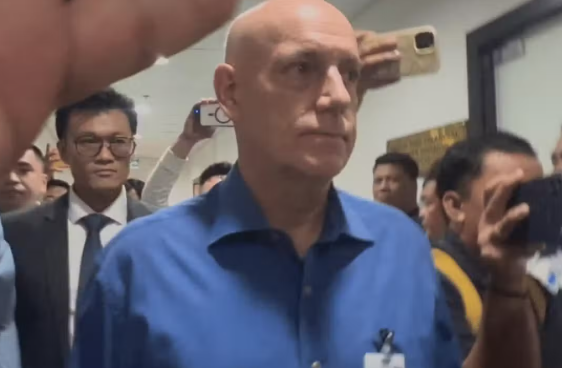
Former Ateneo de Manila University men's basketball head coach Tab Baldwin faced investigators at the National Bureau of Investigation on Tuesday afternoon as authorities continue examining the circumstances surrounding the deaths of two student-athletes who drowned earlier this month. Baldwin's appearance came after he had twice failed to comply with scheduled interview summons, raising questions about the conduct of the high-profile investigation into what began as a tragic team-building exercise that ended in fatality.
The coach arrived at the NBI Homicide Division shortly before 2 p.m. accompanied by his legal representative Karl David. The interview extended well beyond normal business hours, underscoring the gravity of authorities' desire to obtain comprehensive testimony from a central figure in the incident. Baldwin's presence before the investigative body marked a significant development in an inquiry that has drawn intense public scrutiny across the Philippines and among basketball circles throughout Southeast Asia.
The two deceased students, Rene Baterbonia and Divine Adili, met their deaths during a team activity held in Dipaculao, Aurora, earlier in June. The drowning incident has sparked considerable debate about athlete safety protocols, supervision standards during team events, and institutional accountability at one of the country's most prestigious educational institutions. The investigation represents a delicate inquiry into whether negligence, inadequate safety measures, or other factors contributed to the tragedy.
Baldwin's initial absence from a scheduled June 16 interview drew immediate attention, with his legal team citing his deteriorated health condition as justification for non-attendance. This explanation raised eyebrows among observers who noted the coach's apparent fitness to conduct public activities and media interactions during the same period. When Baldwin subsequently missed a second interview date on June 19, he claimed prior commitment to the Philippine National Police Criminal Investigation and Detection Group, creating overlapping investigative procedures that complicated the timeline of official questioning.
The parallel investigations by both the NBI and the PNP-Criminal Investigation and Detection Group have introduced complexity to the case, as each agency pursues its own procedural requirements while gathering evidence and statements from key witnesses. This dual-track approach, while potentially thorough, has also created opportunities for discrepancies between Baldwin's statements to different agencies. Authorities have explicitly signaled their intention to meticulously compare the testimony Baldwin provided to the CIDG on June 19 with the account he delivered during Tuesday's NBI session.
NBI Director Melvin Matibag has indicated that investigators plan to conclude their examination of the drowning deaths by week's end, suggesting the bureau views Baldwin's Tuesday appearance as pivotal to finalizing their findings. This timeline reflects pressure from public opinion and institutional stakeholders to deliver answers about what occurred during the Aurora team activity and whether preventive measures might have altered the outcome.
The investigation carries significant implications for Philippine sports culture and educational institution governance. The case has prompted broader conversations about the responsibilities coaches and administrators bear toward athlete welfare, the adequacy of emergency response protocols at team events, and whether institutional prestige should shield officials from rigorous accountability. Baldwin's conduct during the investigative process—including the disputed absences—has become itself a subject of analysis, with commentators parsing whether his actions suggest reluctance to cooperate or simply reflect legitimate logistical constraints.
For Malaysian observers and Southeast Asian sports communities, the Ateneo incident serves as a cautionary case study in institutional risk management. Universities and sports organizations across the region operate under varying regulatory frameworks and safety standards, and the Philippine investigation demonstrates how quickly team activities can transform into catastrophic incidents when proper safeguards prove inadequate. The prominence of Ateneo, a highly respected institution, underscores that tragic outcomes can occur regardless of an organization's reputation or resources.
The involvement of Baldwin, an internationally experienced coaching figure, adds another dimension to the narrative. His previous roles and professional standing meant the case attracted attention beyond typical institutional investigations, drawing scrutiny from international sports communities. The apparent difficulty in securing his straightforward participation in official proceedings has intensified public and media interest in what transpired during the Aurora activity and what factors may have contributed to the preventable loss of life among young athletes under institutional supervision.