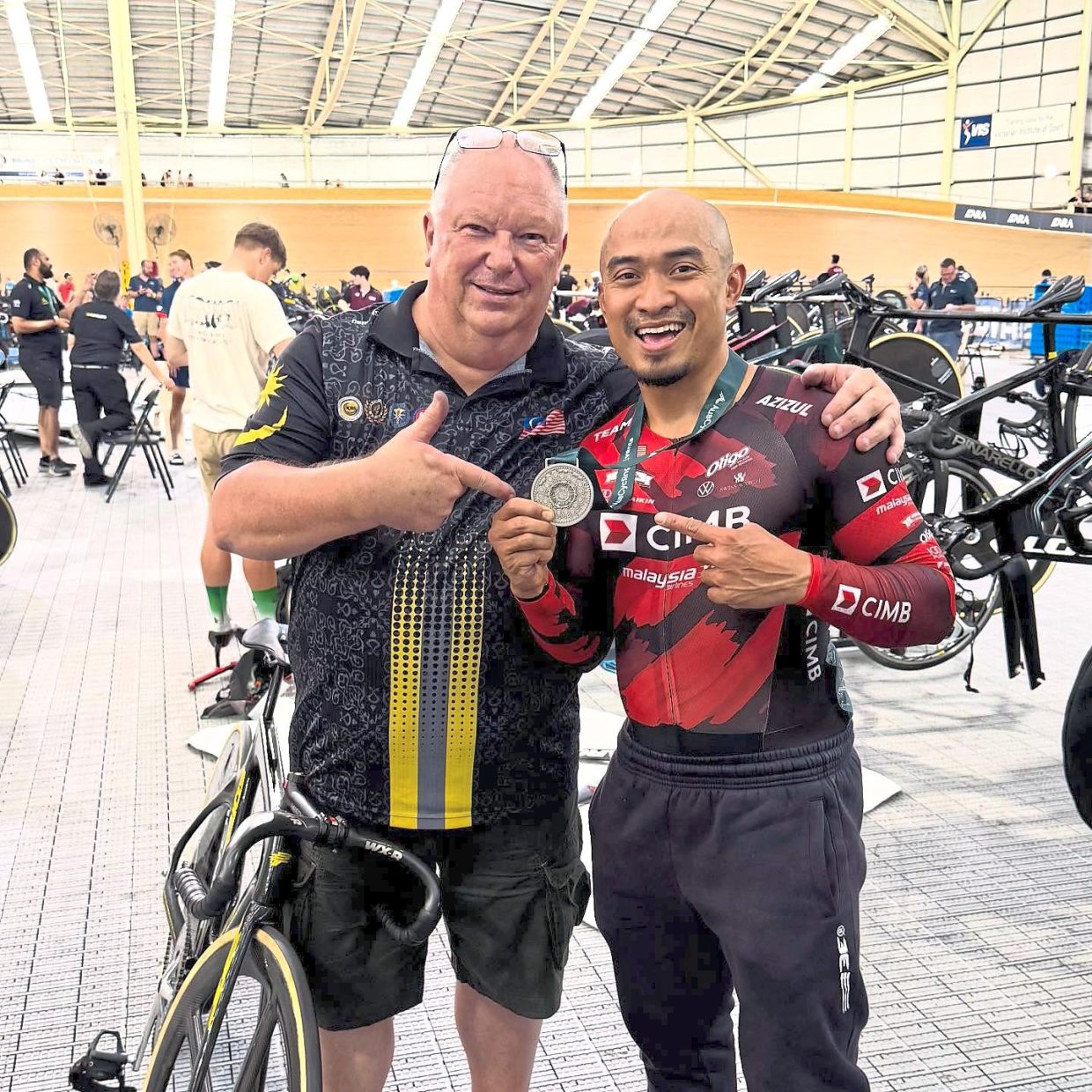
National track cyclist Azizulhasni Awang has acknowledged the risks inherent in his public defence of technical director John Beasley, recognising that his vocal support for the Australian coach could invite criticism and attempts by detractors to undermine him. The two-time Olympic medallist, however, has signalled his unwavering commitment to standing by Beasley despite these potential complications, framing his decision as rooted in principle rather than pragmatism.
Azizul's willingness to absorb personal risk reflects the contentious environment surrounding Malaysia's track cycling programme in recent months. Beasley, who has shaped the development of numerous world-class cyclists over two decades, has become the focus of public scrutiny and criticism from various quarters within the cycling community. By choosing to defend him openly, Azizul has positioned himself at the intersection of a broader institutional debate about coaching and programme management.
The two-time Olympic medallist articulated clearly that he understands the calculus of his position. Should Malaysia's performance at the upcoming Commonwealth Games and Asian Games fall short of expectations, he anticipates that media and public attention may shift toward scrutinising his own credibility and decisions. He stated unequivocally that he expects such scenarios and views them as inevitable consequences of taking a principled stance on a contentious matter.
What distinguishes Azizul's approach is his grounding of this decision in faith rather than strategic calculation. He invoked Islamic concepts of divine will, emphasising that his confidence stems from a belief that outcomes rest ultimately with Allah. This framing reveals how the athlete reconciles his acknowledgement of real professional risks with his conviction that he is acting ethically and with integrity.
For Azizul, Beasley's track record speaks for itself. The technical director's contributions to Malaysian track cycling over twenty years have been substantial, producing multiple world-class athletes and elevating the nation's standing in international competition. From Azizul's perspective, public silence in the face of criticism would constitute a betrayal of someone who has invested decades in developing the programme and mentoring its athletes.
The Malaysia National Cycling Federation has taken formal action in response to the criticism directed at Beasley. Federation president Datuk Amarjit Singh Gill announced last week that show-cause letters would be issued to two individuals affiliated with state cycling organisations. These individuals had publicly criticised Beasley without following proper administrative and internal complaint procedures, which the federation determined had damaged its institutional reputation.
This disciplinary measure underscores the federation's position that internal disagreements should be resolved through official channels rather than through public campaigns. By issuing show-cause letters, the MNCF has signalled that it will not tolerate efforts to undermine its leadership or senior technical staff through media commentary or public statements that circumvent established governance structures.
Azizul's statement reveals a tension within Malaysian sports governance between accountability and institutional loyalty. Athletes occupying his position—holders of major international medals with substantial credibility and media platforms—face genuine dilemmas when internal disputes become public. His choice to speak publicly reflects a calculation that transparency and defence of colleagues outweigh the risks of being perceived as defending the status quo.
The immediate context for these tensions involves preparation for two major tournaments: the Commonwealth Games and the Asian Games. Both events represent critical opportunities for Malaysia to validate its investment in track cycling programmes and for its athletes to demonstrate competitive readiness on continental and regional stages. Performance at these competitions will inevitably inform public and media judgement about whether current coaching, technical direction, and programme management are effective.
Azizul has emphasised that his primary focus remains ensuring smooth preparations for these competitions. He has appealed for unity and collective support from all stakeholders—administrators, coaches, athletes, and affiliated organisations—arguing that public disputes and institutional infighting undermine the coherence required for competitive success. This appeal implicitly challenges those who have criticised Beasley to prioritise team performance over individual grievances.
The situation reflects broader questions about coach accountability, institutional transparency, and the proper channels for resolving disputes within sports federations. While Azizul defends Beasley's tenure and contributions, legitimate concerns about coaching approaches or programme direction might exist among other athletes or administrators. The federation's insistence on internal resolution through proper channels may prevent legitimate critiques from being aired openly.
Moving forward, Malaysia's cycling programme faces a critical period. The credibility of both Beasley and the federation's leadership will be tested through competitive performance. If the Commonwealth Games and Asian Games produce disappointing results, the debate about coaching direction and technical leadership will inevitably resurface, potentially vindicating those who raised concerns and challenging Azizul's public defence.
Ultimately, Azizul's stance represents a calculated expression of loyalty and conviction. He has accepted that defending Beasley may subject him to future criticism should results disappoint, but he has framed this acceptance as preferable to remaining silent about someone he believes has contributed substantially to Malaysian cycling. This principled position, grounded in both pragmatic assessment and faith-based conviction, demonstrates the complex pressures facing elite athletes when institutional disputes become public.