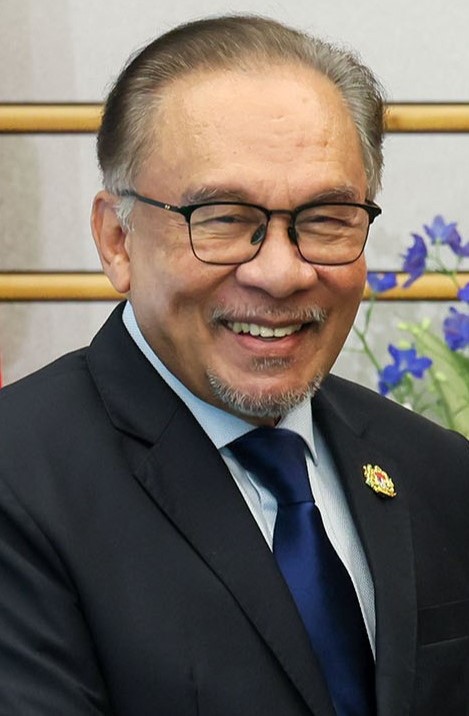
Azmin Ali, the secretary-general of Bersatu, has attracted significant attention from political analysts as a potential figurehead who could facilitate dialogue and eventual reconciliation between Bersatu and the broader Pakatan Harapan coalition—but only if the party's current leadership undergoes substantial change. The assessment reflects growing recognition of Azmin's unique position straddling two major political camps and his demonstrated ability to navigate Malaysia's increasingly fractious opposition landscape.
Analysts citing Azmin's credentials point specifically to his ten-year tenure as deputy president of Parti Keadilan Rakyat, one of Pakatan Harapan's founding members. During this extended period within PKR's upper echelon, Azmin accumulated significant relationships, institutional knowledge, and political capital that remain relevant even after his departure from that party. The depth of his engagement with PKR's organisational structure and personnel networks distinguishes him from other Bersatu figures who lack comparable roots within the coalition.
Bersatu itself emerged from internal PKR factionalism, and Azmin's migration from his former party to this newer vehicle created complex political reverberations that continue reshaping Malaysia's opposition landscape. His willingness to shift allegiances revealed fissures within Pakatan Harapan that extended well beyond personal ambition, touching on ideological differences, generational tensions, and competing visions for opposition renewal. Understanding Azmin as a bridge-builder requires acknowledging that he simultaneously represents both continuity with Pakatan Harapan's traditions and departure from its institutional arrangements.
The scenario in which Azmin assumes greater prominence within Bersatu—contingent upon changes in current party leadership under Muhyiddin Yassin—would theoretically reposition Bersatu as a negotiating partner rather than a rival force to Pakatan Harapan. Such a reconfiguration carries profound implications for Malaysian coalition politics, particularly given Bersatu's role as a kingmaker in previous parliamentary configurations. The party's seventeen parliamentary seats command strategic importance that neither major coalition can dismiss, making the nature of Bersatu's political alignment a persistent consideration for both Pakatan Harapan and other opposition groups.
Muhyiddin's current leadership of Bersatu has been marked by independent positioning that sometimes creates tension with Pakatan Harapan's collective direction. Analysts suggest that different leadership within Bersatu—particularly someone with Azmin's institutional connections—might generate different operational priorities. However, this analysis remains speculative, as Muhyiddin currently maintains firm control over party mechanisms and shows no indication of voluntary relinquishment of authority.
The plausibility of such realignment scenarios has attracted sustained attention because Malaysian opposition coalitions have historically experienced volatility stemming from leadership disputes, personality conflicts, and strategic disagreements. Pakatan Harapan itself fractured substantially between 2020 and 2021, demonstrating how internal contradictions can overwhelm nominal coalition agreements. Observers tracking opposition dynamics view Azmin's potential as a stabilising force less because of revolutionary political visions and more because of his established relationships across factional divides.
For Southeast Asian readers monitoring Malaysian politics, Azmin's position reflects broader regional trends in opposition coalitional politics. The rise of personality-driven disputes and the difficulty of maintaining unified opposition fronts extend well beyond Malaysia's borders. Indonesia, Thailand, and the Philippines have all witnessed opposition fragmentation stemming from analogous leadership questions. Azmin's situation illustrates how individual political figures often serve as either adhesive or divisive elements depending on circumstances and perceptions.
Azmin's economic portfolios and development advocacy during his time with PKR positioned him as a pragmatist focused on bread-and-butter governance questions rather than ideological purity. Such positioning potentially renders him attractive to various political constituencies seeking competent technocratic leadership rather than revolutionary transformation. This orientation may explain why analysts consider him a plausible coalition bridge—he represents a less ideologically polarising alternative than figures associated with more radical reform agendas.
The timing of such speculation becomes relevant within Malaysia's current political cycle. With general elections potentially emerging within the next eighteen months and coalition configurations remaining fluid, strategic positioning becomes increasingly important for opposition actors. Bersatu's members and supporters watch international developments and Muhyiddin's ongoing health conditions with quiet attentiveness, recognising that unforeseen circumstances could accelerate succession discussions.
Critically, Azmin's effectiveness as a bridging figure depends substantially on his personal agency and willingness to actively facilitate reconciliation. Past statements suggest his relationship with certain Pakatan Harapan figures remains complicated, and trust—essential for coalition-building—cannot be automatically assumed. His track record demonstrates both political acumen and controversial decision-making that generates legitimate skepticism among some opposition actors.
Ultimately, analysts assessing Azmin's potential contribution to opposition realignment must acknowledge genuine uncertainty. Political trajectories depend on choices not yet made, circumstances not yet materialised, and calculations not yet executed. Nevertheless, his unique biographical position as both PKR alumnus and Bersatu functionary does render him a figure of genuine political significance within Malaysia's opposition calculations—one whose future moves merit continued observation from observers tracking the country's evolving political equilibrium.