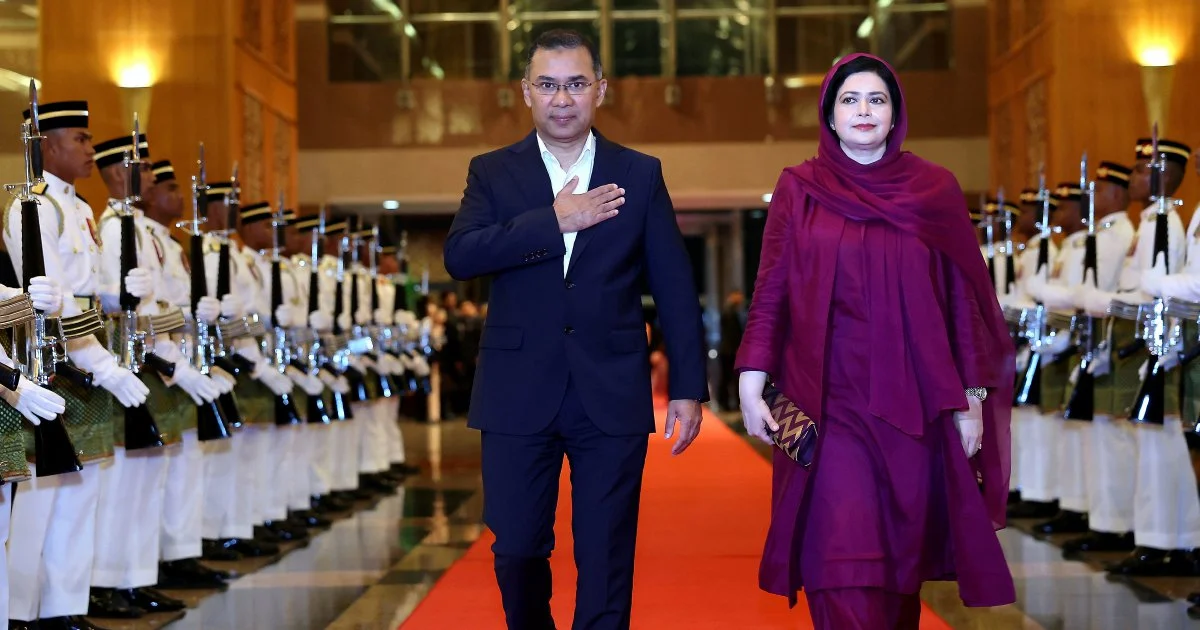
Bangladesh Prime Minister Tarique Rahman has issued a targeted invitation to Malaysia's business community, urging companies to seize emerging opportunities within his country's gradually opening investment landscape. The appeal underscores Dhaka's strategic effort to diversify foreign direct investment sources and strengthen economic ties with key Southeast Asian trading partners.
Rahman's overture comes at a pivotal moment for Bangladesh, which is working to rehabilitate its image and establish investor confidence following a period of political turbulence. The country has undertaken structural reforms aimed at creating a more predictable regulatory environment for foreign enterprises, signalling a fundamental shift in how it approaches international capital inflows. For Malaysian companies, particularly those seeking to expand beyond established markets or diversify their regional portfolios, Bangladesh presents a relatively untapped market with significant growth potential.
Malaysia has historically maintained strong diplomatic and economic relations with Bangladesh, though bilateral business flows have not reached their full potential compared to engagements with other South Asian nations. The invitation from Tarique Rahman represents an official push to rebalance this equation, with Dhaka emphasising that conditions have materially improved for foreign investors willing to establish operations in the country. This messaging is particularly relevant for Malaysian manufacturers, service providers, and financial institutions seeking to hedge against concentration risk in existing markets.
Bangladesh's appeal to Malaysian investors reflects broader recognition within Dhaka that attracting regional capital requires direct, high-level outreach. Rather than relying on general business promotion channels, the Prime Minister's personal engagement signals the seriousness with which the government views Malaysian partnership. This approach has proven effective in other Southeast Asian contexts, where executive-level encouragement often catalyses corporate interest and feasibility studies among private sector decision-makers.
The improving business ecosystem that Tarique Rahman referenced encompasses several concrete dimensions. Recent years have seen Bangladesh investing substantially in infrastructure modernisation, particularly in port facilities, telecommunications, and digital connectivity. These foundational improvements reduce operational friction for foreign companies and enhance the efficiency of supply chain networks that extend throughout South Asia and beyond. For Malaysian firms already operating in neighbouring India or Pakistan, Bangladesh increasingly represents a logical extension of regional strategy.
Specific sectors appear particularly attractive to Malaysian investors based on Bangladesh's comparative advantages and current development trajectory. The country's growing textile and apparel manufacturing base offers potential joint venture opportunities and competitive sourcing alternatives to established supply chains. Additionally, Bangladesh's rapidly expanding telecommunications and digital services sectors present openings for Malaysian technology firms seeking to serve a population exceeding 170 million people. The pharmaceutical industry, where Bangladesh has emerged as a generic medicine powerhouse, may also interest Malaysian healthcare and biotechnology enterprises.
Investor concerns about Bangladesh have historically centred on perceived governance challenges, infrastructure inadequacies, and labour relations complexity. The government's ongoing institutional reforms aim directly at these pain points, with visible improvements in bureaucratic efficiency and dispute resolution mechanisms. While Bangladesh remains a developing market requiring careful due diligence from foreign investors, the trajectory of change suggests decreasing barriers to establishing viable business operations. Malaysian companies accustomed to navigating complex emerging markets may find their operational experience particularly valuable in Bangladesh's context.
The timing of Rahman's outreach coincides with broader regional economic realignment in South Asia. With Myanmar's political situation remaining unstable and Pakistan facing persistent macroeconomic challenges, Bangladesh has positioned itself as a comparatively stable destination for multinational investment. For Malaysian investors already considering South Asian expansion, Bangladesh now offers administrative continuity and political leadership openly committed to attracting foreign capital. This stability advantage, relative to regional alternatives, enhances Bangladesh's competitive positioning for attracting quality investments.
Financial institutions and development banks have increasingly recognised Bangladesh's medium-term growth potential, with multiple international entities upgrading their investment postures in the country. This broader capital market validation encourages private sector participation by reducing perceived sovereign and systemic risk. Malaysian investors can therefore piggyback on this institutional confidence while conducting their own independent assessments of specific opportunities and sectoral dynamics.
The practical mechanisms for Malaysian businesses exploring Bangladesh opportunities have also improved. Both countries maintain active chambers of commerce and bilateral business councils capable of facilitating introductions and feasibility discussions. Government investment promotion agencies in Dhaka have become increasingly sophisticated in identifying opportunities matching foreign investor profiles, reducing the information asymmetries that historically deterred Malaysian corporate exploration of the market.
Looking forward, substantial untapped potential exists for Malaysian-Bangladesh economic integration across multiple value chains. Construction and infrastructure development sectors, where Malaysian firms hold considerable expertise, align well with Bangladesh's ongoing modernisation agenda. Similarly, professional services including accounting, legal consultation, and financial advisory present growth opportunities as Bangladesh's economy becomes increasingly complex and internationally oriented.
Successful Malaysian investment in Bangladesh would strengthen bilateral relations beyond commercial dimensions, contributing to broader Southeast Asian-South Asian connectivity objectives. The investments would create mutual dependencies and shared economic interests that reinforce diplomatic cooperation. For Malaysia, increasing exposure to Bangladesh represents prudent portfolio diversification at a time when traditional markets face various structural headwinds.