%22%2F%3E%3C%2Fpattern%3E%3C%2Fdefs%3E%3Crect%20width%3D%22100%25%22%20height%3D%22100%25%22%20fill%3D%22url(%23ph4xv1kg)%22%2F%3E%3Crect%20width%3D%22100%25%22%20height%3D%22100%25%22%20fill%3D%22url(%23ph4xv1kp)%22%2F%3E%3Ctext%20x%3D%2250%25%22%20y%3D%2250%25%22%20text-anchor%3D%22middle%22%20dominant-baseline%3D%22central%22%20fill%3D%22rgba(255%2C255%2C255%2C0.95)%22%20font-family%3D%22Georgia%2C%20'Times%20New%20Roman'%2C%20serif%22%20font-weight%3D%22700%22%20font-size%3D%22136%22%20letter-spacing%3D%22-0.02em%22%3EBangladesh%3C%2Ftext%3E%3C%2Fsvg%3E)
Bangladesh Prime Minister Tarique Rahman departed from Kuala Lumpur International Airport on Saturday evening, concluding a significant two-day official visit to Malaysia that centred on deepening bilateral relations across multiple sectors. His departure from the Bunga Raya Complex at KLIA at 5 pm was marked by a formal ceremonial send-off involving a 28-member guard of honour from the First Battalion of the Royal Ranger Regiment, underscoring the diplomatic weight both nations have placed on strengthening their partnership. Dr Zulkifli Hasan, Minister in the Prime Minister's Department (Religious Affairs), represented Malaysia in bidding farewell to the Bangladeshi leader and his entourage, which included his spouse Dr Zubaida Rahman.
The visit marks Tarique's first official bilateral trip abroad since assuming office in February 2026, positioning Malaysia as a key early diplomatic destination for the new Bangladesh administration. The timing reflects Dhaka's strategic interest in solidifying relationships within Southeast Asia and the broader Indo-Pacific region at a moment when regional dynamics are shifting. Rahman's decision to travel to China immediately after Malaysia demonstrates Bangladesh's balancing approach to great power relations, seeking partnerships with both regional and global players simultaneously.
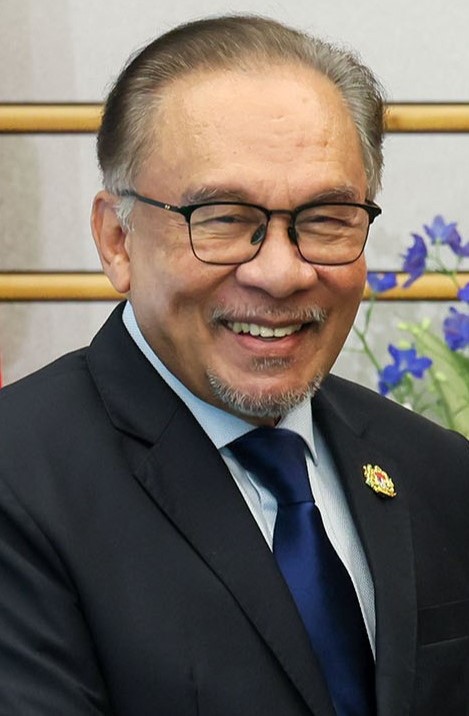
On his final day in Kuala Lumpur, Tarique engaged in substantive bilateral discussions with Prime Minister Datuk Seri Anwar Ibrahim at the Perdana Putra Complex, where both leaders evaluated pressing regional security concerns and economic opportunities. The agenda extended beyond traditional trade matters to encompass geopolitical issues where Kuala Lumpur and Dhaka have demonstrated alignment, particularly regarding Middle Eastern developments and humanitarian crises. The breadth of topics discussed signals that Malaysian and Bangladeshi policymakers view their relationship as extending into spheres of strategic significance beyond commercial exchange.
A major outcome of the visit was the signing of a Memorandum of Understanding on Cultural Cooperation, alongside two Exchanges of Notes addressing Counter-Terrorism Research and Investment Promotion and Facilitation. These agreements establish frameworks for enhanced institutional cooperation in domains where both countries face shared challenges. The counter-terrorism component is particularly significant given Bangladesh's historical struggles with extremist movements and the transnational nature of contemporary security threats. Malaysia's expertise in managing similar pressures and its position as a financial hub make it a valuable partner in developing research capacity and improving investment security protocols.
Both governments committed to pursuing a fast-track free trade agreement designed to accelerate economic integration beyond existing tariff frameworks. This acceleration represents an upgrade from previous discussions and indicates mutual recognition that traditional bilateral trade mechanisms may no longer move at a pace matching regional economic realities. The emphasis on fast-tracking suggests both sides view the relationship as strategically important enough to warrant expedited negotiation timelines compared with standard multilateral processes. Alongside the FTA push, Bangladesh and Malaysia identified energy and the halal industry as priority cooperation sectors, reflecting Malaysia's advanced position in halal certification and Bangladesh's enormous halal market potential.
Tarique used the platform to advance Bangladesh's broader regional ambitions, reiterating his nation's aspiration to achieve ASEAN Sectoral Dialogue Partner status. This elevation would give Bangladesh formal institutional voice in Southeast Asian decision-making structures and grant access to ASEAN mechanisms for addressing pressing challenges like the Rohingya crisis. Bangladesh's interest in joining the Regional Comprehensive Economic Partnership (RCEP) addresses the country's long-term trade integration strategy in an era of Asian regionalisation. Malaysia's support proves critical, as RCEP membership decisions require consensus among existing participants. The framework offers Bangladesh access to a 10-member bloc with combined GDP exceeding US$26 trillion and would reduce tariff barriers across multiple sectors where Bangladeshi exporters operate.
On Palestinian and Middle Eastern issues, both leaders articulated shared positions reflecting their commitment to supporting the Palestinian cause and addressing the humanitarian crisis in Gaza. This convergence underscores how Muslim-majority nations are coordinating diplomatic stances on issues affecting Muslim populations globally. The discussion also encompassed efforts to foster stability in the Iran-Gulf region, an area where Malaysia has pursued balanced diplomatic engagement. Such alignment on international issues strengthens the bilateral relationship by extending cooperation beyond commercial matters into the realm of strategic interests and values-based foreign policy.
The Rohingya refugee crisis emerged as a focal point for intended multilateral action through ASEAN mechanisms. Both governments recognised that enduring solutions require engagement with Myanmar authorities and coordinated regional pressure. Malaysia, hosting approximately 180,000 Rohingya refugees, faces acute humanitarian and social pressures from displacement populations, making the issue an urgent domestic concern alongside regional responsibility. Bangladesh, sheltering roughly 900,000 Rohingya in Cox's Bazar camps, bears an even heavier burden. Joint commitment through ASEAN platforms offers the most viable avenue for coordinated advocacy toward Myanmar's military government.
The bilateral economic relationship exhibits substantial momentum. In 2025, total merchandise trade reached RM12.18 billion (US$2.84 billion), positioning Bangladesh as Malaysia's 28th-largest trading partner globally and its second-largest partner within South Asia after India. Malaysian exports to Bangladesh totalled RM10.08 billion (US$2.35 billion), dominated by petroleum products that supply Bangladesh's energy-intensive manufacturing and power sectors. This energy dependency creates natural economic linkages that can be leveraged for deeper cooperation in renewable energy transition and liquefied natural gas security. Malaysian imports from Bangladesh amounted to RM2.10 billion (US$500 million), primarily comprising textiles, apparel and footwear that reflect Bangladesh's dominance in global ready-made garment manufacturing.
The merchandise trade imbalance, with Malaysian exports exceeding imports by roughly five-fold, suggests untapped potential for expanding Bangladeshi product categories entering the Malaysian market. Enhanced cooperation in sectors like processed foods, light manufacturing and information technology services could rebalance trade flows while creating employment in Bangladesh. The fast-track FTA initiative addresses precisely this opportunity by identifying sectors where both nations can achieve greater complementarity. For Malaysia, deepening ties with Bangladesh provides diversification of South Asian partnerships beyond the India relationship and access to a manufacturing base of 170 million people.
This visit contextualises broader Southeast Asian diplomatic patterns, wherein Bangladesh increasingly positions itself as a significant external actor meriting bilateral engagement rather than merely a source of migrant labour or humanitarian challenges. Tarique's tour suggests Bangladesh's new administration intends to elevate the country's diplomatic profile and secure economic partnerships that support development ambitions. Malaysia's receptiveness to such engagement indicates recognition that Bangladesh's internal stability and external orientation carry implications for regional prosperity and security architecture.