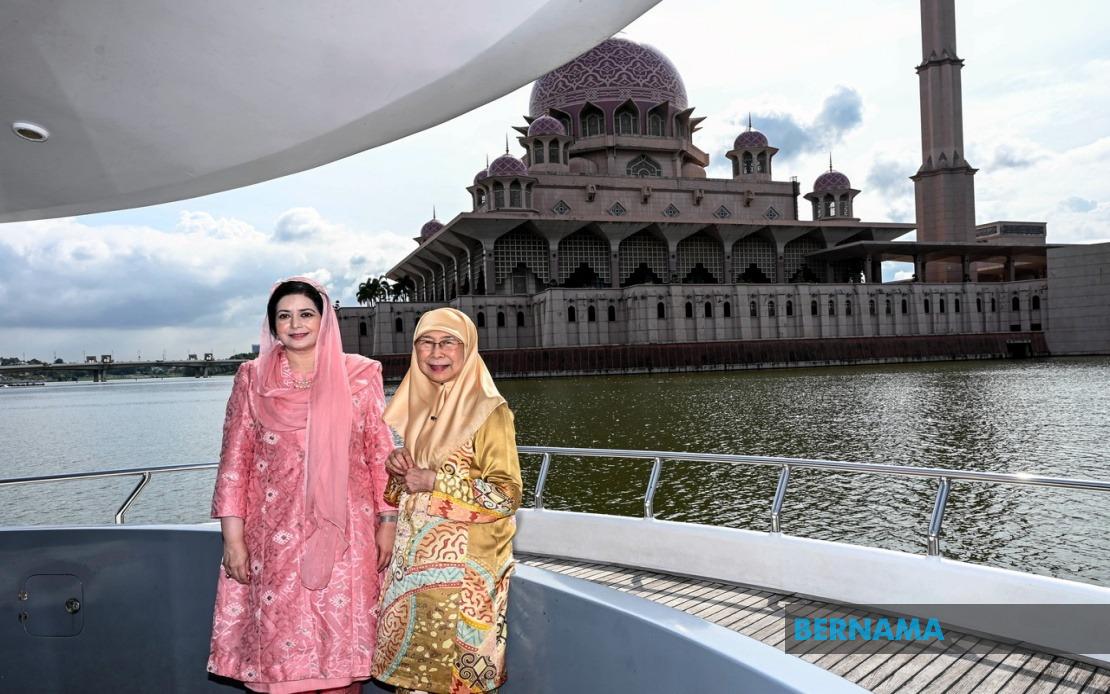
Dr Zubaida Rahman, spouse of newly appointed Bangladesh Prime Minister Tarique Rahman, experienced the architectural splendour of Malaysia's federal capital during a morning cruise on Putrajaya Lake on Saturday. Departing at 9:30 am, she embarked on the waterborne tour to appreciate the prominent structures and natural landscape that define the carefully planned administrative hub, situated roughly 25 kilometres south of Kuala Lumpur. The leisurely boat journey showcased the distinctive character of Putrajaya's waterfront and skyline, offering visitors a unique vantage point unavailable from land-based observation points.
Receiving the distinguished guest were two prominent Malaysian figures: Datuk Seri Dr Wan Azizah Wan Ismail, consort of Prime Minister Datuk Seri Anwar Ibrahim, and Hannah Yeoh, the Minister in the Prime Minister's Department with portfolio responsibility for the Federal Territories. Their presence underscored the significance Malaysia attaches to its relationship with Bangladesh and the reciprocal courtesies extended during high-level diplomatic engagements. Throughout approximately sixty minutes of the cruise, Dr Zubaida maintained cordial conversation with her Malaysian hosts while enjoying unobstructed perspectives of Putrajaya's principal landmarks and the surrounding landscape.
The lakeside excursion forms part of a broader state visit by the Bangladesh delegation, which touched down in Malaysia on Sunday evening and is scheduled to conclude after two days. Prime Minister Tarique Rahman accompanied his wife, with the journey representing his inaugural official bilateral mission since his administration commenced operations in February 2026. The timing of this inaugural foreign visit to Malaysia carries symbolic weight, signalling the importance Bangladesh's leadership places on strengthening relationships with Southeast Asian neighbours and consolidating established economic partnerships.
Official statements characterise the visit as fundamentally aimed at deepening already robust diplomatic and economic connections between Islamabad and Dhaka, whilst simultaneously identifying fresh avenues for collaborative initiatives spanning sectors of mutual advantage. The agenda encompasses discussions on trade expansion, investment opportunities, and potential cooperation frameworks addressing contemporary regional challenges. Bangladesh's selection of Malaysia as the destination for this initial bilateral trip demonstrates the strategic priority Dhaka assigns to the Malaysian relationship within its broader foreign policy architecture.
The economic dimensions of Bangladesh-Malaysia relations provide substantial context for understanding the strategic importance of such high-level exchanges. Bangladesh currently ranks as Malaysia's 28th-largest trading partner globally, whilst simultaneously occupying a prominent position within South Asia's commercial hierarchy. The bilateral trade relationship generated a combined value of RM12.18 billion, positioning Bangladesh as Malaysia's second-most significant commercial partner within the South Asian region, superseded only by India in terms of aggregate transaction volumes. These figures underscore the depth of existing commercial integration and the potential for further expansion through deliberate policy coordination and private-sector engagement.
The waterside setting of Saturday's diplomatic engagement carried its own narrative significance. Putrajaya, conceived as a purpose-built administrative centre reflecting contemporary urban planning principles, presents a carefully curated image of Malaysian governance and development aspirations. The lake cruise experience provided an intimate, informal setting for relationship-building between the delegations, allowing for the kind of personal connection that frequently catalyses productive diplomatic discussions. Such environment-based engagement, distinct from formal conference room negotiations, often generates the rapport necessary for addressing complex bilateral matters with flexibility and creative problem-solving.
For Malaysian observers, the visit reinforces the nation's continuing relevance as a preferred destination for Southeast Asian diplomatic initiatives and state visits. The welcome extended to the Bangladesh Premier and his delegation, coordinated through the Prime Minister's office and involving the first lady's personal participation, reflects the diplomatic weight Malaysia assigns to South Asian partnerships. Such gestures, whilst ceremonial in appearance, communicate substantive messages regarding bilateral importance and governmental commitment to relationship maintenance and development.
The visit also contextualises broader regional dynamics within South Asia and Southeast Asia's interconnected political economy. Bangladesh, as a nation of approximately 170 million inhabitants and a significant manufacturing hub, represents a consequential actor in regional affairs. Its commercial relationships with Southeast Asian economies like Malaysia contribute to supply-chain integration and economic interdependence that stabilises regional political relations. The emphasis placed on bilateral ties through high-level visits reflects recognition that sustainable regional stability emerges from diversified economic engagement and sustained diplomatic dialogue.
Looking forward, the outcomes of the Bangladesh delegation's Malaysia visit will likely determine the trajectory of bilateral cooperation over the coming years. The combination of formal negotiations alongside informal diplomatic courtesies, exemplified by Saturday's lakeside engagement, creates conditions for comprehensive relationship review and renewal. Malaysian stakeholders from both governmental and private sectors will be monitoring the visit's official communiqués and announcements regarding expanded trade frameworks, investment commitments, or sector-specific collaboration initiatives. The symbolic weight of the Bangladesh PM's inaugural bilateral journey abroad, directed toward Malaysia, positions the relationship for potential elevation across multiple dimensions of engagement.

