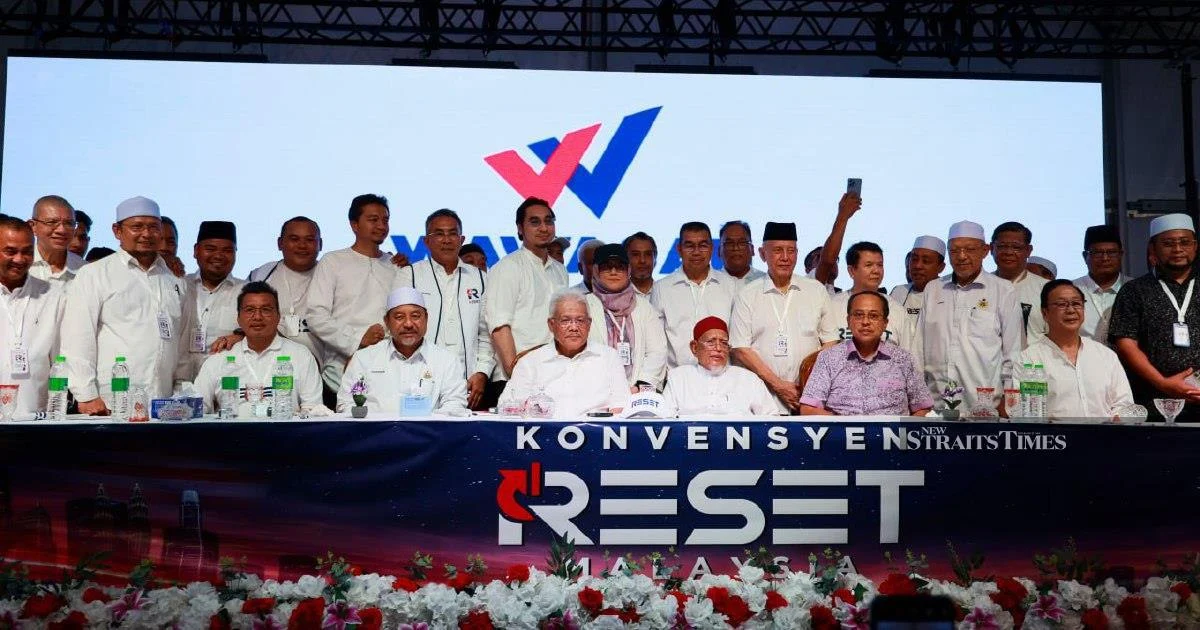
Perikatan Nasional descended into political uncertainty when component party Bersatu publicly questioned the procedural legitimacy of an emergency Supreme Council gathering held by the coalition leadership, threatening to expose fractures within the opposition alliance at a critical juncture in Malaysia's political landscape.
The controversy centres on whether PN chairman Datuk Seri Muhammad Khaled Nordin had the authority to unilaterally convene an emergency meeting of the Supreme Council on Monday night without following established protocols within the coalition framework. Bersatu's challenge strikes at the heart of governance within PN, suggesting that the rapid admission of Wawasan Osman—a splinter faction from Umno led by former agriculture minister Datuk Seri Wawasan Osman—may have circumvented necessary consultative processes that member parties expect to be honoured.
The admission of Wawasan Osman into PN represents a significant strategic manoeuvre for the opposition alliance, potentially reshaping the competitive dynamics in key electoral constituencies and offering additional parliamentary representation. However, the procedural shortcut taken by the PN chairman has created immediate friction, with Bersatu apparently not afforded adequate opportunity to deliberate on such a consequential decision before it was ratified. This suggests concerns extend beyond mere administrative oversight to encompass substantive questions about coalition direction and the balance of power among member parties.
Bersatu's public airing of grievances indicates growing tensions within PN that had previously remained largely contained. As one of the coalition's founding and most influential components, Bersatu's willingness to challenge the chairman publicly demonstrates either genuine procedural concerns or an attempt to assert its institutional weight within the partnership. The timing of this protest is significant, occurring when the opposition alliance should be presenting unified messaging ahead of anticipated electoral activities and parliamentary sessions.
The legality question raised by Bersatu hinges on whether PN's constitutional documents require advance notice, a defined quorum, or consensus among member parties before emergency meetings can be convened. Such technical provisions, while appearing arcane, carry substantial political weight in determining whose voice matters most in coalition decision-making. If Bersatu can demonstrate that proper procedures were violated, it strengthens arguments that the Wawasan admission lacks full legitimacy within PN structures, potentially complicating the newcomer's integration into the coalition machinery.
Wawasan Osman's defection from Umno and subsequent coalition with PN represents the type of political realignment that has characterised Malaysian politics in recent years, reflecting the fluid nature of opposition-versus-government dynamics. The party brings representation from constituencies where Umno had maintained traditional strongholds, potentially offering PN a pathway to expand its electoral footprint. For PN strategists, the speed of formalising this arrangement likely reflected urgency to capitalise on the opening before Wawasan Osman faced pressure to reconcile with its former party or explore other political options.
Yet this strategic imperative collided with institutional norms that coalition partners have relied upon to protect their collective interests. Bersatu's response underscores how opposition alliances remain fragile constructs, held together by explicit and implicit understandings about decision-making processes. When larger or more senior figures within such coalitions act unilaterally, even toward objectives that might benefit the alliance overall, smaller or newer components may fear being sidelined in future determinations affecting their political survival.
The ramifications of this dispute extend beyond internal PN dynamics. Malaysia's broader political opposition has struggled to maintain coherent, disciplined alliances capable of mounting sustained electoral challenges to the government. Public disputes over procedural legitimacy can undermine the credibility that opposition coalitions depend upon when seeking voter confidence. The Bersatu challenge thus risks damaging PN's projection of competent governance at precisely the moment when opposition parties need to demonstrate they offer viable alternatives to existing power structures.
Moreover, this episode provides insight into how Malaysia's coalition politics functions beneath the surface. While formal announcements speak of unity and shared vision, the reality involves constant negotiation over inclusion, resource allocation, and decision-making authority. Bersatu's willingness to contest the chairman's actions suggests it possesses sufficient leverage to raise such questions without fear of immediate expulsion, indicating the coalition remains dependent on maintaining all significant components.
Moving forward, PN leadership faces pressure to either justify the emergency meeting's procedural propriety or address Bersatu's concerns through remedial steps that might include formal re-ratification with proper consultation. How the coalition resolves this internal dispute will signal whether PN can function as an effective governing alternative, or whether procedural irregularities and unresolved tensions will continue to plague its operations. For Malaysian voters evaluating opposition credibility, such episodes matter considerably in assessing whether alternative coalitions can deliver the stability and accountability that they promise.