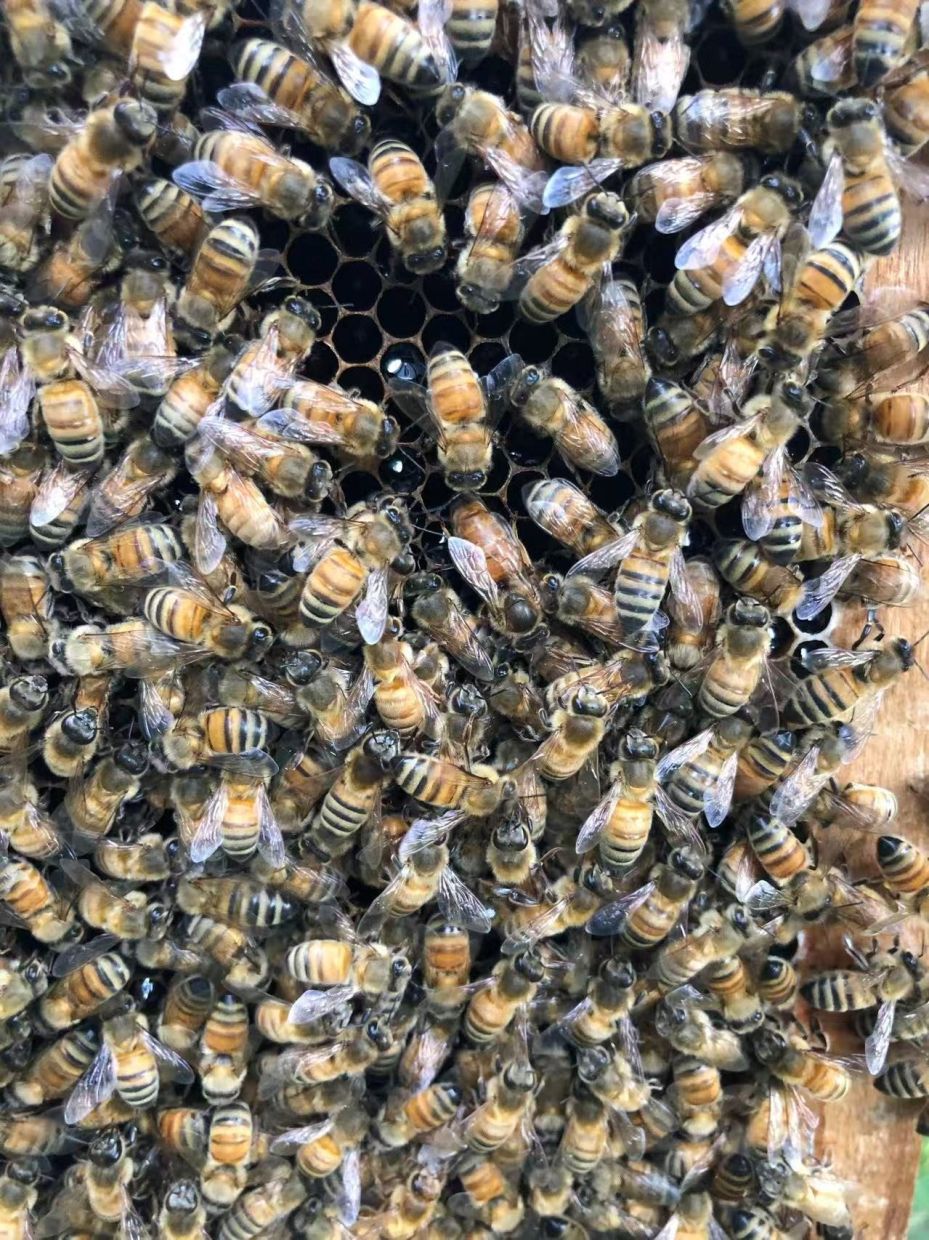
Honeybee colonies have long mystified observers with their ability to transform ordinary larvae into queens destined to rule the hive. Researchers at the Institute of Apicultural Research at the Chinese Academy of Agricultural Sciences have now revealed that this transformation depends on far more than a premium diet—the architectural engineering of the chamber itself plays an equally vital role in determining a bee's royal fate.
For generations, scientists attributed queen development entirely to royal jelly, the nutrient-rich secretion that worker bees feed to chosen larvae. This understanding seemed logical and complete: select a larva, feed it special food, and it becomes a queen. Yet a study published in Nature demonstrates this explanation was only half the story. The research, led by Kai Wang and Boris Baer, shows that the wax structure surrounding the developing larva matters profoundly. As Wang noted with revealing simplicity: "A royal diet means nothing without a royal palace."
The western honeybee, the subject of this investigation, constructs three distinct types of chambers within its hexagonal comb. Worker bees live and develop in ordinary cells, food is stored in others, but future queens occupy uniquely engineered structures resembling suspended peanut shells that hang downward from the comb. Beekeepers have observed these distinctive chambers for centuries as indicators of swarming or queen replacement, typically viewing them as passive containers. The new research fundamentally reframes this understanding, revealing these chambers to be sophisticated biological incubators deliberately engineered to support royal development.
The physical properties of queen cells differ markedly from standard worker cells. The wax is noticeably softer, possesses a higher melting point, and releases distinctive chemical compounds that workers are sensitive to. These characteristics are not accidental byproducts but carefully maintained features that appear to guide larval development toward queenship. The softer walls grant the developing larva greater space to expand, while the chemical composition may trigger hormonal cascades that direct biological transformation. Remarkably, larvae provided with royal jelly but placed in ordinary worker-cell wax showed significantly retarded development and substantially higher mortality rates, suggesting the sensory experience of the chamber environment is essential for survival and transformation.
The bees that construct these specialized chambers undergo temporary but dramatic physiological changes. Worker bees tasked with building queen cells elevate their thoracic temperatures to over 39 degrees Celsius, essentially running biological fevers to warm and soften the special wax to the precise consistency required. This metabolic commitment is extraordinary—these bees function as tiny living furnaces while simultaneously maintaining their regular colony duties. Wang describes them as "the ultimate multitaskers," continuing to share food with nestmates and inspect other cells while undertaking their specialized construction work. Genetic analysis reveals that these builders experience distinct shifts in gene expression, temporary alterations that enable them to process wax differently without becoming a permanent specialized caste.
What Wang found most striking was that conventional wisdom about queen-making was fundamentally incomplete. The "deeply rooted dogma" of nutritional determinism—the assumption that royal jelly alone determined queenship—required substantial revision. The study demonstrates conclusively that larvae need the complete sensory package: the taste of royal jelly combined with the smell and tactile experience of the royal chamber. Neither element alone suffices; both are necessary. This finding reshapes understanding of how colonies function as integrated biological systems where every structural element serves developmental purposes.
Yet the research raises new questions that demand investigation. Precisely which chemical scent or physical property of the wax acts as the molecular trigger telling a larva's DNA "you are the queen" remains unknown. Wang identifies this as the logical next frontier: identifying the specific chemical signature or tactile cue that orchestrates the genetic switch from worker to royal destiny. Understanding these mechanisms at the molecular level could eventually enable beekeepers to manipulate conditions artificially, improving queen production in managed colonies.
The implications extend well beyond honeybees. Wang suggests that similar principles likely operate in other social insects. Termite mounds and paper wasp nests may provide more than mere shelter, potentially playing active roles in caste development. Stingless bees, with their intricate wax architecture, may conceal comparable secrets about how physical environment guides biological development. This research opens investigations across multiple species, suggesting that architectural engineering is a overlooked dimension of social insect biology.
For beekeeping and agriculture, these findings carry substantial practical weight. Queen production stands central to modern beekeeping operations, and colony health depends directly on queen quality. Managed honeybees pollinate more than 80 major agricultural crops globally, making colony resilience economically significant. Beekeepers across the United States and other regions report troubling colony losses, threatening pollination services essential to food production. Better understanding how colonies naturally produce robust, high-quality queens could enable beekeepers to support more resilient populations through improved breeding practices and hive management.
The broader philosophical implication of this research invokes Wang's reflection on the honeybee colony as a true superorganism. Individual workers collectively shape an ordinary larva into their future mother through coordinated effort—dietary provision, architectural engineering, temperature regulation, and chemical signaling all work in concert. The colony functions not as a collection of individuals pursuing independent interests but as an integrated whole pursuing collective survival. This perspective resonates with observations of colony intelligence, where the hive solves complex problems through distributed decision-making rather than centralized command.
For Malaysian readers, these findings carry relevance to beekeeping practices and agricultural sustainability in Southeast Asia. The region's tropical climate and biodiversity support diverse bee populations, both managed and wild. Understanding the environmental and architectural factors that support healthy queen development could inform efforts to maintain or restore bee populations crucial to regional agriculture. As climate change and habitat loss threaten pollinator populations, scientific insights into what bees need to thrive—beyond simple food provision—become increasingly valuable for protecting both agricultural productivity and ecological health.