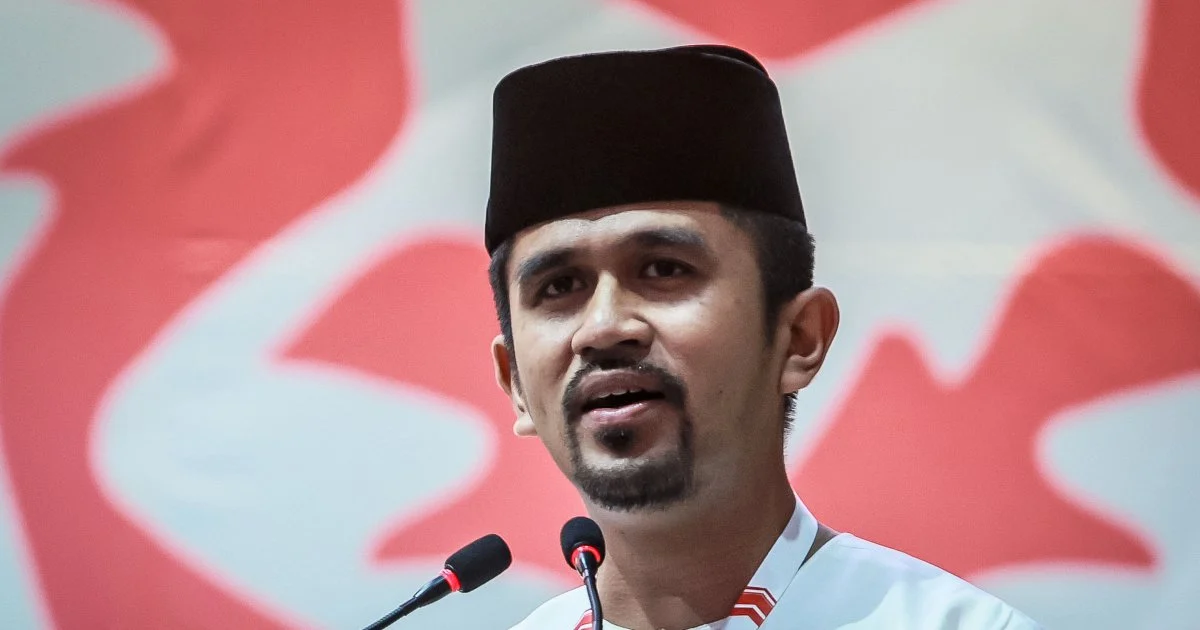
A senior Barisan Nasional official has publicly questioned why prominent Johor Pakatan Harapan leaders have not secured positions on the coalition's candidate list for the upcoming July 11 state election, signalling intensifying political jostling in the crucial southern state. Hafiz Ariffin, who serves as Umno Youth secretary-general and represents the party's youth wing, has drawn attention to what he characterises as notable absences from the PH slate, employing the apparent gaps as a strategic talking point in the run-up to the electoral contest.
The timing of Hafiz's remarks reflects the heightened political temperatures as parties finalise their campaign machinery ahead of the Johor ballot. His intervention from the BN camp suggests that opposition movements and internal party dynamics within PH have become subject matter for public commentary, with the youth leader seemingly attempting to exploit potential organisational friction or leadership disputes within the coalition. The move exemplifies how Malaysian political contests increasingly focus not merely on policy platforms but on the inner workings and cohesion of opposing camps.
Johor occupies strategic importance within Malaysia's electoral landscape, representing a significant territory where both major political coalitions maintain substantial grassroots networks. The state has historically been a BN stronghold, though recent electoral cycles have witnessed shifting voter preferences and the emergence of competitive three-cornered contests. For PH, which has expanded its presence in Johor over the past decade, candidate selection becomes a delicate balancing act between rewarding loyal party members, accommodating coalition partners, and ensuring competitive positioning in marginal constituencies.
The public questioning of PH's candidate decisions suggests that BN strategists have identified what they perceive as vulnerabilities or sources of discontent within the opposition coalition. In Malaysian politics, the absence of expected senior figures from candidate lists frequently indicates either internal party conflicts, generational transitions, or strategic recalibration. These absences can become ammunition for rival political camps, who frame them as evidence of dysfunction or lack of confidence in particular leaders or party directions.
PH's coalition structure, which brings together parties with distinct constituencies and leadership hierarchies, creates inherent complexities in seat allocation and candidate selection. Unlike BN's more hierarchical structure, PH must negotiate among Amanah, DAP, PKR, and other partners, balancing representation and ensuring that each party member feels adequately reflected in the campaign slate. The visible absence of prominent figures may indicate that such negotiations have resulted in some leaders being sidelined, whether voluntarily or otherwise.
For Johor specifically, the composition of candidate lists carries implications beyond the individual constituencies. The state election serves as a bellwether for national political sentiment, with results often influencing the calculus of federal politics and the relative positioning of coalition partners within larger political structures. A strong or disappointing performance by PH in Johor could reshape internal party dynamics at the national level, affecting future leadership contests and policy directions.
The youth wing's involvement in this critique is noteworthy, as younger party members often represent future leadership cohorts and emerging political thinking within their organisations. Umno Youth's decision to spotlight this issue suggests that the party views it as resonating with its constituency, whether in terms of concerns about opposition competence or as a means of energising BN supporters through criticism of rival camps. Youth-focused political messaging frequently emphasises dynamism, renewal, and forward momentum—values that contrasts with any perception of discord or stagnation.
Hafiz Ariffin's position as Umno Youth secretary-general places him within the party's communication apparatus and strategic communications efforts. His public statements typically reflect broader party messaging priorities rather than isolated individual commentary. The fact that he has chosen to amplify questions about PH's candidate composition suggests this forms part of a calculated BN narrative being developed for the Johor campaign, likely to be echoed through party machinery and social media channels.
For Malaysian political observers, such inter-coalition criticisms illuminate the complex calculations that underpin electoral competition. Rather than focusing narrowly on policy differences, Malaysian parties frequently engage in strategic deconstruction of rival organisations, hoping to either demoralise supporters or create openings for persuasion among swing voters who might be uncertain about opposition credibility or unity.
As the July 11 election approaches, the question of which senior PH figures appear on the ballot and in what positions will likely continue generating commentary. The BN's willingness to publicly discuss these absences reflects confidence in their own positioning in Johor, whilst also suggesting they may feel threatened by potential PH candidates or combinations. How PH responds to these critiques—whether through clarifying the strategic rationale for their candidate selections or through counter-attacks on BN's record—may shape the broader narrative trajectory of the state campaign and influence voter perceptions of both coalitions' organisational coherence and forward planning.