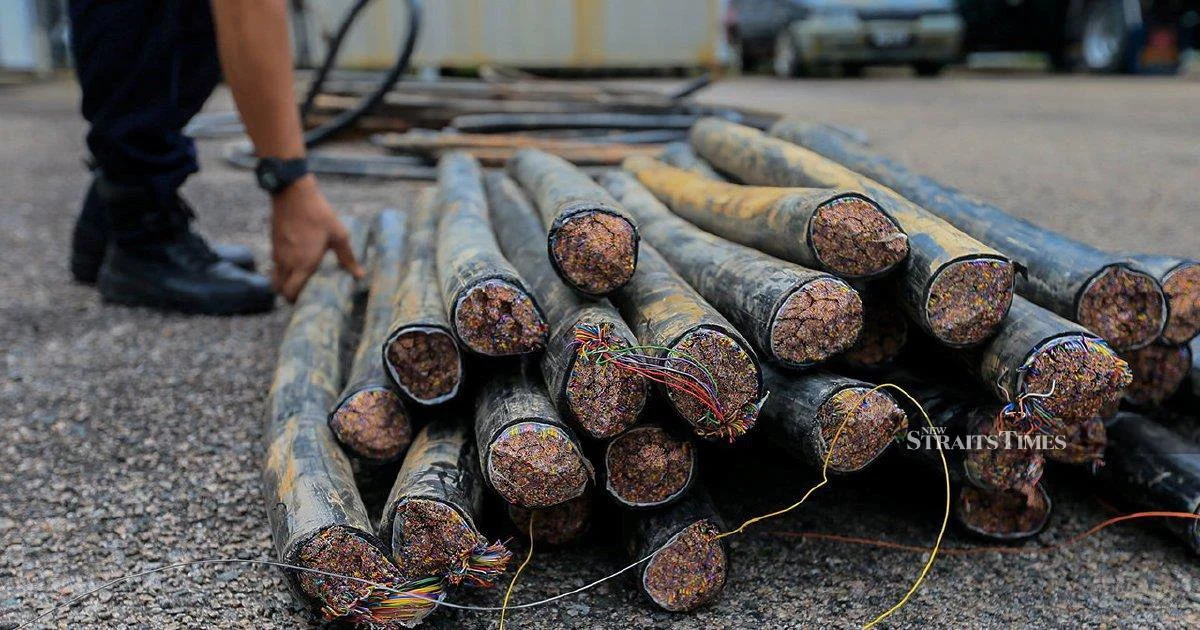
Cable theft in Kuala Lumpur has experienced a notable downturn this year, marking a substantial improvement in a crime category that has long plagued the metropolitan area's infrastructure and public services. Police statistics covering the January to May period show 71 reported cases of cable theft across the city, representing a dramatic decrease compared to the full-year total of 205 incidents recorded in 2025. The downward trajectory reflects intensified law enforcement efforts aimed at dismantling theft networks that have historically targeted telecommunications, electrical, and construction sites throughout the federal territory.
The reduction underscores the effectiveness of coordinated policing operations specifically designed to combat organised cable theft, a persistent challenge in urban Malaysia. Enforcement teams have focused on high-risk zones where thieves typically strike, including abandoned properties, industrial areas, and sections of public infrastructure undergoing maintenance or renovation. By disrupting supply chains and apprehending key perpetrators, authorities have managed to create a deterrent effect that has gradually suppressed criminal activity in this domain. The five-month performance suggests that sustained attention to this crime category can produce measurable results, encouraging police leadership to maintain current resource allocation and tactical approaches.
Arrest figures further demonstrate the police's commitment to tackling cable theft at its source. With 85 suspects already apprehended this year, law enforcement has widened its net beyond individual thieves to target organised networks involved in the commodification and resale of stolen cable. These networks often involve multiple layers of participants, from site-level perpetrators to warehouse operators and scrap metal dealers who launder the stolen materials into legitimate recycling channels. By pursuing this comprehensive strategy, police have disrupted the economic incentive structure that previously motivated theft gangs to operate with relative impunity across the city.
Cable theft carries significant economic and social consequences that extend well beyond the immediate value of stolen materials. Telecommunications infrastructure damage frequently disrupts internet and mobile phone services affecting thousands of residents and businesses, disrupting essential connectivity that modern urban life depends upon. Electrical cable theft poses acute safety risks, including electrocution hazards for both perpetrators and emergency responders, while also creating power outages that impact hospitals, schools, and commercial establishments. In construction and development projects, theft of cables and related materials drives up project costs and delays completion timelines, ultimately translating into higher housing prices and reduced economic efficiency across the sector.
The geographic concentration of cable theft in Kuala Lumpur reflects broader patterns observed across Southeast Asian capitals, where rapid urbanisation and dense infrastructure networks create both opportunities and vulnerabilities for organised theft operations. The federal territory's status as Malaysia's commercial and administrative hub means it possesses extensive networks of valuable cables serving financial institutions, government offices, hospitals, and residential complexes. Thieves typically operate under cover of darkness or during periods of reduced surveillance, often targeting sites where security presence is minimal or where infrastructure repairs create temporary access points. The January to May improvement suggests that police have successfully identified and sealed many of these vulnerability gaps.
Context matters significantly when evaluating the 2025 baseline figure of 205 cases. This comparative metric indicates the scale of the challenge that prompted police to escalate enforcement operations in the current year. The 65 percent reduction achieved in just five months projects to potentially dramatic annual savings in infrastructure disruption costs, security expenses, and insurance claims. For Malaysian telecommunications providers and utility companies, the declining theft rate translates into improved service reliability, reduced emergency repair expenditures, and enhanced customer satisfaction metrics that directly impact operational bottom lines.
The arrest of 85 suspects also creates opportunities for intelligence gathering and network mapping. Police interrogations of detained individuals yield information about suppliers, fence operations, storage locations, and purchasing intermediaries, allowing authorities to construct a more comprehensive picture of the cable theft ecosystem. This intelligence-led approach moves beyond reactive policing toward strategic intervention, potentially enabling preemptive action against networks before they execute large-scale theft operations. Successful prosecutions of ringleaders and mid-level organisers further strengthen the deterrent effect, signalling to would-be perpetrators that the risk-reward calculation has shifted unfavourably.
The sustainability of this improvement remains an open question for police planners and city administrators. Cable theft historically resurges when enforcement attention diminishes or when economic hardship prompts individuals to seek quick cash through theft and resale of scrap materials. The global price of copper and aluminium, key components in cable, directly influences the economic incentive for theft regardless of police presence. As long as international commodity markets remain favourable to scrap dealers, maintaining downward pressure on theft requires continuous operational commitment and resource availability that Malaysian police must balance against competing demands across other crime categories.
Looking forward, sustained success in reducing cable theft depends partly on complementary crime prevention strategies involving private sector and community participation. Infrastructure operators can reduce vulnerability through improved security measures, including surveillance systems, perimeter fencing, and collaborative intelligence sharing with law enforcement. Community awareness campaigns that educate the public about the broader impacts of cable theft may also generate tip-offs and spontaneous reporting that support police investigations. The current positive trajectory provides police with momentum to consolidate gains and establish new baseline expectations for acceptable cable theft levels across Kuala Lumpur's metropolitan landscape.