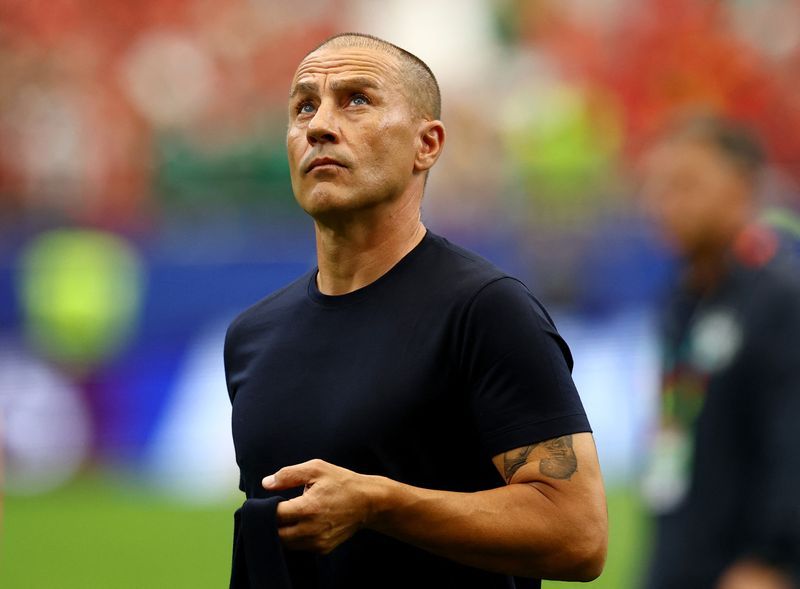
Uzbekistan's maiden World Cup campaign suffered a catastrophic blow in Houston on Tuesday when they capitulated 5-0 to Portugal in Group K, leaving coach Fabio Cannavaro to confront the harsh realities of international football's highest stage. The Italian tactician, who lifted the World Cup trophy with Italy in 2006, made clear in the aftermath that he would not deflect criticism towards his players, instead bearing the weight of responsibility for what amounted to a comprehensive dismantling by a superior opponent.
For a nation competing in the World Cup for the first time, the margin of defeat represents a sobering introduction to tournament football. Uzbekistan now finds themselves in a precarious position within Group K, having previously fallen to a 3-1 loss against Colombia. With only a final group-stage fixture remaining against the Democratic Republic of Congo on Saturday, the Central Asian side requires nothing short of a victory to mathematically retain any possibility of advancing to the knockout round. The mathematics are unforgiving, yet Cannavaro's insistence on continued belief underscores the psychological battle that unfolds in the hours following such a defeat.
When addressing reporters after the match, Cannavaro articulated a message that blended accountability with encouragement. He acknowledged his players' efforts and commitment while framing the loss as a stepping stone in their developmental journey as an international team. This diplomatic stance—neither excusing the performance nor scapegoating individuals—reflects the experience of a coach who has operated at the highest levels of European football and understands the volatility of tournament competition.
The 2006 World Cup winner placed the onus squarely on his own shoulders, a statement that carries particular weight given his pedigree. Cannavaro drew a distinction between the coach's responsibility and the players' roles, arguing that his tactical decisions and preparation had to account for the lopsided outcome. In his view, the players had executed his instructions to the best of their ability, and any shortcomings stemmed from his leadership rather than their commitment or technical deficiencies.
A critical turning point in the contest emerged when Uzbekistan had what appeared to be a legitimate goal disallowed. With the scoreline at 2-0 in Portugal's favour, Azizjon Ganiev found the net only to see the effort chalked off due to a foul deemed to have occurred during the build-up. Cannavaro reflected that this decision fundamentally shifted the psychological momentum of the match, deflating his team's confidence at a moment when they might have clawed back into contention. The disallowance represented not merely the loss of a goal but a crushing blow to morale at a vulnerable juncture.
The coach's analysis of the team's performance identified a pattern of initial promise followed by deterioration. Cannavaro noted that Uzbekistan had begun both the Portugal match and their earlier encounter with Colombia by playing with boldness and intention, adopting a proactive approach that suggested they could compete at this level. However, as the matches unfolded, particularly after adversity struck in the form of the disallowed goal, the team's resilience buckled under the weight of playing against superior opposition.
Cannavaro's philosophy regarding his players' development reflects a mature perspective on tournament football and the learning curve demanded of debut participants. He emphasised his commitment to instilling courage and encouraging his squad to attempt football without fear, recognising that mistakes would inevitably occur but viewing these as essential components of growth. His messaging to the players centered on the notion that misplaced passes and tactical errors were permissible if they arose from attempting bold football rather than cautious, defensive approaches.
The broader context of Uzbekistan's World Cup participation carries significance for Central Asia on the global sporting stage. This tournament represents the region's opportunity to demonstrate its football credentials and establish itself within the international narrative. While the opening results have been disappointing, Cannavaro's framing of the experience as a learning opportunity reflects the long-term perspective required when building a competitive national team. The investment in qualifying for the World Cup is rarely recouped in a maiden appearance; rather, it forms the foundation for future campaigns.
For Malaysian and Southeast Asian observers, Uzbekistan's struggle offers instructive parallels regarding the demands of World Cup football. The tournament mercilessly exposes gaps in quality, fitness, and tactical sophistication that might not be apparent in regional competitions. Uzbekistan's experience underscores the vast gulf between continental dominance and world-class opposition, a reality that resonates across the Asian confederation as nations attempt to bridge the gap to European and South American standards.
Cannavaro's commitment to pressing ahead despite near-certain elimination reflects the mentality required of coaches developing emerging football nations. The Saturday fixture against the Democratic Republic of Congo provides an opportunity to salvage some dignity and demonstrate the lessons absorbed from facing Portugal's technical superiority. Whether Uzbekistan can muster the psychological resilience required to bounce back from such a humbling defeat will largely depend on the resolve instilled by their coaching staff in the intervening days.