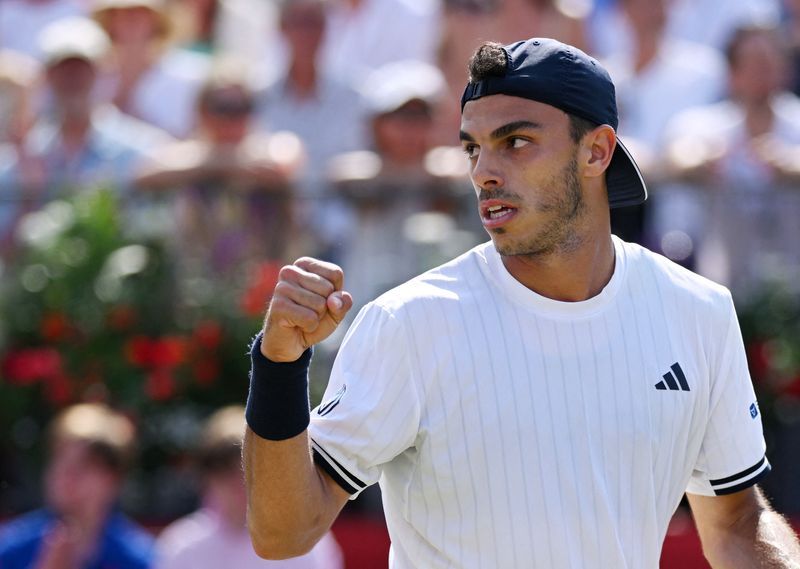
Francisco Cerundolo has captured the Queen's Club title, one of professional tennis's most storied grasscourt championships, with a hard-fought victory over American Tommy Paul in a final that tested both players' physical and mental reserves. The seventh-seeded Argentine emerged triumphant with a 6-7(4) 6-4 6-3 scoreline on Sunday, claiming what stands as the most significant trophy of his career to date and etching his name into the tournament's distinguished history.
The match itself became a grueling contest that stretched to three hours and two minutes, making it the longest final the Queen's Club has ever witnessed. Cerundolo's path to victory demonstrated remarkable resilience, particularly in the decisive third set where he squandered multiple opportunities to close out proceedings. Serving at 2-5, Paul managed to stave off three match points against Cerundolo, including one that struck the net cord in a cruel twist of fortune. However, the Argentine's persistence paid dividends when he finally converted his breakthrough on his own serve in the subsequent game, unleashing a definitive smash that sent him collapsing to the turf in a wave of emotional release.
The significance of Cerundolo's triumph extends beyond the immediate tournament victory. By winning Queen's Club, he became the first player from Argentina to claim this particularly prestigious crown, a distinction that carries considerable weight given the tournament's century-long pedigree and status as an essential preparation event for Wimbledon. For a nation with a rich tennis heritage that includes multiple Grand Slam champions, this specific gap in Queen's Club history now belongs to Cerundolo, cementing his place in Argentine tennis lore.
The path to his championship required extraordinary endurance from the 23-year-old. Cerundolo navigated through five matches across the week, an impressive four of which concluded in deciding sets. His cumulative time on court throughout the tournament reached approximately twelve hours, a demanding physical toll that culminated in the marathon final. This statistic underscores the level of competitive intensity he faced, suggesting that Queen's Club 2024 may be remembered as much for its grueling demands on the field as for the quality of tennis displayed.
Cerundolo's emotional connection to this victory carried additional poignancy due to an unexpected family presence at courtside. His father Alejandro, who has historically avoided international travel due to a fear of flying, made the extraordinary journey to London to witness his son's breakthrough moment. The elder Cerundolo had previously only seen his son compete in Buenos Aires and Davis Cup competition. The Argentine champion revealed that his parents arrived during the match itself, appearing in the crowd when he held a commanding 5-3 advantage in the third set. This confluence of personal achievement and family reconciliation transformed the victory into something deeper than a mere professional triumph.
The previous grasscourt encounter between these two competitors provided an interesting subplot. Cerundolo had defeated Paul in another significant grasscourt final at Eastbourne in 2023, suggesting an emerging pattern of dominance in this specialized surface where Cerundolo's game appears particularly well-suited. This victory at Queen's Club marked his second career grasscourt title, building upon that earlier breakthrough and signaling his emergence as a legitimate threat on the surface that leads directly to Wimbledon.
Paul arrived at Queen's Club as the defending champion, having claimed the 2024 title, and initially appeared poised to retain the trophy. The American generated significant threat during the opening set tiebreak, which he captured after aggressively breaking Cerundolo's serve to love while the Argentine attempted to serve out the set. This early momentum suggested Paul might dominate proceedings, particularly given his recent experience winning this tournament. The 29-year-old New Yorker also forged ahead in the second set following a break of serve, positioning himself to potentially claim a second consecutive title.
However, a critical shift in the match's dynamic materialized as Paul's performance level deteriorated. Rather than capitalize on his advantageous positions, the defending champion allowed Cerundolo to recover and gain the upper hand. The Argentine's tactical adjustments and intensity in the baseline rallies began to wear down Paul, who appeared unable to sustain the exceptional tennis required to maintain his early dominance. Cerundolo's superior freshness and sustained intensity during rallies proved decisive as he seized control of the second set, forcing the contest into the deciding third.
The third set illustrated Cerundolo's capacity to handle pressure while managing physical fatigue. After establishing his lead, he demonstrated the composure necessary to navigate through the nervous moments that inevitably accompany a championship-deciding set. Despite occasional lapses in concentration that threatened to hand Paul opportunities, Cerundolo maintained sufficient control to guide the match to completion. His refusal to collapse mentally when facing multiple set and match points proved instrumental in securing the trophy.
This victory represents a watershed moment for Cerundolo's professional trajectory. At 23 years old, securing his first ATP 500 title positions him among the sport's ascending players, suggesting future opportunities to compete at the sport's highest levels. The Queen's Club championship carries particular significance within professional tennis circles, with its historical prestige and the caliber of competitors who have claimed it. For Cerundolo, overcoming Paul in such circumstances and in such a demanding match provides an enormous confidence boost heading into Wimbledon, where grasscourt specialists have historically thrived.
The emotional and practical implications of this triumph reverberate throughout Argentine tennis and Southeast Asian sporting circles watching talent emerge globally. Cerundolo's breakthrough demonstrates that players from outside the traditional power centers can achieve major success through dedicated effort and specialized surface expertise. For Malaysian and regional tennis enthusiasts, the victory serves as a reminder that the sport remains open to players regardless of nationality, and that grasscourt expertise can emerge from unexpected quarters.