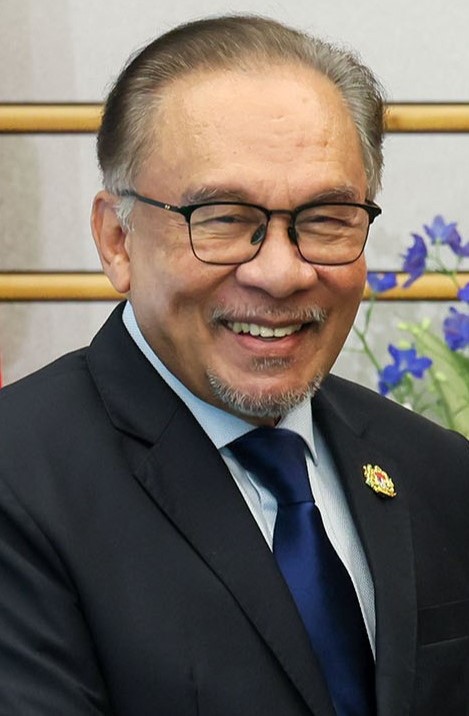
Swedish Prime Minister Ulf Kristersson stands at a peculiar crossroads in Scandinavian politics. Despite being ensnared in a succession of scandals that would have toppled leaders in many democracies, the centre-right politician has maintained his grip on power with striking resilience. Now, with parliamentary elections just three months away, he confronts yet another controversy—fresh corruption allegations that test whether his seemingly inexhaustible supply of political luck will hold once more.
Kristersson's four-year tenure has been marked by an unusual pattern: crisis followed by escape, each time with minimal fallout. His ability to navigate potential career-ending situations has become almost legendary in Swedish political circles, confounding analysts who might have predicted his downfall. This consistent evasion of serious consequences raises important questions about accountability, media dynamics, and the resilience of coalition governments in contemporary Nordic politics.
What distinguishes Kristersson's experience from leaders in comparable democracies is not the absence of controversy—Sweden's media landscape is robust and investigative journalism thrives—but rather the apparent unwillingness of political opponents or institutional actors to force meaningful consequences. Each scandal emerges, generates headlines, then dissipates without producing the resignations, criminal charges, or electoral punishment that might be expected. This pattern suggests deeper structural factors at play within Swedish governance and political culture.
For Malaysian observers and Southeast Asian political analysts, Kristersson's survival carries instructive lessons. The Nordic region is often held up as a model of institutional integrity and low corruption, yet even in Sweden, scandals accumulate without producing systematic accountability. This reality undercuts simplistic narratives that paint Scandinavia as uniquely virtuous, revealing that political resilience and elite protection function across different cultural and institutional contexts. Malaysia's own struggle with accountability structures becomes somewhat less anomalous when viewed against the Swedish experience.
The timing of these allegations—arriving so close to elections—adds a tactical dimension to Swedish politics. Voters will head to the polls with fresh reminders of governance failures, yet historical precedent suggests such timing may not dramatically alter electoral arithmetic. Whether Swedish voters will deliver a different verdict than they have in response to previous controversies remains the open question. Unlike systems where scandals rapidly crystallise public opinion, Swedish electoral behaviour has proven more resistant to single-issue realignment.
Kristersson's coalition government, which brought together the centre-right Sweden Democrats and other conservative parties, was itself built partly as a response to perceived institutional weakening and immigration concerns rather than as a mandate for reformist ethics. This foundational legitimacy may insulate him from the kind of moral reckoning that a government lacking such mandate might face. The electorate that brought him to power was responding to specific policy priorities, not primarily evaluating his personal integrity or governance standards.
The mechanics of how these scandals dissolve without producing consequences illuminates important aspects of modern governance. Media coverage, while certainly present, may not translate into sustained public pressure. Opposition parties must balance calls for accountability with strategic electoral positioning. Civil society organisations face questions about when and how to escalate scandals into institutional crises. Meanwhile, legal systems and regulatory bodies operate according to their own timelines and thresholds, often disconnected from political cycles and public attention spans.
For regional readers, the Swedish experience offers perspective on how institutional frameworks in wealthy democracies can paradoxically provide protection to powerful figures despite egalitarian rhetoric. The assumption that developed democracies naturally police themselves more effectively than others faces uncomfortable evidence when examining how scandals cluster around certain leaders yet fail to produce removal. Institutional capacity for accountability, it appears, functions differently when directed upward versus downward in power hierarchies.
The upcoming elections will test whether accumulated scandals finally shift Swedish political equilibrium. Historical patterns suggest Kristersson's coalition retains sufficient structural advantages to survive the ballot, though margins may narrow. What complicates predictions is the specific nature of these latest allegations and whether they penetrate public consciousness differently than previous controversies. Voter fatigue with scandal itself may paradoxically benefit an incumbent offering a sense of stability amid constant institutional turbulence.
Kristersson's trajectory also reveals how personalised political systems can be, where individual leaders develop reputations for survivability that transcend specific incidents. Voters may simultaneously disapprove of particular actions while maintaining confidence in a leader's overall stewardship. This psychological disconnect—between evaluating specific acts and overall competence—enables scandals to remain compartmentalised rather than cumulative.
As Sweden approaches its electoral moment, observers internationally will watch whether three months provides sufficient time for corruption allegations to alter political reality, or whether Kristersson will once again demonstrate the remarkable resilience that has defined his tenure. For Malaysia and other nations grappling with accountability and governance standards, the Swedish case serves as a reminder that institutional wealth and developed democratic systems do not automatically guarantee either elite accountability or the kind of dramatic political consequences that conventional analysis might predict.