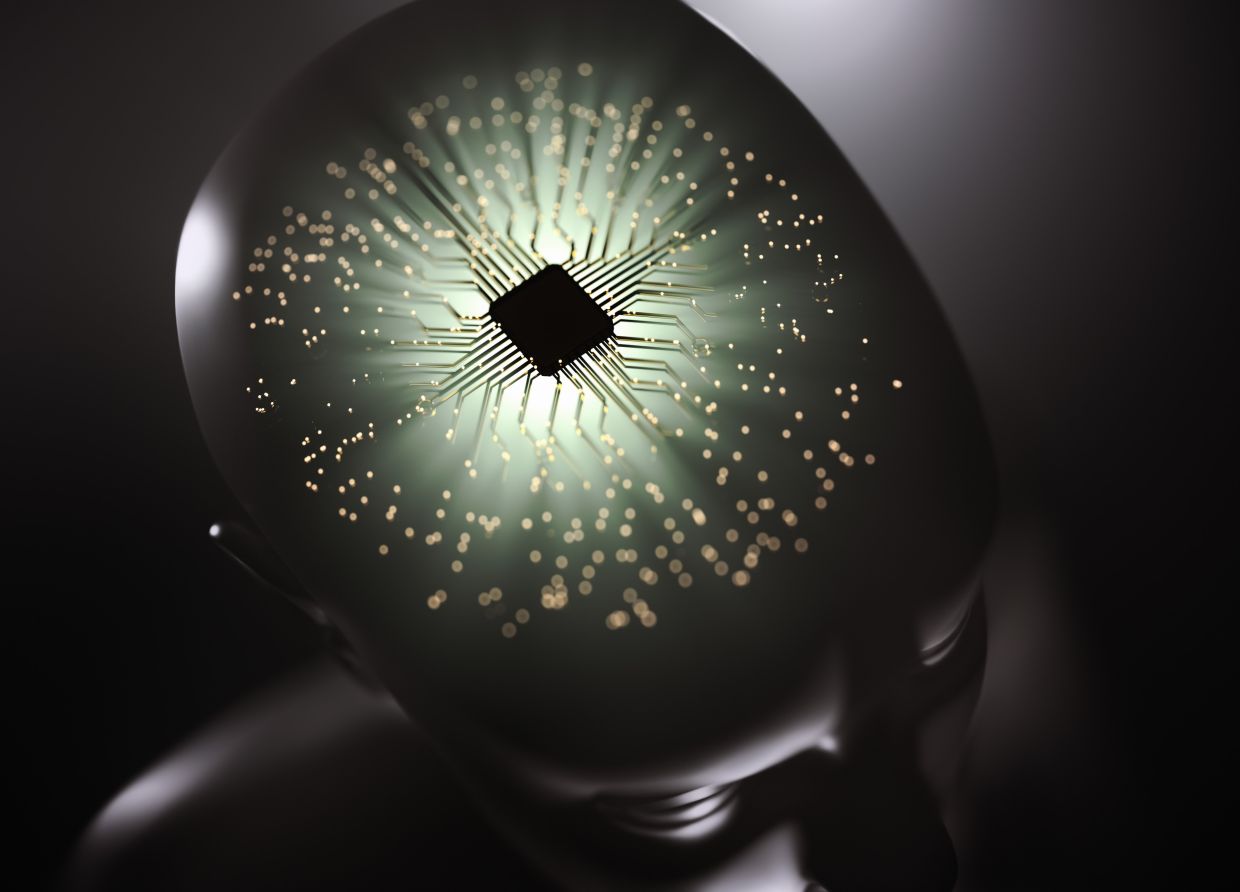
A research team led by Xu Xiaomin has announced a significant advancement in neural implant technology, developing a brain electrode array so thin it rivals a human hair while remaining as soft as brain tissue itself. The breakthrough addresses a fundamental engineering problem that has long constrained the development of reliable brain-computer interfaces—the mismatch between rigid electrode materials and the brain's delicate biological composition. In extensive animal trials conducted over 18 months, the implant successfully recorded neural activity with exceptional clarity whilst maintaining structural integrity and safety, marking a watershed moment for invasive neural interface technology.
The challenge that this innovation resolves has plagued neurotechnology researchers for decades. Whilst invasive brain implants deliver far superior signal quality compared to non-invasive alternatives, they introduce a troubling incompatibility. Traditional electrode arrays, typically manufactured from platinum or platinum-iridium alloys, are excellent electrical conductors but are significantly stiffer than the soft neural tissue surrounding them. Over months and years of implantation, this hardness differential creates continuous microscopic friction and relative movement. This perpetual mechanical stress triggers a cascade of inflammation and eventually leads to scar tissue formation encapsulating the electrodes, progressively degrading signal fidelity until the device becomes unreliable.
The solution developed by the Chinese-led team centres on a material called conductive hydrogel with interfacial percolation, abbreviated as Chip. This fully organic substance achieves electrical conductivity levels previously thought impossible for hydrogels, reaching 2,512 S/cm—sufficient to capture even the faintest neural signals with high fidelity. The exceptional conductivity represents a fundamental breakthrough, yet the team recognised that electrical performance alone would be insufficient. Hydrogels pose their own manufacturing challenge: when exposed to bodily fluids, they absorb moisture and swell, distorting the precision microelectrode patterns built into them and altering the spacing between channels. This deformation severely restricts the density of electrodes that can be integrated into a single array.
To circumvent this limitation, the researchers devised an ingenious fabrication approach involving pre-anchoring the hydrogel material onto a rigid parylene substrate to prevent lateral expansion. They then performed high-precision photolithography whilst the material remained in its dry state, preserving structural integrity throughout the manufacturing process. This technique proved transformative. The resulting 128-channel electrode array measures just 9 micrometres in thickness—thinner than many conventional electronics—yet achieves a channel density of 853 per square centimetre, more than tenfold higher than previous hydrogel-based designs. For Malaysian researchers and institutions exploring neural technology, this fabrication methodology offers a replicable pathway to miniaturisation previously considered technically unachievable.
Beyond raw specifications, the practical durability of implantable neural devices hinges on their ability to withstand the mechanical stresses imposed by a living, moving brain. The Chip material was subjected to rigorous testing simulating the maximum stretch that brain tissue can endure. Even after 1,000 cycles of 30 per cent tensile strain—representing extreme physical deformation—the electrode array maintained stable electrical performance with less than 4 per cent variation. In direct contact experiments with fresh porcine brain tissue, the array conformed gently to the tissue surface and could be cleanly removed without causing any damage, demonstrating exceptional biocompatibility at the material-tissue interface.
The pivotal test, however, came through long-term implantation studies. The research team surgically implanted their Chip-based electrode arrays into five rabbits and monitored neural signal recording over more than 550 days whilst the animals moved freely within their environments. Throughout this extended period, the system captured stable neural signals, with the signal-to-noise ratio remaining consistently above 94 per cent of its initial baseline value. This remarkable consistency contrasts sharply with conventional implants, which typically exhibit pronounced signal degradation within months. Subsequent histological examination of the implant sites after 16 weeks revealed minimal inflammatory response, indicating that the material's integration with living tissue was remarkably benign.
The implications of this research extend well beyond academic interest, particularly for Southeast Asian nations developing neurotechnology capabilities. Brain-computer interfaces promise transformative therapeutic applications for patients with paralysis, neurological disorders, and severe disabilities. However, devices have remained confined primarily to research settings due to durability concerns and the need for repeated surgeries to replace degraded implants. The stability demonstrated by this hydrogel-based system potentially removes a critical barrier to clinical translation. Healthcare systems in the region could eventually offer patients the prospect of stable, long-term neural interfacing without the repeated procedural risks currently required.
The research, published in the peer-reviewed journal PNAS on April 28 and subsequently reported by state-run China Science Daily, represents a substantial investment in neural engineering by Chinese research institutions. The work reflects the broader strategic importance China places on neurotechnology development as a frontier field with profound medical and technological implications. For the regional scientific community, the publication of detailed methodologies enables other research groups to build upon these findings, potentially accelerating parallel developments in neural interface technology across Asia.
The team's findings suggest that the fabrication strategies developed for this hydrogel system could extend to diverse bioelectronic applications beyond neural recording. Conductive hydrogels might eventually enable biosensors, cardiac monitors, and other devices requiring intimate contact with soft biological tissues. This broader applicability could unlock entirely new categories of wearable and implantable medical technology. For developing economies in Southeast Asia where healthcare infrastructure continues expanding, the emergence of durable, biocompatible implantable devices manufactured through scalable microfabrication techniques could democratise access to advanced neural therapies currently concentrated in wealthy nations.
Regarding the practical timeline for clinical deployment, several intermediate steps remain necessary. The current trials employed small animals; larger primate studies will be required to confirm safety and efficacy in biological systems more closely resembling humans. Regulatory pathways in various countries will need to evaluate the material's long-term biocompatibility and establish safety standards. Nevertheless, the 18-month stability demonstrated in animal models substantially exceeds the performance of existing clinical implants, suggesting realistic potential for regulatory approval within the coming years. Malaysian hospitals and research institutions with neurology departments would be well-positioned to participate in subsequent clinical validation studies, positioning the region at the forefront of this transformative technology.
The achievement underscores a fundamental principle in biomedical engineering: solving device failure often requires fundamental innovation at the materials level rather than mere incremental engineering refinement. By shifting from rigid, stiff electrode materials to soft, organic hydrogels whilst simultaneously solving the manufacturing challenges that flexibility introduced, the research team has potentially unlocked a new generation of neural devices. This paradigm shift—matching material properties to biological tissue rather than forcing biological systems to tolerate foreign materials—may prove applicable across multiple domains of implantable medicine, from neural recording to drug delivery systems.
%22%2F%3E%3C%2Fpattern%3E%3C%2Fdefs%3E%3Crect%20width%3D%22100%25%22%20height%3D%22100%25%22%20fill%3D%22url(%23ph4exaug)%22%2F%3E%3Crect%20width%3D%22100%25%22%20height%3D%22100%25%22%20fill%3D%22url(%23ph4exaup)%22%2F%3E%3Ctext%20x%3D%2250%25%22%20y%3D%2250%25%22%20text-anchor%3D%22middle%22%20dominant-baseline%3D%22central%22%20fill%3D%22rgba(255%2C255%2C255%2C0.95)%22%20font-family%3D%22Georgia%2C%20'Times%20New%20Roman'%2C%20serif%22%20font-weight%3D%22700%22%20font-size%3D%22320%22%20letter-spacing%3D%22-0.02em%22%3E70%3C%2Ftext%3E%3C%2Fsvg%3E)

%22%2F%3E%3C%2Fpattern%3E%3C%2Fdefs%3E%3Crect%20width%3D%22100%25%22%20height%3D%22100%25%22%20fill%3D%22url(%23ph2vervg)%22%2F%3E%3Crect%20width%3D%22100%25%22%20height%3D%22100%25%22%20fill%3D%22url(%23ph2vervp)%22%2F%3E%3Ctext%20x%3D%2250%25%22%20y%3D%2250%25%22%20text-anchor%3D%22middle%22%20dominant-baseline%3D%22central%22%20fill%3D%22rgba(255%2C255%2C255%2C0.95)%22%20font-family%3D%22Georgia%2C%20'Times%20New%20Roman'%2C%20serif%22%20font-weight%3D%22700%22%20font-size%3D%22226%22%20letter-spacing%3D%22-0.02em%22%3EPenang%3C%2Ftext%3E%3C%2Fsvg%3E)