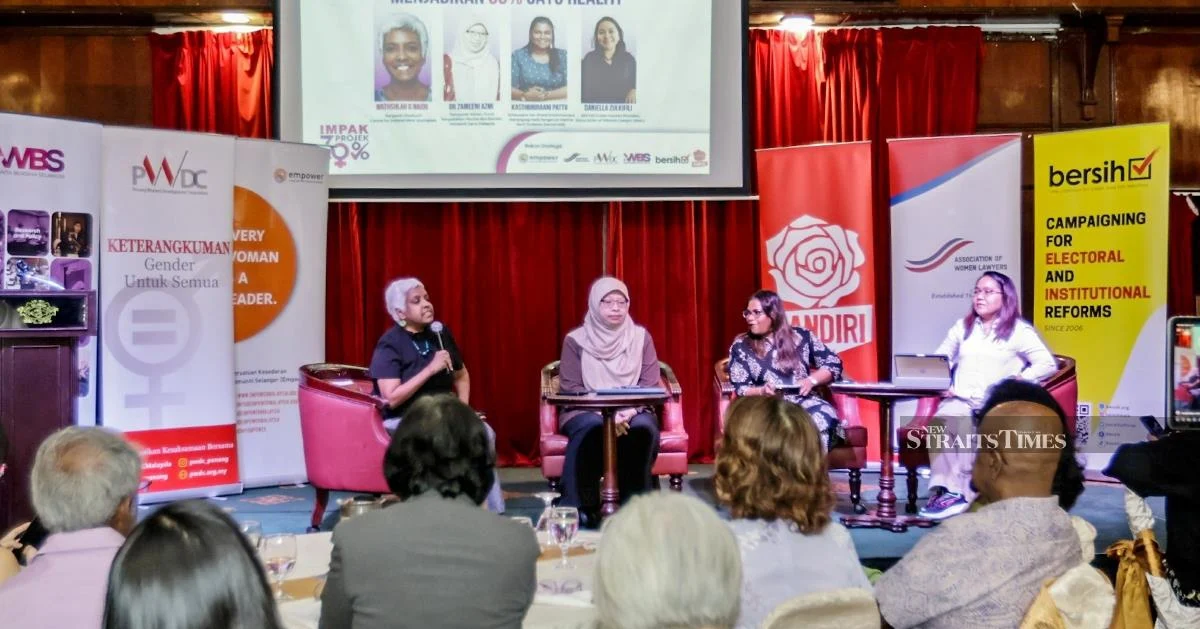
Malaysia's civil society sector has intensified its push for greater female representation in national politics by formally presenting the government with a draft law requiring political parties to nominate a minimum of 30 per cent women candidates for the next general election. The memorandum and proposed legislation, submitted to the authorities in Kuala Lumpur, represents a coordinated effort by multiple organisations seeking concrete legislative action to address persistent gender imbalances within the country's political establishment.
The timing of this submission carries particular significance as Malaysia approaches GE16, the next scheduled general election. This legislative initiative reflects growing domestic momentum for gender parity in elected office, building on years of advocacy and research demonstrating the barriers women face when entering competitive electoral politics. The 30 per cent threshold represents a pragmatic first step, acknowledging both international best practices and the need for phased implementation that Malaysian political parties might feasibly accommodate within their nomination processes.
Gender representation in Malaysian parliaments has historically lagged regional and global benchmarks, despite the country's relatively mature democratic institutions. Women currently hold a minority of seats in both the federal Dewan Rakyat and various state assemblies, a disparity that the submitting organisations argue undermines democratic principles and excludes half the population from meaningful legislative participation. The draft law seeks to rectify this through enforceable requirements rather than relying on voluntary party commitments, which previous experience suggests often remain unfulfilled.
The civil society coalition's approach demonstrates strategic sophistication by combining advocacy with formal legislative drafting. Providing government with ready-made legislation reduces implementation barriers and demonstrates that the 30 per cent requirement is administratively feasible. This also signals that participating organisations have invested considerable effort in legal research, making dismissal of their proposal more politically costly for policymakers who might otherwise defer action indefinitely.
For Malaysian readers and regional observers, this development signals ongoing societal demands for democratic reform beyond electoral systems alone. Women's political participation intersects with broader governance quality, as numerous studies suggest greater gender diversity in legislatures correlates with stronger oversight, more responsive policymaking on issues affecting families and communities, and enhanced legislative professionalism. The push for candidate quotas therefore represents not merely a fairness issue but a governance imperative.
The coalition's emphasis on candidate nomination—the point at which political parties exercise gatekeeping power—proves analytically astute. While Malaysia's electoral laws are proportionally representative in some respects, the critical bottleneck exists earlier in the process when party leadership selects candidates to contest seats. Mandating 30 per cent women candidates directly addresses this mechanism, preventing parties from fielding predominantly male candidate lists regardless of internal party democracy or member preferences.
Regionally, Malaysia's potential adoption of women candidate requirements would place it among Southeast Asian countries actively implementing gender quota measures, though implementation depth and enforcement remain variable across the region. Thailand, Indonesia, and Cambodia have experimented with varying quota systems, each with different outcomes regarding actual parliamentary representation. Malaysia's experience could offer important lessons for other ASEAN members while potentially elevating regional standards for women's political inclusion.
Implementation timelines matter considerably for the legislation's eventual success. If parliament were to pass such a law close to GE16, political parties would argue they lack sufficient lead time to restructure their nomination procedures and candidate development pipelines. Conversely, early passage would allow parties to integrate the requirement into routine processes, reducing resistance based on logistical claims. The civil society organisations likely appreciate these strategic considerations, having timed their submission to permit adequate legislative window before the election.
Opposition to the proposal will likely emerge from multiple quarters. Certain political parties traditionally resistant to reform may argue that merit should outweigh gender when selecting candidates, despite evidence that women face structural discrimination rather than merit deficits. Conservative voices may frame the requirement as external imposition on parties' internal autonomy. Such resistance requires the civil society coalition to maintain public pressure, secure sympathetic parliamentary champions, and potentially demonstrate that comparable democracies have successfully implemented candidate quotas without party destabilisation.
The memorandum submission also carries symbolic weight in positioning women's political participation as a mainstream governance issue rather than a niche concern. Official submission to government confers legitimacy and creates documentary records for future accountability. Should the government ignore the proposal, proponents can invoke this formal rejection during election campaigns, making inaction politically visible and potentially influencing voter behaviour toward parties supporting the quota measure.
Broader implications extend to Malaysia's international credibility on gender equality commitments. The country has endorsed various United Nations gender equality targets and ASEAN frameworks promoting women's empowerment. A concrete law mandating candidate quotas would substantiate these commitments through enforceable domestic legislation rather than rhetorical endorsement, strengthening Malaysia's standing within international gender equality assessments and regional development indices.
As this legislative proposal navigates the political process toward potential enactment, it will likely become a referendum on whether Malaysia's political establishment genuinely prioritises inclusive democracy or prefers incremental, voluntary approaches to gender representation. The civil society coalition's systematic approach through formal legislation signals serious intent, and their success or failure will significantly shape perceptions of Malaysian democracy's responsiveness to citizens' demands for structural reform beyond electoral cycles themselves.