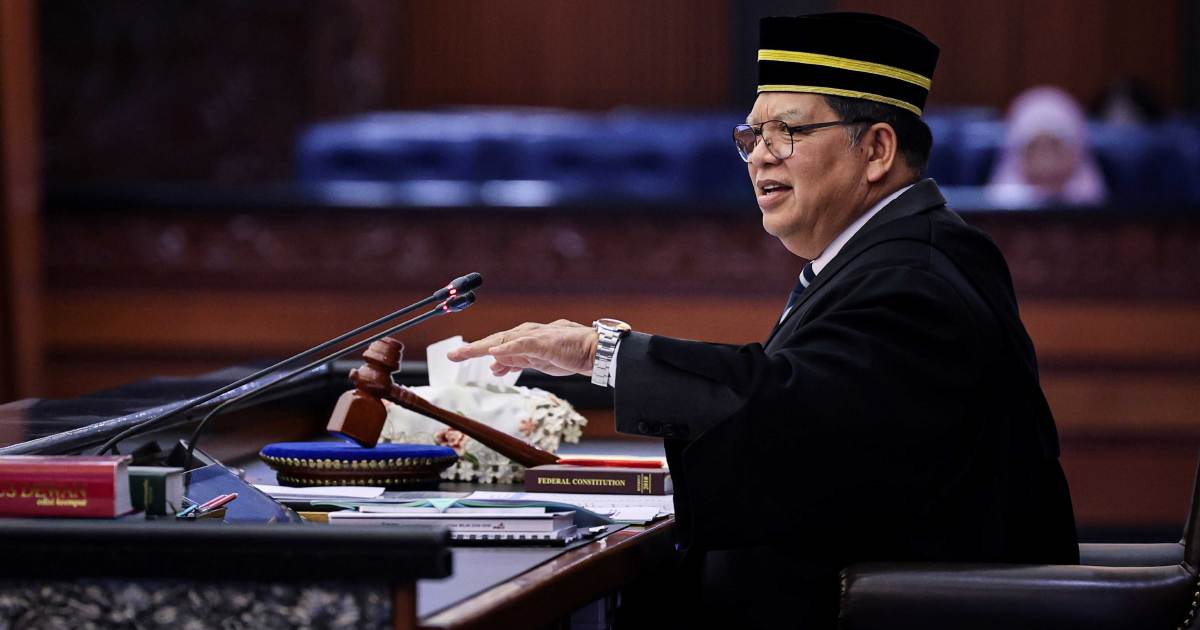
Dewan Rakyat Speaker Tan Sri Johari Abdul has issued a forceful reminder to members of parliament that attending parliamentary sittings represents a fundamental obligation that should not be treated lightly, particularly when justification for absence is lacking. The speaker's intervention highlights persistent challenges with legislative attendance in Malaysia's lower house, where sporadic absences by MPs have occasionally disrupted parliamentary business and raised questions about lawmakers' commitment to their constituencies.
The speaker's admonition arrives at a time when parliamentary discipline and decorum have become increasingly scrutinised by observers and the public. In Malaysia's Westminster-style system, the presence of legislators during debates and votes is essential for maintaining the legitimacy and effectiveness of parliamentary proceedings. When members fail to show up without authorised reasons, it creates gaps in representation and can delay important legislative work, ultimately affecting the constituents these MPs are elected to serve.
Parliamentary attendance is governed by established conventions and standing orders, though the enforcement of these regulations has occasionally been inconsistent. The speaker's authority to address absenteeism reflects the significant responsibility placed on the office to maintain decorum and ensure that legislative business proceeds smoothly. By explicitly reminding MPs of their responsibilities, Tan Sri Johari Abdul is asserting the importance of institutional discipline within a chamber that increasingly faces public scrutiny regarding its effectiveness.
The broader context of parliamentary attendance reflects wider concerns about the quality of legislative oversight in Malaysia. Opposition and government-aligned MPs alike have occasionally been absent during critical debates, leading to criticism that parliamentarians prioritise other commitments—whether political party activities, state constituency work, or business interests—over their duties in the national legislature. Such patterns weaken the parliamentary check on executive power and diminish public confidence in democratic institutions.
Recognising valid reasons for absence is crucial to this discussion. Legitimate excuses include health emergencies, family bereavement, overseas government duties, or pre-approved parliamentary business. However, the speaker's remarks suggest that some MPs have been absent without offering satisfactory explanations, creating an accountability gap. This distinction between justified and unjustified absences is important because it allows flexibility for genuine circumstances while maintaining institutional standards.
The speaker's warning also carries implications for party leadership. Political parties bearing responsibility for their MPs may face internal repercussions if their members repeatedly skip sessions, as consistent absences reflect poorly on party discipline and organisation. Both government and opposition coalitions have an interest in demonstrating that their representatives take parliamentary responsibilities seriously, as failure to do so provides ammunition for political opponents and undermines their legitimacy.
From a Malaysian governance perspective, strengthening parliamentary attendance supports the broader agenda of institutional strengthening and democratic consolidation. A more engaged legislature, with consistent attendance and active participation across all benches, contributes to more robust scrutiny of government policy and legislation. This is particularly important in Malaysia's evolving political landscape, where questions about institutional independence and accountability remain salient.
The speaker's intervention also signals stricter expectations going forward. Tan Sri Johari Abdul's position as Dewan Rakyat Speaker carries significant weight in shaping parliamentary culture. When speakers explicitly address attendance, they establish norms that influence MP behaviour and create space for applying consequences to persistent offenders. This can include warnings, suspension of certain privileges, or reduction in allowances, depending on parliamentary standing orders.
For Malaysian citizens, the speaker's reminder serves as a reminder that parliamentary representation involves tangible duties. MPs elected to the Dewan Rakyat occupy positions of public trust, and consistent attendance is the baseline expectation for fulfilling that trust. When legislators are absent without valid reason, they are, in effect, failing to show up for the constituents they represent, which undermines the social contract underlying democratic representation.
The timing of the speaker's remarks suggests ongoing administrative challenges within the chamber. Parliamentary management in Malaysia involves coordinating schedules across 222 MPs with diverse commitments and constituencies. Establishing clear expectations about attendance helps administrators plan parliamentary business more effectively and ensures that quorum requirements are met for important votes and debates.
Moving forward, the speaker's message will likely be reinforced through administrative measures, including monitoring systems and communication to party whips who bear responsibility for disciplining their members. Such steps reflect a tightening of parliamentary governance aimed at improving institutional performance and public perception of the legislature.
This emphasis on attendance discipline also resonates with international best practices. Parliaments worldwide maintain rigorous attendance records and apply sanctions for unjustified absences as part of maintaining institutional credibility. By aligning Malaysian parliamentary standards with these international norms, the Dewan Rakyat strengthens its standing as a serious legislative body worthy of public respect and confidence in its deliberative capacity.