King Willem-Alexander and Queen Máxima of the Netherlands embarked on an unusually demanding day of World Cup diplomacy on Saturday, attending two matches separated by hundreds of kilometres to support the football teams representing their interconnected domains. The royal couple's globe-trotting commitment to both nations reflected the unique constitutional relationship binding the Dutch monarchy to its Caribbean territories, a geographical and political reality that few other European kingdoms must navigate during international sporting competitions.
The day began in Houston, where the Netherlands made a commanding statement in their World Cup campaign by dispatching Sweden with a 5-1 victory. The dominant performance underscored the Dutch squad's attacking prowess and provided Willem-Alexander and Máxima with an emphatic opening to their double-header schedule. Wearing the traditional orange colours of the Netherlands, the monarchs experienced the kind of comprehensive display that suggests serious tournament ambitions. The emphatic margin of victory represented precisely the sort of result that builds momentum in the early group stages, where establishing dominance over fellow competitors can prove psychologically significant in determining which teams advance from tight knockout contests.
Hours after the final whistle in Houston, the royal pair had relocated to Kansas City for an entirely different narrative. Curaçao, the Dutch Caribbean island nation over which Willem-Alexander also reigns as sovereign, delivered a performance that defied conventional expectations against Ecuador. The goalless draw represented a creditable result for the smaller nation, particularly against an opponent with greater tournament pedigree. The fact that Curaçao managed to secure a point while facing a major South American representative demonstrated considerable defensive discipline and tactical maturity, qualities often overlooked when analysing smaller nations' World Cup campaigns.
The constitutional arrangement enabling Willem-Alexander's dual interest carries particular significance for Malaysian and Southeast Asian observers accustomed to more straightforward national sporting loyalties. As King of the Netherlands, Willem-Alexander holds formal sovereignty over several Caribbean territories that maintain varying degrees of autonomy, including Curaçao, Sint Maarten, and various smaller islands. This arrangement, a historical legacy of Dutch colonial expansion, means that the Dutch monarchy must balance diplomatic and ceremonial obligations across vastly separated territories. The World Cup provided a compelling theatre for demonstrating this commitment, with the royal couple's willingness to traverse North America within hours serving as potent symbolic affirmation of the kingdom's interconnectedness.
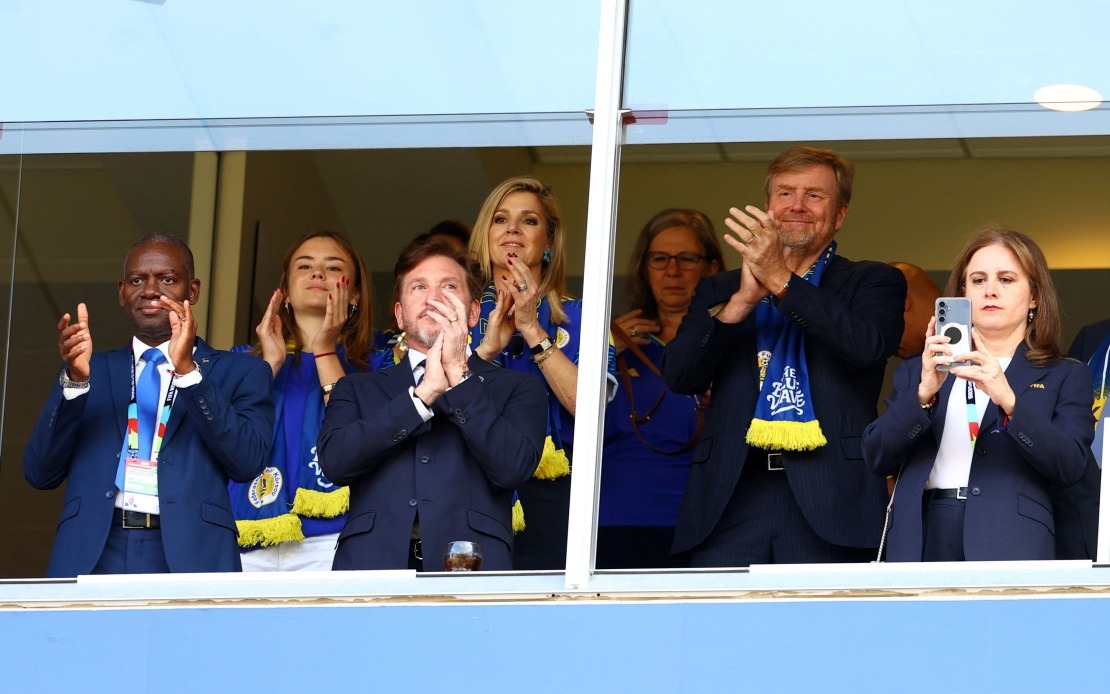
The visual presentation of royal support proved equally deliberate and meaningful. At the Netherlands match, Willem-Alexander and Máxima wore orange, honouring the national colours that have represented Dutch football for generations. Upon arriving in Kansas City, they switched to Curaçao's blue, a sartorial gesture that conveyed respect for both communities' distinct identities whilst maintaining the monarchy's overarching role. Such attention to symbolic detail matters considerably in royal protocol and messaging, signalling that both nations occupy equal standing within the broader kingdom structure rather than existing in a hierarchical relationship.
The emotional connection between the royals and the Curaçao squad transcended typical ceremonial appearances when a video released by Curaçao's football federation captured the couple dancing and celebrating with players in the post-match dressing room. This informal, behind-the-scenes moment humanised the monarchy and demonstrated genuine enthusiasm rather than obligatory attendance at official fixtures. For Curaçao, a nation with a population barely exceeding 160,000, having their sovereign personally celebrate their World Cup achievement represented extraordinary validation and prestige. Such moments resonate deeply within smaller communities where international recognition often remains elusive.
Willem-Alexander's statement to broadcasters captured the unique appeal of his situation. He noted that possessing two teams competing simultaneously in the World Cup afforded the monarchy a distinctive opportunity to amplify their support and double their emotional investment in the tournament's outcomes. His expressed hope that both squads could advance far reflected not merely sporting optimism but also the diplomatic necessity of maintaining enthusiasm across both constituencies. Should either team exit the tournament early, the optics of diminished interest could potentially signal imbalance in royal affection, a subtle but not insignificant political consideration.
For the Netherlands, the 5-1 demolition of Sweden positioned them advantageously within their group ahead of their final match against Tunisia. Such a substantial victory typically guarantees progression to the knockout stages, assuming they avoid catastrophic collapse against their remaining opponents. The Dutch squad appeared to be hitting peak form at precisely the moment when tournament success becomes determined by consistency and execution under pressure. Meanwhile, Curaçao's challenge proved considerably steeper; advancing would require defeating Ivory Coast, a task requiring near-perfect performance against a well-established African nation.
Contextually, Willem-Alexander and Máxima's World Cup itinerary extended beyond the Saturday double-header. Earlier in the week, they had watched the Netherlands' opening fixture against Japan while hosting Emperor Naruhito and Empress Masako on a state visit to the Netherlands. That 2-2 draw with the Japanese represented a less commanding start than the Sweden victory, suggesting the Dutch had adjusted their approach and tactical execution across their early tournament matches. The appearance of Japanese imperial representatives added another layer of diplomatic complexity and international significance to the already elaborate royal World Cup experience.
For Southeast Asian observers, the Dutch royal family's World Cup engagement illustrates how historical colonial relationships continue reshaping contemporary sporting structures and international competitions. Many Southeast Asian nations, including Malaysia, maintain complex relationships with former colonial powers, though rarely expressed through simultaneous participation in global sporting events. The phenomenon demonstrates how historical ties produce enduring institutional frameworks that influence modern life in unexpected ways, including how monarchies navigate their obligations and how populations experience international sporting competitions.
The broader implications of such royal engagement with World Cup football extend beyond mere ceremonial presence. These events provide relatively rare opportunities for small nations like Curaçao to command international media attention and assert their presence on global stages. When a reigning European monarch travels thousands of kilometres to celebrate a Caribbean island's football match, it amplifies that nation's visibility and cultural significance in ways that routine political or economic relationships rarely accomplish. For Curaçao, the royal endorsement transformed what might otherwise have been a minor World Cup storyline into an international human-interest narrative worthy of widespread media coverage.