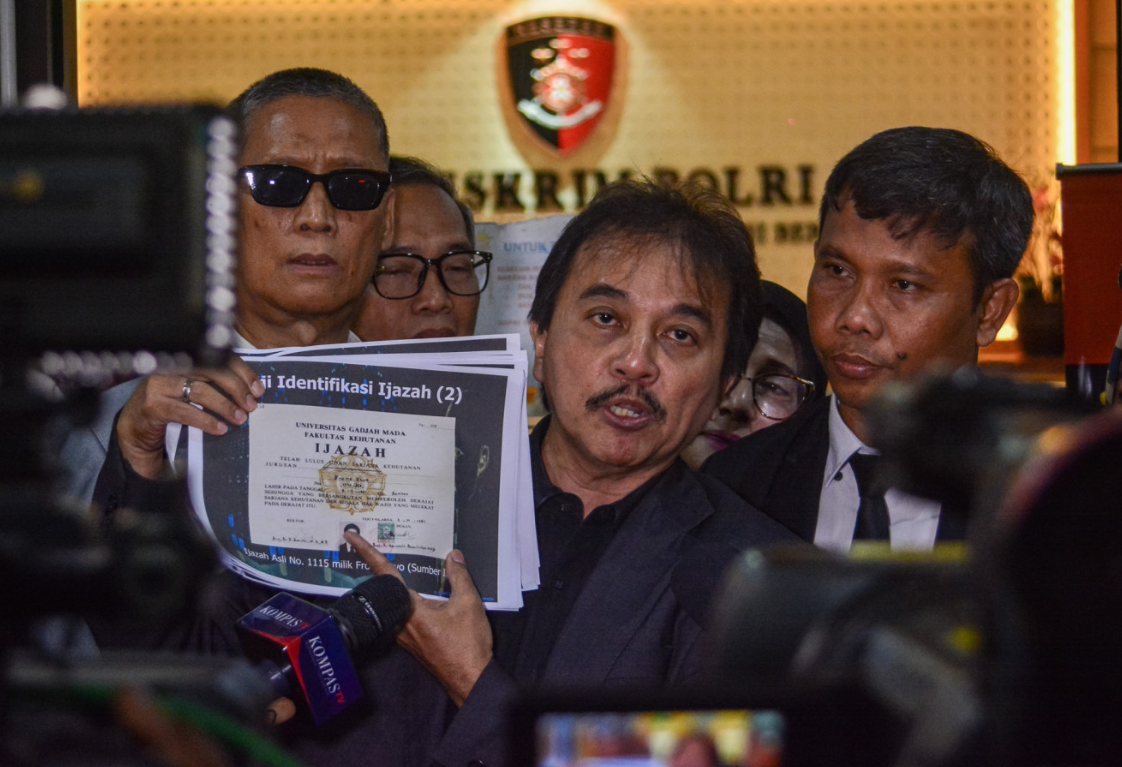
The Jakarta Police have arrested former youth and sports minister Roy Suryo and health activist Tifauzia 'Tifa' Tyassuma on Friday morning, marking a decisive turn in one of Indonesia's most contentious political disputes. Both individuals stand accused of defaming former president Joko 'Jokowi' Widodo through allegations questioning the authenticity of his university diploma, a controversy that has festered since 2019 when questions first surfaced online about his academic credentials. The arrests were conducted at their respective homes and represent the culmination of months of investigation into claims that the pair knowingly promoted false information about the former leader's educational qualifications.
According to Roy's legal representative Ahmad Khozinudin, the detention followed formal questioning and is being characterised by authorities as a procedural step ahead of transferring the case to the Jakarta Prosecutor's Office. The General Crimes Directorate of Jakarta Police framed the move as routine, with investigation director Sr Comr Iman Imanuddin explaining during Friday's press conference that detention was necessary to prevent administrative delays and ensure the completion of standard procedures including health examinations and evidence verification before the handover to prosecutors. This justification has proven contentious, with Roy's other lawyer Refly Harun immediately challenging the necessity of the measure, noting that the case transfer to prosecutors was not scheduled until the following Monday.
The diploma controversy itself represents one of the most persistent challenges to Jokowi's political legacy, with questions about his educational background initially emerging on social media platforms before developing into a substantial legal matter. What began as unsubstantiated claims has evolved into a complex web of civil suits, police investigations, and court proceedings spanning multiple years and involving numerous parties. The dispute gained particular momentum during 2022 when civil litigation was initiated, followed by fresh investigations and court filings in 2025 that kept the matter in the public consciousness as Jokowi's presidency concluded.
Roy and Tifa face additional accusations beyond simple defamation, with authorities alleging that they manipulated electronic documents to substantiate their claims about the diploma's authenticity. These charges fall under the Electronic Information and Transactions (ITE) Law, legislation that carries maximum prison sentences of six years and has become increasingly controversial among civil liberties advocates who argue it is deployed to silence political criticism. The document manipulation allegations suggest prosecutors believe the pair engaged in deliberate falsification rather than merely voicing good-faith doubts about the diploma's legitimacy.
The National Police's determination in May 2025 that Jokowi's diploma was genuine appeared initially to have settled the matter, with authorities announcing the closure of their earlier investigation into forgery allegations. However, this conclusion failed to silence critics, and when a case review was conducted in July 2025, Roy Suryo and other opponents reiterated their objections to the police findings. This continued contestation despite official endorsement of the diploma's authenticity suggests deep-rooted scepticism among certain political circles regarding both the investigation's integrity and the document itself.
The legal framework being employed against Roy and Tifa warrants particular scrutiny given Malaysia's own evolving relationship with similar legislation. Indonesia's ITE Law has drawn international criticism from human rights organisations that contend it is frequently weaponised against political opponents and critics rather than used primarily to address genuine cybercrimes. The application of these statutes to the Jokowi diploma case raises questions about whether Indonesian authorities are using defamation and document manipulation charges as a mechanism to suppress politically inconvenient dissent or whether the evidence genuinely supports criminal prosecution.
Beyond Roy and Tifa, the investigation has implicated additional individuals, with police naming six suspects in total under the ITE Law. Notably, three of these individuals—Eggi Sudjana, Damai Hari Lubis, and Rismon Sianipar—had charges dropped following mediation, suggesting that police possessed discretion regarding prosecution and that negotiated settlements were possible for some defendants. The differentiation in treatment raises questions about whether Roy and Tifa's status as more prominent public figures influenced the decision to proceed with detention and prosecution rather than pursuing comparable mediation.
Roy's background as a minister in the Susilo Bambang Yudhoyono administration provides political context to his current legal jeopardy. As a figure associated with the previous political order, his aggressive pursuit of the diploma controversy might be interpreted by some observers as part of broader political contestation rather than genuine civic concern. Conversely, critics of Jokowi's government might view the prosecution of Roy as political persecution designed to protect a retiring president from scrutiny. This ambiguity about motivation complicates assessment of whether the legal proceedings serve legitimate law enforcement objectives or political purposes.
For Malaysian observers, the case demonstrates how diploma authentication disputes can escalate into major constitutional controversies, particularly when they involve sitting or recently-departed leaders. The durability of the Jokowi diploma question across six years and multiple institutional investigations underscores how effectively education credentials can become contested political terrain. The resort to criminal prosecution for defamation and document falsification represents one approach to resolving such disputes, though it carries risks of appearing politically motivated and potentially chilling legitimate public scrutiny of leadership qualifications.
The detention of Roy and Tifa comes at a sensitive moment in Indonesian politics as Jokowi's presidency transitions to his successor Prabowo Subianto. The continued pursuit of defamation charges during this leadership transition period may reflect institutional commitments to defending Jokowi's legacy or alternatively could represent final efforts by outgoing government apparatus to eliminate remaining legal threats to his reputation. The prosecutor's office will now determine whether to proceed with formal charges, a decision that will significantly influence perceptions of Indonesian judicial independence and its willingness to accommodate high-level political figures.
Legal experts observing the case have noted the unusual intensity of prosecution relative to the evidentiary foundation, with some questioning whether defamation proceedings represent the most appropriate mechanism for resolving disputed academic credentials. Alternative approaches, including independent expert verification, legislative inquiries, or institutional accountability mechanisms, might have addressed underlying concerns about diploma authenticity without necessitating criminal prosecution. The choice to pursue criminal sanctions suggests Indonesian authorities view the diploma questions as sufficiently severe to warrant the criminal justice system's involvement rather than civil or administrative remedies.