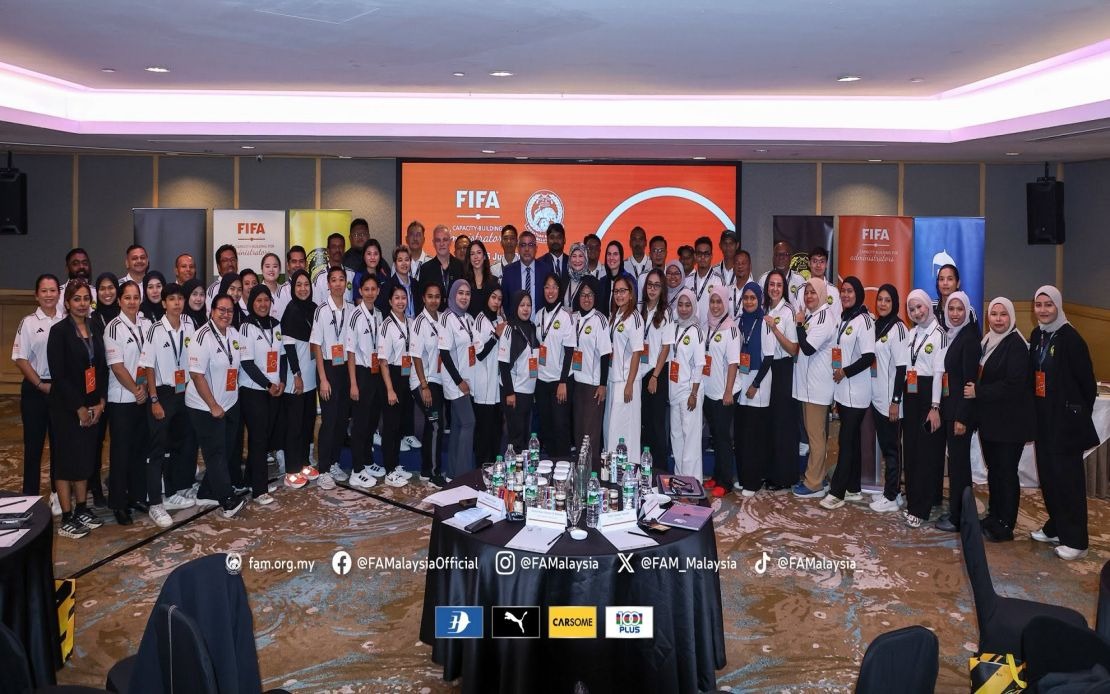
The Football Association of Malaysia has launched a four-day capacity-building initiative designed to elevate the standards of management and administration across the country's women's football sector. Conducted in partnership with FIFA, the Capacity-Building For Administrators 2026 programme represents a strategic investment in developing the human infrastructure required to sustain long-term growth in women's football, moving beyond purely technical skill development to encompass the institutional frameworks that underpin professional sports operations.
The initiative, which commenced in June in Kuala Lumpur, reflects FAM's recognition that competitive success and organisational sustainability in women's football depend heavily on qualified managers, administrators, and leaders operating behind the scenes. By pairing technical expertise on the field with robust administrative capacity off it, FAM is attempting to create a more comprehensive ecosystem where women's football can flourish as both a competitive enterprise and a developmental pathway for female talent across the region.
Two FIFA Women's Football Development Experts, Safia Abdeldayem and Pema Choden Tshering, are steering the programme through a carefully structured curriculum. The modules being delivered cover four core competency areas that reflect contemporary challenges in sports governance: Women's Leadership, examining how female-led structures can strengthen organisational culture; Women's Competition, addressing the technical design and management of league and tournament systems; Club and Players' Rights, ensuring participants understand the legal and ethical frameworks protecting athletes and organisations; and Strategic Planning, equipping administrators with frameworks for long-term institutional development.
This multifaceted approach acknowledges that women's football in Malaysia and across Southeast Asia faces systemic constraints that extend far beyond player recruitment or coaching quality. Administrative capacity gaps often limit the ability of teams and competitions to scale, maintain professional standards, or navigate increasingly complex regulatory environments. By targeting team managers and administrative officers directly, FAM is attempting to address a critical bottleneck in the development pipeline that frequently goes unacknowledged in media coverage focused primarily on match results and player performance.
The presence of senior FAM leadership, including Secretary-General Datuk Noor Azman Rahman, alongside international figures such as Datuk Suraya Yaacob—who holds positions within both the AFC Women's Football Committee and FIFA's Women's National Team Competitions Committee—signals institutional commitment to the programme's importance. The inclusion of Soleen Al-Zoubi, FAM's Women's Football Technical Director, ensures continuity between administrative development initiatives and technical coaching structures, preventing the common disconnect between governance and playing operations.
For Malaysian stakeholders, this programme carries significant implications for the trajectory of women's football in the country. As regional competitions intensify and international standards for women's football governance continue to rise, Malaysian clubs and teams that lag in administrative professionalism risk becoming uncompetitive not just on the pitch but in securing sponsorships, managing player contracts, and accessing FIFA development funding. The capacity-building initiative directly addresses this vulnerability by creating a cohort of administrators equipped with contemporary best practices.
FAM's explicit emphasis on creating a "stronger, more professional and sustainable ecosystem" suggests an understanding that women's football requires different growth strategies than the men's game in Malaysia. Whereas men's football has established historical pathways and institutional momentum, women's football must be deliberately constructed through systematic investment in foundational elements. This programme targets a gap that external observers often overlook: while Malaysian women footballers have demonstrated competitive ability, organisational fragility in administration has historically limited their teams' capacity to sustain success across multiple seasons or compete effectively in continental tournaments.
The alignment with FIFA's broader women's football development agenda also positions Malaysian administrators within international networks of practitioners and thought leaders. Exposure to global standards and peer learning with administrators from other nations provides contextual understanding of how women's football operations function at higher levels of professional organisation. This knowledge transfer is particularly valuable for Southeast Asian practitioners who may have limited exposure to advanced administrative practices in women's sport.
Beyond immediate competency development, the programme carries broader implications for gender equity within Malaysian sports administration. By intentionally cultivating female leaders and decision-makers in football governance structures, FAM is contributing to a gradual rebalancing of power and responsibility within the sport. This systemic shift—developing women not just as players but as the administrators, managers, and strategic thinkers directing the sport—represents meaningful progress toward equitable governance that goes substantially beyond tokenistic inclusion.
The sustainability argument underpinning the initiative reflects mature thinking about women's football development. Short-term competitive success depends on talented players and skilled coaches, but long-term viability requires institutional health. By investing in administrative capacity now, FAM is establishing conditions for continued growth even as individual players progress, retire, or move abroad. This creates resilience against the cyclical vulnerability that characterises many women's football programmes in the region.
Looking forward, the programme's success will depend on whether participating administrators can translate classroom learning into practical improvements in their operational environments. FAM's commitment to "expanding opportunities" and "empowering the role of women" must extend beyond the four-day workshop to sustained mentoring, resource allocation, and structural reforms within clubs and team management operations. The real test arrives when graduates return to their institutions and attempt to implement new practices within existing hierarchies and resource constraints.
For Malaysia's position within Southeast Asian women's football, this initiative signals competitive seriousness. As regional rivals invest in professionalisation across all operational dimensions, Malaysian teams cannot afford to neglect administrative development. The programme represents FAM's recognition that elevation to genuine continental competitiveness requires comprehensive investment, not merely in player talent but in the institutional machinery that transforms individual ability into sustained team and organisational success.