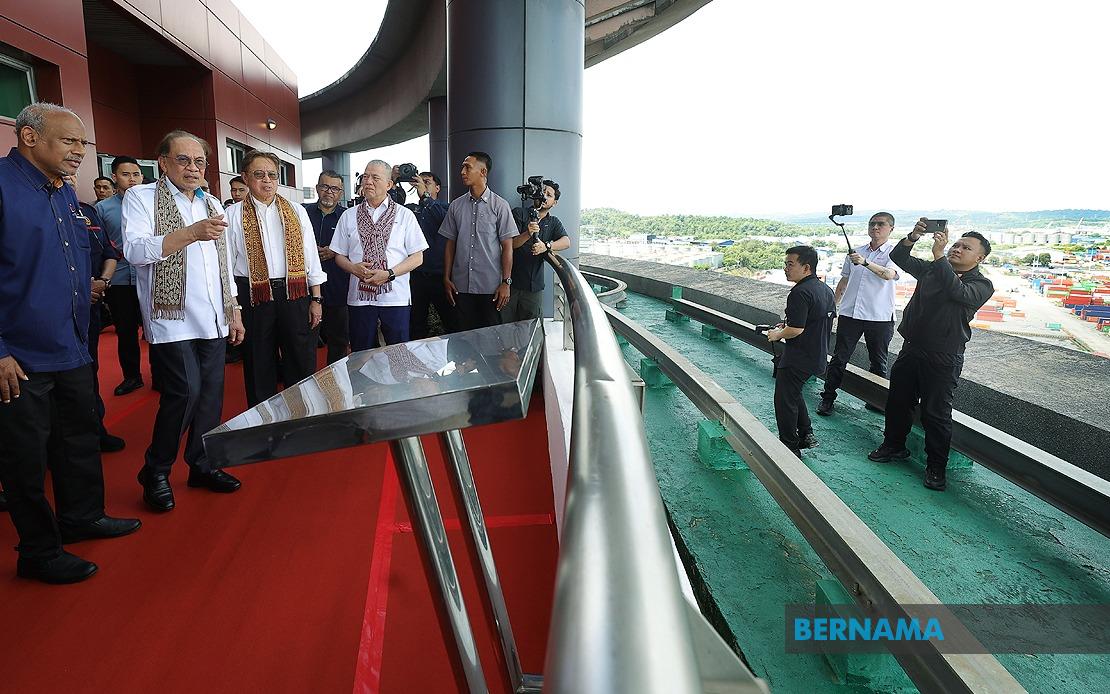
Prime Minister Datuk Seri Anwar Ibrahim has expressed strong confidence in Sarawak's readiness to assume operational control of Bintulu Port, following the completion of its formal transition from federal to state authority. The shift represents a significant recalibration of port management responsibilities within Malaysia's federal structure, with the federal government maintaining backing for the state-level transition despite the operational handover.
Addressing attendees at the Sarawak Level Gawai Dayak 2026 Dinner in Kuching on June 21, Anwar emphasised that the state possesses both the technical knowledge and personnel necessary to run the facility effectively. His remarks underscored the federal government's assessment that Sarawak has developed sufficient institutional capacity to handle the port's day-to-day operations, procurement, and strategic planning without requiring ongoing federal supervision or intervention.
Bintulu Port occupies a crucial position within Malaysia's economic infrastructure, particularly as a major terminal for the country's liquefied natural gas export operations. The facility serves as a critical link in the global energy supply chain, handling shipments that reach markets across Asia and beyond. Its significance extends beyond immediate export volumes, as the port underpins Malaysia's position as a leading LNG supplier and supports the broader petrochemical and industrial ecosystem centred in Sarawak.
The ceremonial handover, formalised through a cheque presentation ceremony held in Bintulu itself, marks the culmination of administrative restructuring that redistributes port management authority to state level. This devolution reflects broader trends in Malaysian federalism where increasing numbers of commercial operations and infrastructure assets are being transferred from federal to state governments, particularly in resource-rich jurisdictions like Sarawak.
Anwar characterised the port transfer as emblematic of collaborative federalism and mutual confidence between Kuala Lumpur and Sarawak. By publicly endorsing the state's capability during a prominent cultural event, the Prime Minister sought to project unity and reinforce the notion that the federal government views the transition as a beneficial arrangement rather than a loss of control. His framing of the handover as a demonstration of "confidence and friendship" attempts to position the restructuring within a narrative of cooperative governance.
Sarawak's administration has assembled teams with demonstrable expertise in port operations and international maritime commerce. The state government has invested in developing local talent within the shipping and logistics sectors, and senior personnel within the administration bring prior experience from federal port authorities and private sector maritime companies. These credentials formed the basis of Anwar's public endorsement of the state's readiness.
The implications of this transition extend beyond administrative convenience. Port efficiency directly affects the competitiveness of Sarawak's LNG producers in global markets, as operational delays, congestion, or cost increases translate into reduced profit margins and potential loss of export contracts to competing suppliers in Australia, Qatar, and Indonesia. Sarawak's government now bears direct responsibility for maintaining the facility's operational standards and technological currency.
The transfer also carries political dimensions within Malaysian federalism. Sarawak, which possesses substantial autonomy under the Malaysia Agreement 1963, has long sought expanded control over strategic economic assets within its borders. The Bintulu Port transition represents a concrete victory for state-level autonomy advocates and may encourage similar discussions regarding other major infrastructure facilities. Other resource-rich states, particularly Sabah, may view this development as establishing precedent for their own claims to expanded asset control.
International stakeholders in Sarawak's LNG industry—including multinational energy corporations and offshore investors—will be monitoring the transition closely. Their confidence in the state's operational competence directly influences investment decisions, technology partnerships, and long-term development commitments. Any disruption to port operations or perception of declining management standards could affect future capital allocation to Sarawak's energy sector.
The federal government's public confidence statement serves multiple audiences simultaneously. Domestically, it reassures Sarawak's leadership that the transfer reflects genuine trust rather than administrative expediency or federal retreat. Internationally, it signals to foreign investors and trading partners that Malaysia's infrastructure remains stable and professionally managed under new local governance arrangements. For the broader region, it demonstrates Malaysia's capacity to undertake significant institutional reforms while maintaining operational continuity.
Looking forward, the success of this transition will likely inform federal policy decisions regarding other major ports, including those in Peninsular Malaysia. If Sarawak's management of Bintulu Port delivers improved efficiency, innovation, or revenue outcomes, the federal government may face pressure to expand state-level involvement in other infrastructure sectors. Conversely, operational difficulties would reinforce arguments for maintaining centralised federal control over critical economic assets.
The timing of this announcement, concurrent with Gawai Dayak celebrations, carries cultural and political significance within Sarawak's context. By making the announcement within a framework celebrating indigenous Dayak culture and community, Anwar linked infrastructure development to broader narratives of state recognition and indigenous empowerment. This positioning reinforces the message that the transition benefits all Sarawakians, not merely political elites.
%22%2F%3E%3C%2Fpattern%3E%3C%2Fdefs%3E%3Crect%20width%3D%22100%25%22%20height%3D%22100%25%22%20fill%3D%22url(%23ph12ncwg)%22%2F%3E%3Crect%20width%3D%22100%25%22%20height%3D%22100%25%22%20fill%3D%22url(%23ph12ncwp)%22%2F%3E%3Ctext%20x%3D%2250%25%22%20y%3D%2250%25%22%20text-anchor%3D%22middle%22%20dominant-baseline%3D%22central%22%20fill%3D%22rgba(255%2C255%2C255%2C0.95)%22%20font-family%3D%22Georgia%2C%20'Times%20New%20Roman'%2C%20serif%22%20font-weight%3D%22700%22%20font-size%3D%22226%22%20letter-spacing%3D%22-0.02em%22%3EPenang%3C%2Ftext%3E%3C%2Fsvg%3E)