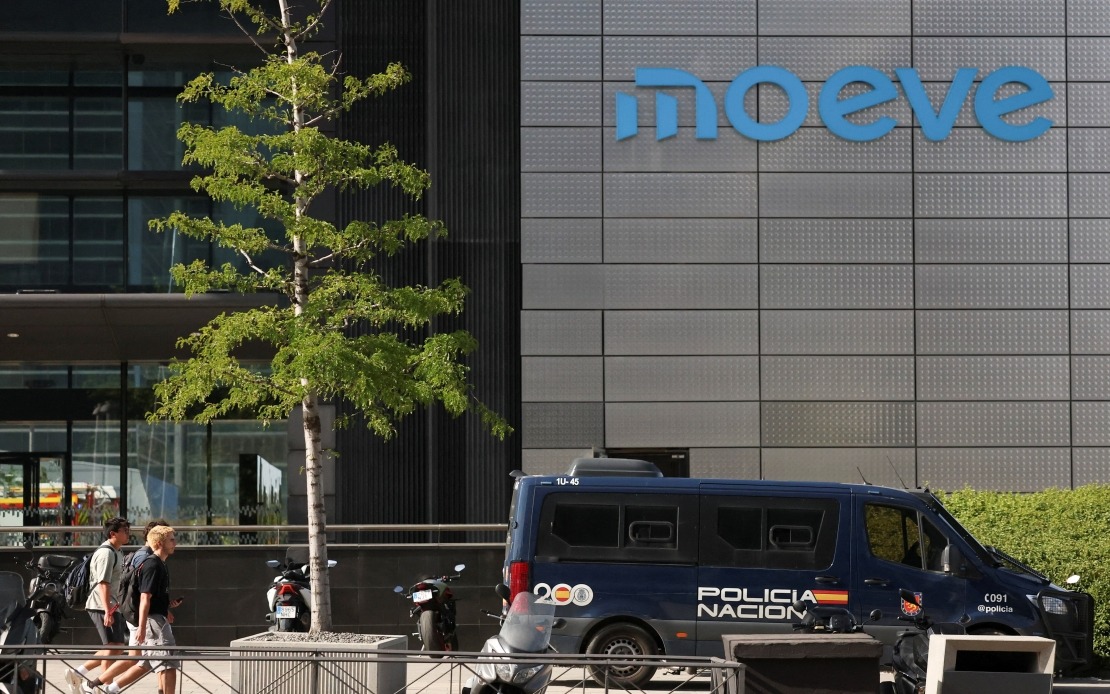
A significant fire emergency unfolded in Madrid on Tuesday when flames erupted at Torre Moeve, one of Spain's most prominent architectural landmarks, following an internal explosion that reverberated through the city's business district. The incident, which originated around 5.00 pm local time according to reports from Spanish national broadcaster RTVE, generated substantial plumes of smoke that were visible across considerable distances throughout the Spanish capital, immediately drawing attention from residents and authorities.
The fire department's response was swift and coordinated, with the Madrid City Council dispatching firefighting units that successfully contained and extinguished the blaze after conducting thorough inspections of the affected structure. Spanish government officials confirmed that the flames originated on the 25th floor, where technical infrastructure and mechanical systems are housed, explaining the initial explosion that triggered the emergency. The strategic location of the fire source—within specialist equipment rooms rather than occupied office spaces—proved crucial in limiting potential harm to building occupants.
Building management implemented precautionary evacuation protocols immediately upon detecting the emergency, ensuring that personnel vacated Torre Moeve in an orderly manner before the situation could escalate. These rapid safety measures, coordinated between security personnel and emergency responders, proved effective in preventing the kind of mass casualties that might otherwise occur in a high-rise incident. The National Police, through their coordination with regional authorities, maintained clear communication channels that allowed seamless evacuation execution across the tower's multiple levels.
Casually figures remained minimal, reflecting both the early detection of the emergency and the effectiveness of evacuation procedures. Medical personnel documented three individuals requiring treatment: two workers who experienced mild smoke inhalation and a bystander who suffered an anxiety reaction triggered by the dramatic nature of the incident. All three received on-site medical assessment and were cleared without requiring hospital admission, indicating that smoke exposure and psychological impacts remained within manageable parameters despite the dramatic circumstances.
Torre Moeve occupies a significant position within Madrid's contemporary skyline as Spain's second-tallest building, making this incident noteworthy for Spain's construction and real estate sectors. The building serves as a symbol of modern Spanish architecture and engineering, representing substantial commercial investment in the capital's business infrastructure. Its prominence in the urban landscape meant that the incident garnered widespread public attention, as smoke from the 25th floor fire was clearly observable from numerous vantage points across the city.
The explosion preceding the fire raises questions about maintenance protocols and technical systems management within high-rise commercial structures, matters of considerable importance for facilities operators across Spain and Europe more broadly. Preliminary assessments suggest that the explosion occurred within technical areas rather than in spaces containing hazardous materials in dangerous concentrations, though comprehensive investigations will determine precise causation. Spanish authorities indicated that the incident did not appear to have resulted from criminal activity or external interference, though formal conclusions remain pending further analysis.
For Malaysian and Southeast Asian observers, this incident underscores the importance of robust emergency response frameworks and strict evacuation procedures in high-rise commercial developments. The region continues expanding its skyline with increasingly tall structures, and learning from international incidents provides valuable context for refining local safety standards. Malaysian building codes and emergency response protocols, particularly in Kuala Lumpur's growing corporate towers and mixed-use developments, benefit from examining how Spanish authorities managed this significant incident.
The incident also highlights the critical role of professional firefighting capabilities in managing modern building emergencies. Madrid's City Council fire services demonstrated effective resource deployment and technical expertise in rapidly containing what could have developed into a more severe situation. The coordination between police, fire services, and building management illustrated how institutional frameworks and pre-established emergency procedures significantly reduce incident severity when execution is professional and immediate.
Reassessment of technical room maintenance and monitoring systems will likely follow this incident, as building operators across Spain examine whether enhanced surveillance or preventative measures could have detected problems earlier. Technical equipment areas in high-rise buildings require particular attention, as machinery, electrical systems, and mechanical infrastructure can develop conditions leading to fires or explosions if maintenance protocols are inadequate. The location of this incident in such spaces will prompt facility managers throughout Spain to review their inspection frequencies and monitoring technologies.
International incident databases and building safety organizations will certainly document this event, contributing to broader understanding of high-rise fire management and emergency response effectiveness. The successful evacuation with minimal injuries provides a case study in effective crisis management, while the investigation into causation will inform technical safety standards and maintenance requirements across the construction and facilities management industries throughout Europe.