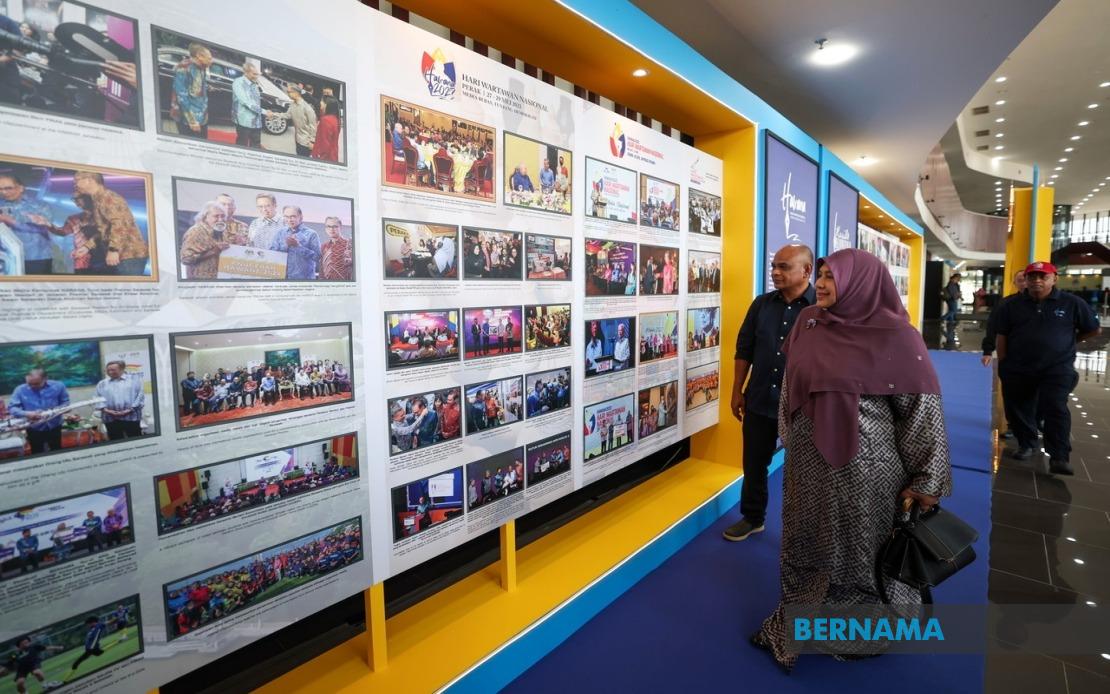
The National Journalists' Day (HAWANA) 2026 summit is poised to commence tomorrow at the PICCA@Arena Butterworth Convention Centre, with final preparations now 80 per cent complete following intensive rehearsals over the past three days. The event represents a significant departure from tradition by relocating from Kuala Lumpur to Penang, marking a strategic effort to bring Malaysia's premier journalism platform to the northern region and engage a broader cross-section of the media community outside the capital.
Prime Minister Datuk Seri Anwar Ibrahim is scheduled to officiate the summit at 3 pm, delivering what is expected to be a landmark address on the state of journalism and media responsibility in Malaysia. The summit carries the theme 'Media Integrity Strengthens Credibility', positioning it as a critical moment for the industry to collectively reassess professional standards and ethical frameworks amid evolving media landscapes and societal pressures.
Datin Paduka Nur-ul Afida Kamaludin, Bernama chief executive officer and HAWANA 2026 Working Committee chairman, emphasised that hosting the event in Penang necessitated meticulous logistical planning. The northern venue presented distinct challenges in accommodation, transportation, and coordination that differed substantially from previous editions held in the capital, requiring the committee to forge partnerships with local accommodation providers and transport operators to facilitate attendance by approximately 1,000 media practitioners from Malaysia and the region.
The decision to move the summit northward reflects organisational thinking about accessibility and inclusivity, yet it has also introduced practical trade-offs. Nur-ul Afida acknowledged that the Penang location may suppress overall attendance compared with Kuala Lumpur gatherings, as professionals outside the immediate vicinity face competing work obligations, travel time, and family responsibilities that could deter participation. This geographic shift therefore embodies both an opportunity to democratise access to the summit and a recognition of real constraints facing journalists and editors operating across the country.
The summit is being organised under the auspices of the Ministry of Communications, with Bernama serving as the implementing agency. HAWANA, the acronym for the National Journalists' Day platform, functions as Malaysia's foremost institutional mechanism for honouring the contributions, dedication, and professional achievements of media practitioners nationwide. The event has evolved into a strategic convening space where industry leaders, practitioners, academics, and policymakers converge to generate innovative perspectives and establish the trajectory for contemporary journalism practice in a rapidly transforming media environment.
Beyond the main summit, several complementary side events are scheduled in conjunction with HAWANA 2026, organised in partnership with the Malaysian Media Council, the Federation of Malaysian Media Clubs (GKMM), and the Malaysian Press Institute (MPI). These ancillary programmes are designed to extend the intellectual and professional engagement beyond the central summit, offering targeted forums for specialist discussion on emerging challenges in journalism, media ethics, digital transformation, and industry sustainability.
The timing of HAWANA 2026 assumes particular significance in the Malaysian media landscape, where questions about editorial independence, information accuracy, and public trust in news institutions remain contested. The central theme of media integrity versus credibility speaks directly to these concerns, framing journalism not merely as a commercial or political function but as a foundational pillar of democratic and social cohesion. By elevating integrity as a prerequisite for credibility, the summit implicitly acknowledges that technical or commercial success cannot substitute for ethical practice and transparency.
For Malaysian media practitioners, the summit offers a rare occasion to engage in structured dialogue with peers, access professional development opportunities, and gain exposure to international best practices and benchmarks. The anticipated attendance of approximately 1,000 media professionals from Malaysia and abroad creates a cross-pollination environment where local journalists can absorb perspectives from regional and international counterparts while showcasing Malaysian journalism's distinctive approaches and innovations.
The relocation to Penang also carries symbolic weight within Malaysia's federal structure and media geography. Penang, as a major commercial and communications hub in the northern region, serves as a secondary media centre and political battleground, making it a strategically appropriate venue for a national journalism summit. The choice signals organisational commitment to distributing major institutional events beyond Kuala Lumpur and encouraging regional engagement with critical professional and policy discussions.
For the broader Southeast Asian media community, HAWANA 2026 provides a window into Malaysia's evolving relationship with journalism, institutional support for the profession, and the region's response to global pressures on media freedom and sustainability. The summit's explicit focus on integrity and credibility reflects regional conversations about combating misinformation, maintaining professional standards amid digital fragmentation, and preserving public interest journalism against economic headwinds affecting newsrooms across Asia.
The intensive preparation undertaken by the working committee over recent days underscores the logistical complexity of convening a large-scale professional gathering in a venue outside the usual infrastructure and networks concentrated in the capital. The rehearsal sessions and detailed planning reflect institutional seriousness about ensuring the summit proceeds smoothly, maintaining professional standards in its execution, and delivering substantive value to attendees who are investing time and resources in participation.
As the summit approaches, it encapsulates both continuity and evolution in how Malaysia's journalism profession organises itself, sets professional standards, and engages with government and institutional stakeholders. The event's success in Penang will likely influence decisions about future venues and formats, potentially reshaping the geography of Malaysia's media leadership conversations and broadening the constituency that shapes the industry's future direction.