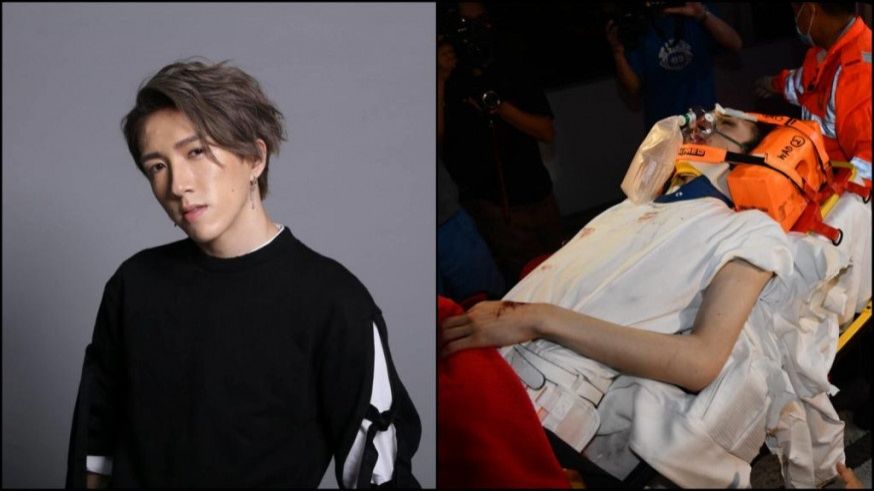
A Hong Kong District Court has awarded dancer Mo Li Kai-yin HK$6.29 million (approximately RM3.32 million) in damages following the catastrophic accident that left him permanently paralyzed during a Cantopop boy band Mirror concert two years ago. The judgment, delivered on June 15, represents the maximum compensation available across multiple categories and underscores the severe and irreversible nature of injuries sustained when a four-by-four-meter LED panel fell from the ceiling at Hong Kong Coliseum on July 28, 2022.
The court's language in describing Mo's condition was unsparing. Describing his disabilities as "catastrophic" and finding him in a state of "permanent total incapacity," the judgment noted that the 31-year-old dancer would require round-the-clock assistance from three full-time caregivers for the remainder of his life. The verdict emphasised that Mo is now incapable of living independently or experiencing the ordinary freedoms and dignity associated with adult autonomy. This characterisation underscores how a single moment during what should have been an ordinary performance fundamentally erased the trajectory of a young professional's existence.
Mo's employer, Studiodanz, bears legal responsibility for the accident and has been ordered to pay the full compensation package, which encompasses permanent incapacity payments, ongoing caregiving expenses, medical treatment costs, and periodic maintenance support. Beyond the damages award, Studiodanz must also cover Mo's legal expenses and accrued interest on the judgment. The company's absence from the trial proceedings—it did not contest the case—speaks to the gravity of the incident and the strength of Mo's legal position. Additionally, Studiodanz had already faced regulatory sanctions, having been fined HK$132,000 for breaching occupational safety standards related to the accident.
The specific injury sustained during the Mirror concert was a cervical spine dislocation that resulted in paralysis from the neck downward. Mo underwent emergency surgical intervention at Queen Elizabeth Hospital immediately following the accident, followed by intensive inpatient treatment and ongoing rehabilitation. His medical journey subsequently extended beyond Hong Kong, with transfers to private institutions and overseas centres where he continues to undergo surgical procedures and therapy aimed at functional recovery. The treatment regimen reflects both the severity of his condition and his determination to pursue every available avenue toward rehabilitation.
Mo's father, Reverend Derek Li Shing-lam, made the profound sacrifice of resigning from his pastoral position in Canada to return to Hong Kong and serve as his son's primary full-time caregiver. This arrangement persisted until his passing on April 25, highlighting the emotional and practical toll such injuries inflict not merely on the injured individual but on their entire family unit. The need for three professional caregivers alongside familial support demonstrates the labour-intensive nature of caring for someone with total paralysis.
Prior to the accident, Mo had established a growing career in Hong Kong's entertainment industry. His introduction to dance occurred during his university years between 2015 and 2019, but he only transitioned to full-time professional dancing in 2019. Within the relatively brief window before his injury, he accumulated substantial performance credits, appearing at concerts, television broadcasts, commercial advertisements, and music videos. Simultaneously, he maintained an instructional presence, teaching at four different dance studios including Studiodanz, where he was employed at the time of the accident.
The accident occurred during the fourth performance of Mirror's planned twelve-concert residency at Hong Kong Coliseum, meaning the boy band's show series was effectively disrupted by the tragedy. The incident raised immediate questions about venue safety protocols and equipment securing procedures, particularly concerning the use of large suspended display screens in performance environments. For the entertainment industry across Hong Kong and the broader region, the incident served as a stark reminder of occupational hazards that performers face even in ostensibly professional, regulated venues.
Since the accident, Mo has pursued an aggressive rehabilitation strategy incorporating cutting-edge therapeutic technologies. His treatment protocol includes regenerative medicine approaches and an implantable microstimulator device designed to restore neural function. These interventions have yielded modest but meaningful improvements: he has regained some motor control in his right arm and recovered sensation in his bladder and bowel functions. In March, a video posted to his Instagram account demonstrated his progress, showing him operating an electric wheelchair using his right hand—a capability that, while modest by pre-accident standards, represents significant advancement for someone with complete neck-level paralysis.
The financial compensation, while substantial, exists primarily to cover the extraordinary expenses associated with lifetime care rather than to serve as genuine restitution for the loss of his career, independence, and life trajectory. The award reflects the court's acknowledgment that Mo's earning potential has been entirely eliminated and that he now represents a permanent dependent requiring institutional or familial support. For Malaysian audiences familiar with the Southeast Asian entertainment industry, Mo's case serves as a cautionary examination of workplace safety in high-profile performance environments and the devastating consequences when safety systems fail.
The judgment also carries implications for venue operators and entertainment companies throughout the region. The regulatory fine imposed on Studiodanz, combined with the substantial damages award, demonstrates that financial accountability follows when occupational safety breaches result in catastrophic injury. For performers, crew members, and technical staff working in comparable venues across Malaysia, Singapore, and other neighbouring countries, Mo's case underscores the critical importance of rigorous safety protocols and equipment maintenance procedures. The compensation awarded, while providing essential financial resources for his care, cannot restore what was lost on that July evening at Hong Kong Coliseum.

