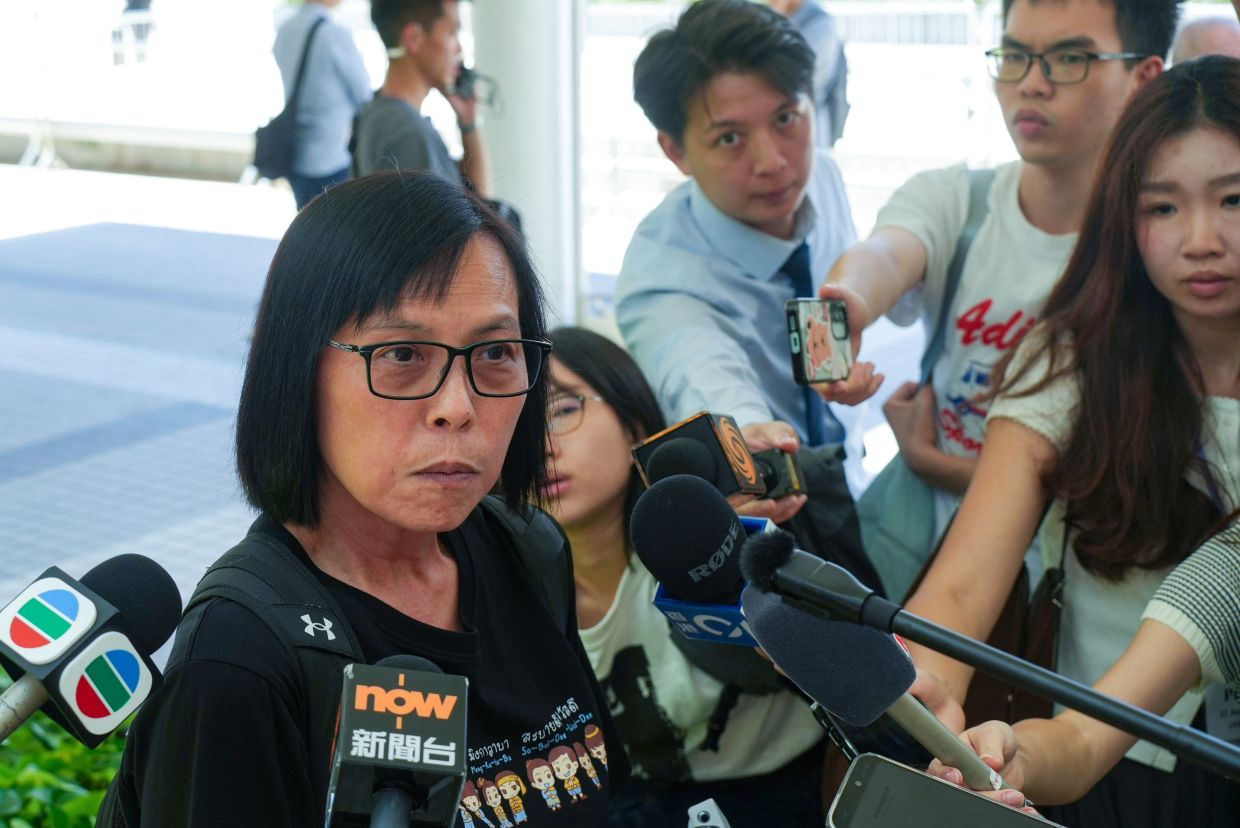
An independent panel investigating last year's Wang Fuk Court fire in Hong Kong has decided against pursuing statutory commission status, a choice that has prompted worry among survivors and observers who question whether the investigation can adequately uncover systemic failures. Committee chairman Justice David Lok Kai-hong announced the decision as the inquiry resumed Monday following a six-week adjournment, signalling the panel will continue its work under its current non-statutory framework.
The distinction between a statutory and non-statutory inquiry carries substantial implications for how thoroughly officials can be compelled to participate and what enforcement mechanisms exist for compliance. A statutory commission of inquiry typically enjoys enhanced legal authority to subpoena witnesses, demand documentary evidence, and impose penalties for non-cooperation. Without these powers, investigators rely on voluntary participation and the goodwill of institutions and individuals whose conduct may come under scrutiny. In the Hong Kong context, where accountability for building safety and emergency response procedures remains contested, this choice represents a significant constraint on investigative reach.
Justice Lok's position reflects a judgment that the independent committee possesses adequate tools to pursue its mandate, yet survivors of the Wang Fuk Court incident have expressed concern that non-statutory status may discourage candid testimony from government officials and property managers who might otherwise face legal consequences for obstruction. The ability to compel attendance and extract detailed accounts is particularly important when investigating workplace safety, emergency preparedness, and regulatory oversight—domains where institutional resistance to critical scrutiny is predictable.
The Wang Fuk Court fire occurred last year and prompted significant public attention regarding building safety standards and fire prevention protocols in Hong Kong's aging residential stock. As a densely populated urban territory with many older structures, Hong Kong faces ongoing challenges in balancing renovation demands with safety improvements. The incident highlighted potential gaps in fire detection systems, emergency evacuation procedures, and the maintenance responsibilities of property management companies. An investigation with robust investigative authority might more effectively identify which gaps stem from regulatory failures, resource constraints, or negligent management.
The six-week pause in proceedings suggests the committee has substantial work ahead, including witness examinations and document review. However, the absence of statutory powers means investigators cannot enforce cooperation from parties who might otherwise delay, provide incomplete responses, or decline participation altogether. This dynamic becomes particularly consequential when examining the conduct of government agencies responsible for building inspections and fire safety certification. Without statutory authority, such bodies face minimal risk if they choose not to disclose relevant internal communications or policy decisions.
Malaysian observers of Hong Kong governance should note parallels with fire safety and building regulation challenges across Southeast Asia. High-rise residential developments, aging infrastructure, and rapid urbanisation create similar vulnerabilities in Malaysia and neighbouring countries. The manner in which Hong Kong's inquiry proceeds—and whether its non-statutory status affects the quality of findings—could inform discussions about investigative frameworks for building-related disasters throughout the region. An inquiry that fails to uncover root causes may not yield lessons applicable to preventing future incidents in similar contexts.
The decision also reflects broader questions about accountability mechanisms in Hong Kong's governance structure. Survivor groups have advocated for converting the committee into a statutory inquiry, arguing that formal legal status would strengthen the investigation's legitimacy and ensure that recommendations carry greater weight with authorities responsible for implementing reforms. When inquiries operate without statutory authority, their findings, however thorough, may be treated as advisory rather than binding guidance for systemic change.
Chairman Justice Lok's stated reasoning for declining statutory status has not been fully elaborated in public statements, though independence from government pressure is presumably a consideration. A non-statutory committee may be perceived as distanced from bureaucratic influence, yet this independence comes at the cost of enforcement capacity. The trade-off between perceived neutrality and investigative power represents a genuine dilemma in inquiry design, one that no configuration can fully resolve.
The implications extend beyond the Wang Fuk Court incident itself. If the non-statutory inquiry produces findings that implicate government negligence or systemic failures, without statutory backing those findings may prove difficult to enforce or translate into concrete policy change. Survivors and their advocates seeking accountability might find that recommendations, even if robust, lack the legal weight to compel government action on implementation timelines or resource allocation for safety improvements.
As the investigation continues through Monday's resumption, attention will focus on whether witnesses testify candidly and whether investigative staff can access necessary documentation without resorting to formal compulsion. The decision to maintain non-statutory status represents a calculated judgment about how to balance independence with effectiveness—a judgment that will only be fairly evaluated once findings are released and observed in relation to subsequent policy responses. For residents of aging high-rise buildings throughout Hong Kong and comparable urban centres in Southeast Asia, the quality of this investigation carries direct bearing on whether building safety protocols improve or stagnate in the years ahead.