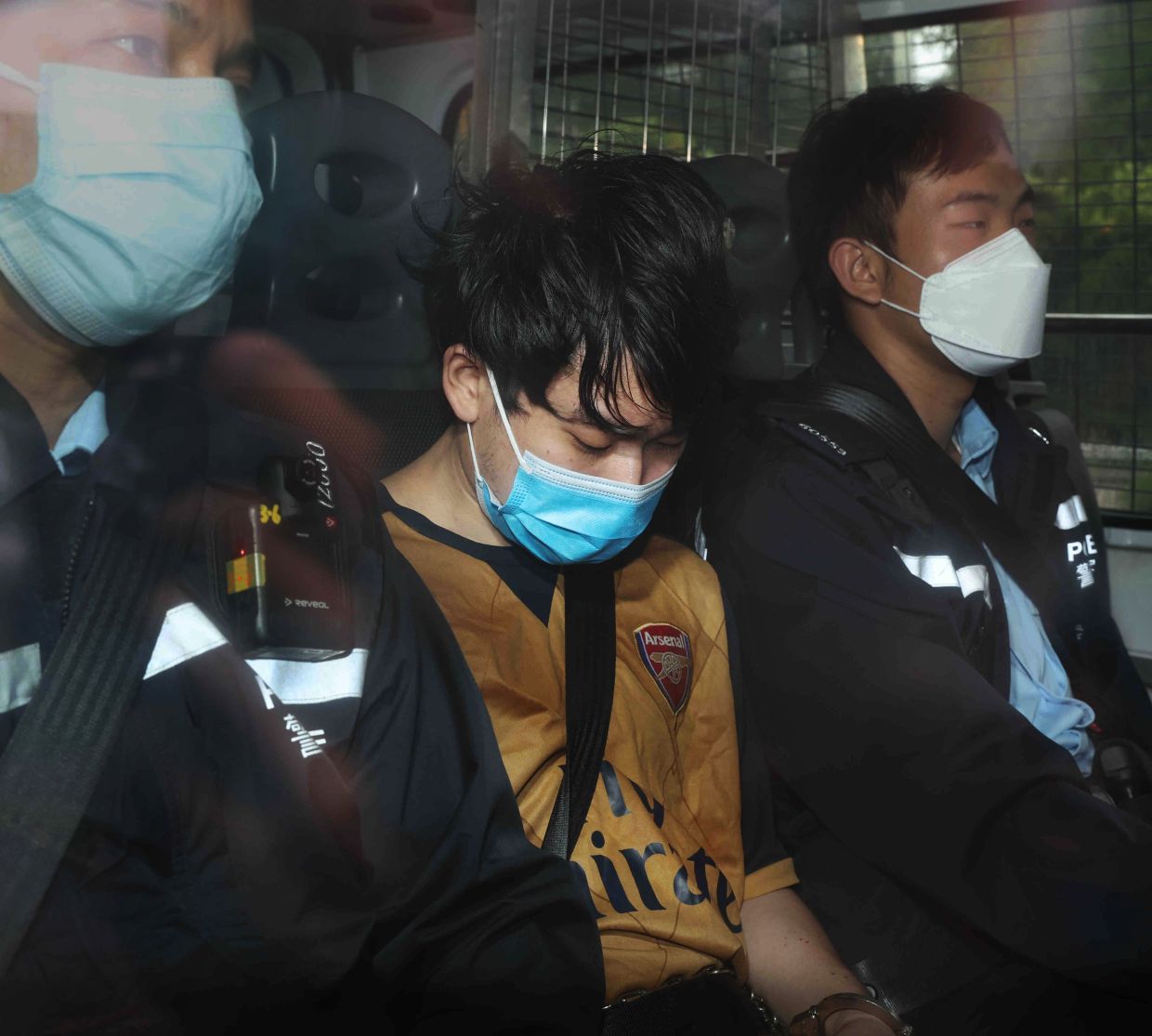
A 29-year-old unemployed man has mounted an extraordinary defence in a Hong Kong murder trial, claiming he fatally beat his girlfriend by accident while attempting to assist her weight loss through sleep deprivation. Ng Ka-sing is accused of killing Yip Tsz-ching, 30, at their 700-square-foot flat in Galore Garden, Hung Shui Kiu, between April 28 and 29, 2022. The case represents a particularly troubling intersection of domestic violence, alleged abuse masquerading as health intervention, and the disturbing circumstances surrounding the discovery and disposal of the victim's remains.
The High Court heard that Ng struck Yip repeatedly with a rod over several hours as she lay in their shared home, which they occupied with his sworn sister and her family. According to Ng's account to police, he began this assault on the night of April 27, motivated by a desire to keep his girlfriend awake in the misguided belief that sleep deprivation would facilitate weight reduction. This claim raises critical questions about control, coercion, and the veneer of concern that can mask systematic abuse within intimate relationships. The prosecution's opening statement made clear that investigators and prosecutors view Ng's narrative with deep scepticism, with Senior Public Prosecutor Audrey Parwani explicitly telling the seven-member jury that "the prosecution does not accept the accused was telling the whole truth."
According to testimony, Ng continued his assault intermittently across two separate periods: initially from 10pm on April 27 until 1:30am the following morning, then again from 3am to 5:30am on April 28. What renders the account particularly disturbing is Ng's claim that he sought permission to continue the violence, with his sworn sister allegedly encouraging him to persist. When asked whether he should stop, she reportedly suggested he "continue for a bit longer"—a detail that, if substantiated, implicates another household member in sanctioning the abuse. Ng maintained throughout his police interviews that Yip never explicitly instructed him to cease the beating, thus providing what he presumably believed was a justification for prolonging the violence.
The physical evidence paints a grimmer picture than Ng's narrative can accommodate. Government pathologist Dr Foo Ka-chung discovered multiple bruises, abrasions, and lacerations distributed across the victim's head and body, consistent with blunt force trauma from punching and kicking. Beyond these injuries, the court learned that Yip sustained extensive corrosive burns covering 55 per cent of her body. Ng claims that Yip herself poured drain cleaner over her body, while he merely splashed some liquid on the floor to "stimulate" her feet. The pathologist determined that suffocation, precipitated by head injuries and the severe thermal burns, constituted the cause of death—a medical conclusion that undermines the defendant's account of a tragic accident.
By approximately 5am on April 28, Yip reportedly told Ng that she was experiencing significant pain and doubted her survival prospects. She subsequently fell into a coma and spoke for the last time at 7:21am that morning. Rather than seek emergency medical assistance at this critical juncture, Ng appears to have taken measures to conceal what had transpired. The case came to public attention when early-morning joggers spotted a human leg protruding from a rolled-up quilt balanced on Ng's wheelboard at approximately 6am on April 29. Forensic evidence specialist Lo Man-hung discovered that Yip's body had been bound to an overturned wooden chair using black rubbish bags, with her head wrapped in multiple layers of cling film and adhesive tape—preparations suggesting deliberate concealment rather than panicked disposal.
The discovery itself offers insight into Ng's demeanour and state of mind. Lau Kwok-yan, the jogger who reported the body to police, testified that Ng stood passively on the street while awaiting officers, displaying no apparent signs of distress or agitation. Street cleaner Wong Ah-sum recounted that when he questioned Ng about the package on the wheelboard, the defendant calmly identified it as a "corpse" and stated his intention to transport it to a police station. Upon arrest at 6:36am, Ng made a statement that appeared calculated to minimise culpability: "This was my girlfriend. I hit her to death with a rod by mistake." This formulation—presenting the killing as unintentional while admitting the fundamental act—establishes precisely the narrative he has carried into trial.
Initially, Ng offered to plead guilty to manslaughter rather than murder, a substantial concession that would typically signal acceptance of responsibility for causing death through reckless conduct. The prosecution's rejection of this offer suggests that investigators and the Crown's office believe the evidence supports a finding of intentional killing rather than a tragic accident. The distinction carries profound legal and moral weight: manslaughter encompasses deaths caused by gross negligence or during the commission of an unlawful act, whereas murder typically requires proof of intent to kill or cause grievous bodily harm. By rejecting the guilty plea and proceeding to trial, prosecutors are essentially asserting that Ng acted with knowledge of the probable consequences of his prolonged violence.
The case raises uncomfortable questions about how domestic violence escalates and how abusers often rationalize systematic cruelty. The claim that Ng was attempting to help his girlfriend lose weight through violent sleep deprivation illustrates how perpetrators sometimes frame control and abuse as assistance or care. This psychological dynamic—wherein coercive behaviour is presented as being in the victim's interest—represents a well-documented pattern in intimate partner violence. The presence of his sworn sister in the household adds another troubling dimension, suggesting that Yip lacked refuge or intervention from other household members, and that witnessing such violence may have become normalized within that domestic space.
The trial, presided over by Mrs Justice Judianna Barnes and a jury, is expected to continue for 18 days. The proceedings will likely explore not only the immediate circumstances of Yip's death but also the broader context of their relationship, patterns of behaviour, and the psychological states of all parties involved. For Malaysian observers and the broader Southeast Asian public, this case serves as a sobering reminder of the dangers lurking beneath claims of concern or care within intimate relationships, and the importance of recognizing coercive control and physical violence as serious red flags warranting intervention and protection.
%22%2F%3E%3C%2Fpattern%3E%3C%2Fdefs%3E%3Crect%20width%3D%22100%25%22%20height%3D%22100%25%22%20fill%3D%22url(%23ph1pb81g)%22%2F%3E%3Crect%20width%3D%22100%25%22%20height%3D%22100%25%22%20fill%3D%22url(%23ph1pb81p)%22%2F%3E%3Ctext%20x%3D%2250%25%22%20y%3D%2250%25%22%20text-anchor%3D%22middle%22%20dominant-baseline%3D%22central%22%20fill%3D%22rgba(255%2C255%2C255%2C0.95)%22%20font-family%3D%22Georgia%2C%20'Times%20New%20Roman'%2C%20serif%22%20font-weight%3D%22700%22%20font-size%3D%22272%22%20letter-spacing%3D%22-0.02em%22%3EMITRA%3C%2Ftext%3E%3C%2Fsvg%3E)
%22%2F%3E%3C%2Fpattern%3E%3C%2Fdefs%3E%3Crect%20width%3D%22100%25%22%20height%3D%22100%25%22%20fill%3D%22url(%23ph3khjrg)%22%2F%3E%3Crect%20width%3D%22100%25%22%20height%3D%22100%25%22%20fill%3D%22url(%23ph3khjrp)%22%2F%3E%3Ctext%20x%3D%2250%25%22%20y%3D%2250%25%22%20text-anchor%3D%22middle%22%20dominant-baseline%3D%22central%22%20fill%3D%22rgba(255%2C255%2C255%2C0.95)%22%20font-family%3D%22Georgia%2C%20'Times%20New%20Roman'%2C%20serif%22%20font-weight%3D%22700%22%20font-size%3D%22320%22%20letter-spacing%3D%22-0.02em%22%3ERim%3C%2Ftext%3E%3C%2Fsvg%3E)
%22%2F%3E%3C%2Fpattern%3E%3C%2Fdefs%3E%3Crect%20width%3D%22100%25%22%20height%3D%22100%25%22%20fill%3D%22url(%23ph3tt8dg)%22%2F%3E%3Crect%20width%3D%22100%25%22%20height%3D%22100%25%22%20fill%3D%22url(%23ph3tt8dp)%22%2F%3E%3Ctext%20x%3D%2250%25%22%20y%3D%2250%25%22%20text-anchor%3D%22middle%22%20dominant-baseline%3D%22central%22%20fill%3D%22rgba(255%2C255%2C255%2C0.95)%22%20font-family%3D%22Georgia%2C%20'Times%20New%20Roman'%2C%20serif%22%20font-weight%3D%22700%22%20font-size%3D%22226%22%20letter-spacing%3D%22-0.02em%22%3EDiesel%3C%2Ftext%3E%3C%2Fsvg%3E)