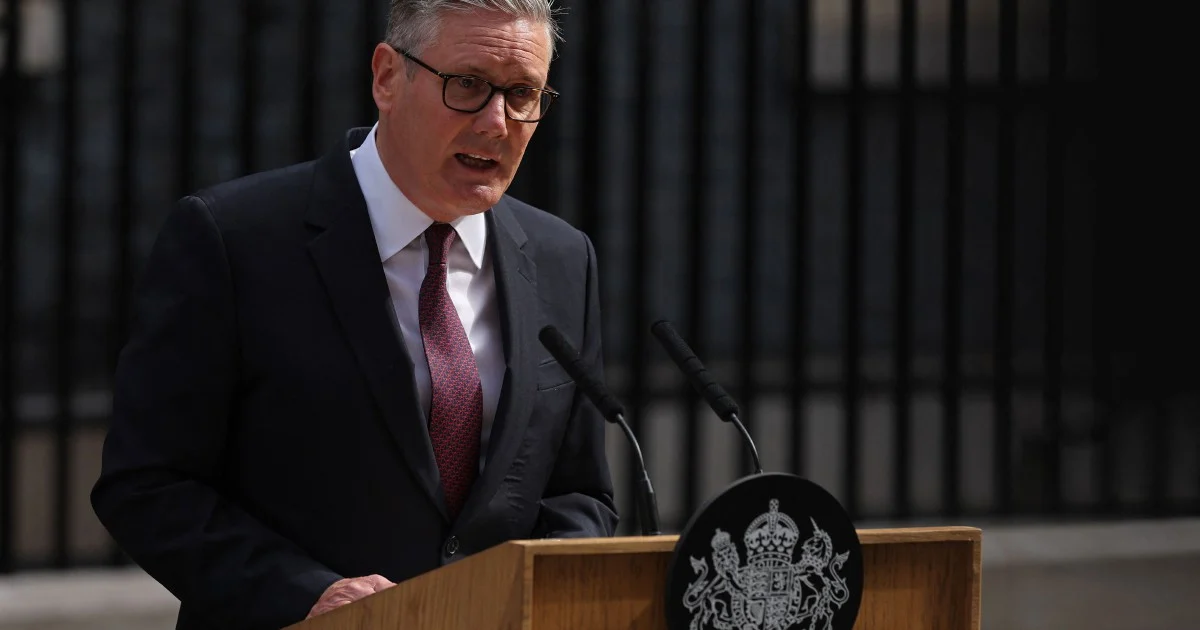
Prime Minister Keir Starmer declared on Monday that he would step down from office, ensuring the United Kingdom would have selected a replacement leader by the time parliament resumes sitting in September. This announcement catapults Britain towards what will be its seventh change of prime minister in just one decade, a record that underscores the remarkable volatility of British politics in recent years.
The selection process for a new Labour Party leader hinges on a distinctive democratic framework established within the party hierarchy. Any member of parliament who wishes to become prime minister must first secure the backing of an agreed threshold of fellow Labour MPs. This gatekeeping mechanism was designed to prevent a proliferation of candidates and ensure that frontrunners possess substantive parliamentary support from their peers. The exact threshold required can shift depending on the party rules in force at the time of the leadership election.
Once candidates clear the nominations hurdle, the contest enters its broader phase, where the wider Labour Party membership gets its say. Unlike some other political systems, British Labour Party leadership elections are not determined solely by MPs or party grandees. Instead, members across the entire country—ordinary Labour Party cardholders—participate in a weighted voting system that often gives decisive influence to the grassroots. This two-stage process reflects the party's commitment to internal democratic principles, though it has occasionally produced outcomes that surprised parliamentary colleagues.
The timeline becomes crucial here. With parliament scheduled to return in September, the Labour Party leadership must complete its selection process well before that date, giving the successful candidate sufficient time to prepare for governing and establish their administration. This compressed calendar means party officials will need to move swiftly through nominations, campaign periods, and voting rounds. The accelerated schedule contrasts sharply with leadership transitions that unfold over several months, potentially giving the new leader limited opportunity to consolidate their position before facing public scrutiny.
The unprecedented frequency of prime ministerial changes in Britain reflects deeper fractures within the political establishment. Since 2015, the country has cycled through David Cameron, Theresa May, Boris Johnson, Liz Truss, Rishi Sunak, and now moves toward a successor to Starmer. This instability has several roots: divisive referendums like Brexit, fractured party coalitions, electoral pressure from insurgent movements, and periods of single-party government that lack the moderating influence of coalition partners. Each transition has disrupted policy continuity and tested public confidence in institutional governance.
For Malaysia and other Commonwealth nations observing British politics, this perpetual leadership churn carries important implications. Commonwealth countries often look to Britain's constitutional practices and parliamentary traditions for guidance or comparison. The current degree of prime ministerial turnover challenges assumptions about political stability in mature democracies and raises questions about whether Westminster systems can effectively govern when party discipline erodes or internal factionalism dominates.
The specific circumstances driving Starmer's resignation reflect broader pressures that many leaders across the region might recognise: the difficulty of managing divergent expectations within governing coalitions, public frustration with incremental progress on major challenges, and the relentless scrutiny of modern media environments. Unlike sudden forced removals, Starmer's departure appears more strategic, allowing his party to manage the transition rather than undergo a damaging leadership struggle that plays out in full public view.
Labour's mechanisms for selecting a new leader will face testing during this contest. The party must balance competing values: democratic inclusivity through membership voting, parliamentary effectiveness through MP nominations, and the practical necessity of installing a functioning government quickly. Different candidates may appeal to different constituencies within the party—some attracting traditional working-class voters, others appealing to younger progressive members, still others commanding respect among parliamentary colleagues through legislative experience and tactical acumen.
The international context adds another dimension to Britain's leadership transition. As one of the world's major economies and a permanent UN Security Council member, Britain's period without a fully settled government creates uncertainty in global affairs. Trade negotiations, security partnerships, and diplomatic initiatives all require consistent leadership. The compressed timeline for choosing Starmer's successor means Britain must avoid prolonged instability, yet the process cannot be rushed so much that insufficient consideration is given to candidates' capabilities and vision.
Median age and demographic representation may become factors in this leadership race. Younger politicians within Labour might argue that fresh generational perspectives are needed, while veterans could emphasise experience and established relationships. The candidate field itself will reveal much about Labour's self-perception and the direction members believe the party should travel following recent electoral and governance experiences.
The broader electorate will watch this process carefully, knowing that Labour's next leader might well be Britain's prime minister for years to come—or potentially only briefly, continuing the cycle of instability. This transition represents not merely a routine change of personnel but an indicator of whether British democracy can stabilise around durable political leadership or whether the mechanisms of Westminster governance have become insufficiently robust to anchor long-term policy direction and public trust.