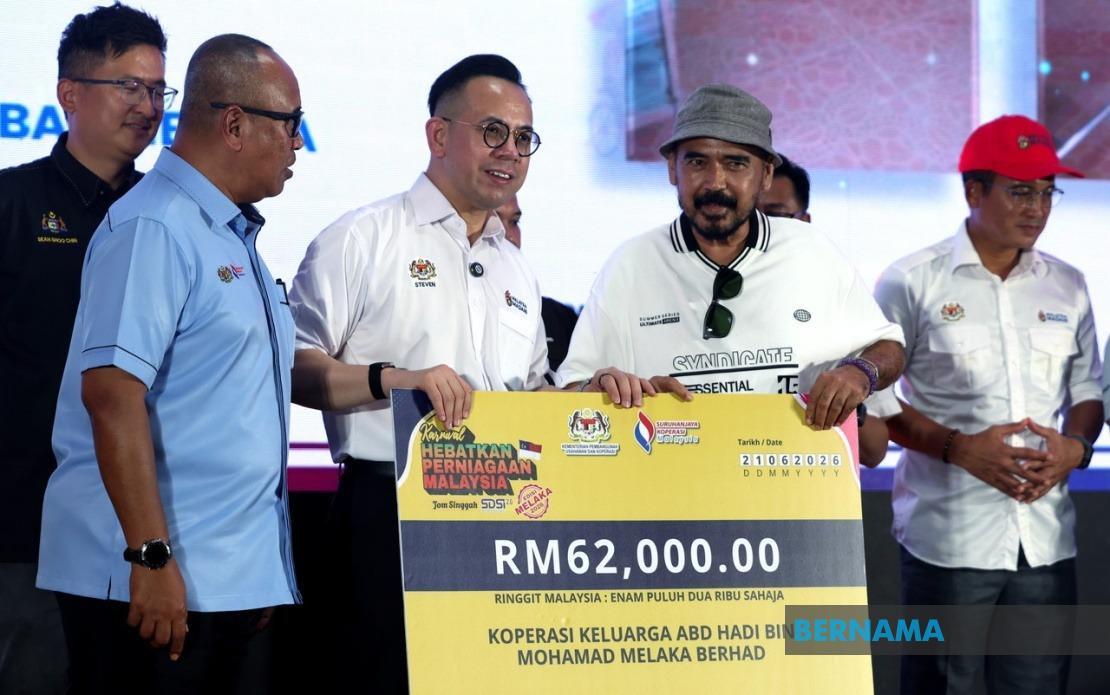
The 2026 Empowering Malaysian Businesses Carnival (Karnival Hebatkan Perniagaan Malaysia 2026), held in Melaka from June 19 to 21, has demonstrated the growing appetite among Malaysian entrepreneurs for networking and growth opportunities. Organised under the auspices of the Ministry of Entrepreneur Development and Cooperatives (KUSKOP), the three-day event delivered substantial tangible results, with a combined business matching value and financing potential reaching RM8.45 million.
The scale of attendance underscores the significance of such initiatives for the local entrepreneurial ecosystem. The carnival drew approximately 70,000 visitors over its three-day run, indicating strong grassroots interest in business development programmes and support mechanisms. Beyond foot traffic, the event translated engagement into measurable economic activity, with entrepreneurs recording direct sales of their products totalling RM532,802.77. This direct commercialisation component reveals how such gatherings serve a dual purpose: fostering strategic connections whilst simultaneously providing immediate sales platforms for participating businesses.
The business matching segment proved particularly successful, generating RM6.4 million in potential partnerships. This achievement stemmed from 72 structured business matching sessions that brought together 25 potential entrepreneurs with established industry players, investors, and service providers. The structured approach to matchmaking—rather than relying on ad-hoc networking—appears to have enhanced the quality and substance of business interactions, creating pathways for entrepreneurs to secure partnerships that could translate into operational expansion and market access improvements.
Financial accessibility, a persistent challenge for small and medium enterprises across Southeast Asia, received targeted attention through dedicated financing interaction sessions. Fifty-five MSMEs participated in financial engagement activities that culminated in RM2.05 million in potential financing opportunities. This component addresses a critical bottleneck in Malaysian business development: many entrepreneurs possess viable business concepts and operational capacity but lack structured access to capital. By facilitating direct dialogue between MSMEs and financial institutions or lending partners, the carnival addressed this friction point whilst reducing information asymmetries that typically characterise small-business lending decisions.
The success of the Melaka edition positions the HPM Carnival series as a strategic policy instrument within KUSKOP's broader Hebatkan Perniagaan Malaysia agenda. Initiated by Minister Steven Sim Chee Keong, this initiative reflects a systematic approach to enterprise development grounded in the ABCD framework: Accelerating Productivity, Bureaucracy Reduction, Capital Accessibility, and Developing Market Access. Each pillar addresses specific structural constraints limiting Malaysian SME growth. By embedding carnival activations within this strategic framework, policymakers ensure that entrepreneurial support activities remain aligned with longer-term development objectives rather than functioning as isolated promotional events.
The carnival serves as an integrated ecosystem that extends beyond one-off networking moments. By providing a consolidated platform where SMEs can simultaneously enhance business capacity, forge strategic partnerships, and identify market expansion opportunities, the initiative reduces transaction costs for entrepreneurs juggling multiple development priorities. Rather than chasing separate training programmes, financing applications, and networking events, participants engage with a curated environment addressing multiple growth dimensions concurrently.
Looking ahead, the HPM series maintains momentum with the third edition scheduled for Penang from July 17 to 19 at the Penang Waterfront Convention Centre. The progression from Melaka to Penang reflects a deliberate geographical expansion strategy, ensuring that enterprise development support reaches entrepreneurial communities across different Malaysian states. Penang's established status as a business and technology hub suggests organisers are positioning subsequent carnivals to leverage existing regional economic clusters and institutional infrastructure.
The Melaka results carry particular significance for Southeast Asian policy observers. Malaysia's structured approach to entrepreneurial ecosystem development—combining financial facilitation, networking infrastructure, and government coordination—offers a model that neighbouring economies experiencing similar SME growth constraints might analyse. As ASEAN nations increasingly recognise that sustainable growth requires robust domestic enterprise sectors, policy blueprints like the HPM Carnival merit regional attention.
For Malaysian entrepreneurs and business operators, the Melaka carnival's performance suggests that government-coordinated support mechanisms can deliver genuine commercial value when properly structured. The RM8.45 million in combined business and financing potential translates into tangible opportunities for participating enterprises to acquire capital, expand operations, and access new markets. As subsequent carnival editions roll out, the accumulative impact on Malaysia's SME landscape could prove substantial, particularly if participating entrepreneurs successfully convert potential partnerships and financing leads into operational reality.
The direct sales achievement of RM532,802.77 merits particular emphasis for what it reveals about entrepreneurial demand. Rather than waiting for formal credit approvals or partnership agreements, SME operators seized immediate commercial opportunities within the carnival environment. This suggests entrepreneurs are cash-constrained but operationally competent—they require capital and market access rather than capacity building. Policymakers should note this distinction when designing subsequent support interventions.
Success in Melaka establishes baseline performance metrics against which future carnival editions will be measured. As the series expands geographically, organisers face the challenge of maintaining or exceeding the RM8.45 million result whilst accommodating different regional economic structures and entrepreneur demographics. Penang's more manufacturing and technology-oriented business landscape will likely produce different business matching and financing patterns compared to Melaka's tourism and services-influenced economy.
Ultimately, the HPM Carnival model demonstrates that strategic entrepreneurial support extends beyond passive policy frameworks or standard grant programmes. Active ecosystem facilitation—bringing together entrepreneurs, financial institutions, established businesses, and government support agencies within concentrated temporal and spatial settings—can catalyse economic activity and create advancement pathways for SMEs. As Malaysia pursues sustainable productivity growth and economic diversification, initiatives embedding such facilitation within coherent policy strategies like ABCD will likely prove increasingly central to national competitiveness objectives.