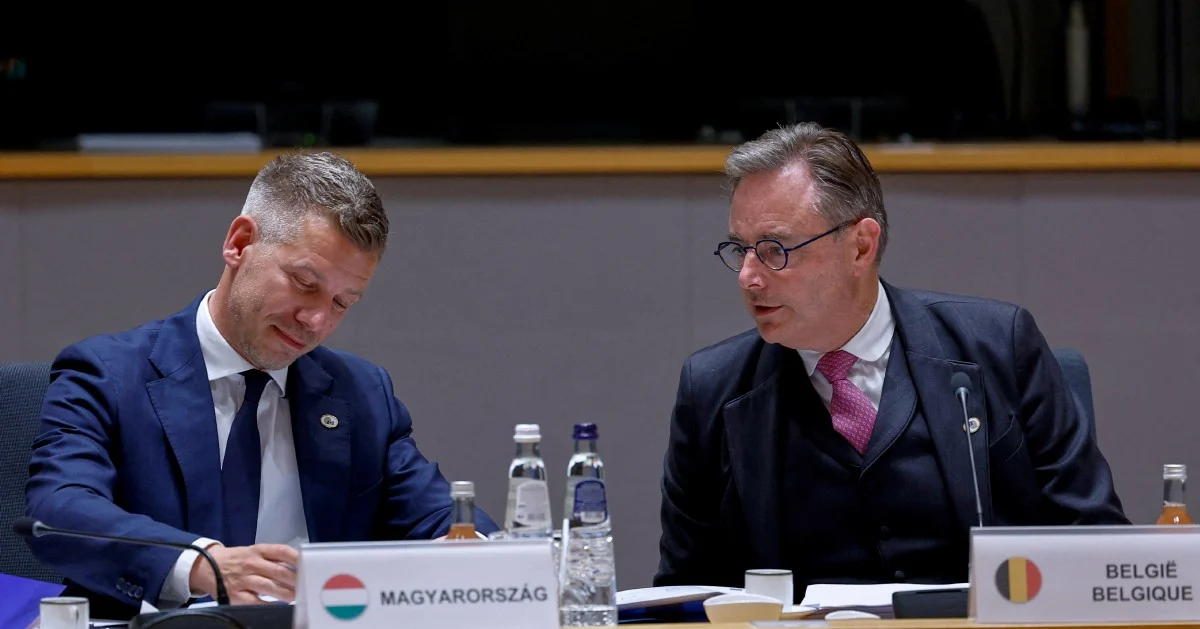
Hungary is poised to approve a comprehensive package of anti-corruption measures that reflects new Prime Minister Peter Magyar's determination to reset governance standards in the country. The parliamentary vote, anticipated for Tuesday, marks a critical moment in the government's broader reform programme aimed at restoring international confidence in Hungary's institutional framework. The legislative initiative signals Magyar's intent to address longstanding concerns about rule of law that have strained Budapest's relationship with its European partners and resulted in the suspension of substantial EU funding.
The withheld EU funds represent a significant economic consideration for Hungary, with billions of euros frozen due to concerns over judicial independence, democratic standards, and corruption. Brussels has maintained conditional access to these resources pending demonstrable improvements in governance and the elimination of systemic vulnerabilities. The approval of anti-corruption measures would constitute tangible progress toward meeting these benchmarks and potentially unlocking financial support critical to Hungary's economic recovery and development priorities.
Magyar's approach reflects a departure from the previous administration's confrontational stance toward EU oversight mechanisms. Where earlier governments resisted external scrutiny and framed EU criticism as interference, the new prime minister has adopted a more cooperative posture centred on institutional reform and compliance with European standards. This shift in diplomatic approach carries implications beyond Hungarian domestic politics, influencing perceptions of Budapest's commitment to shared European values and its reliability as a member state.
The legislative package addresses specific vulnerabilities identified by EU auditors and international observers. Strengthened transparency requirements, enhanced oversight of public procurement, reforms to the judicial appointment process, and tighter controls over state asset distribution form the core of the reform agenda. These measures target systemic weaknesses that have enabled opaque decision-making and concentrated power, creating space for corruption to flourish within institutional structures.
For Southeast Asian observers, Hungary's experience offers instructive parallels regarding the relationship between governance standards and access to international development funding. The EU's conditioning of financial support on institutional reforms demonstrates how developed regional blocs increasingly leverage economic interdependence to promote governance alignment. This approach differs notably from traditional aid models and reflects broader trends toward performance-based financing within international cooperation frameworks.
Magyar's reform drive also addresses concerns about media freedom and civil society space that had become more constrained under the previous government. Proposed changes to media regulation and protection for independent journalism form part of the broader governance overhaul. These elements carry particular weight for EU officials monitoring whether Hungary is moving toward greater pluralism or maintaining institutional practices that marginalise dissenting voices and limit democratic competition.
The parliamentary approval process itself carries symbolic significance beyond the legislative mechanics. A substantial majority vote would demonstrate broad political consensus on reform direction and suggest that governance standards have emerged as a legitimate issue commanding cross-party support. Conversely, significant opposition would signal lingering resistance to international scrutiny and potential difficulties implementing reforms that require sustained political commitment across electoral cycles.
Regional implications extend beyond immediate bilateral EU-Hungary relations. Other member states navigating similar governance challenges may interpret Hungary's trajectory as either a cautionary tale or a pathway toward restoring international confidence. Countries within the European Union facing their own rule-of-law investigations—including Poland and Romania—will observe closely how effectively Magyar's government translates legislative reforms into institutional practice, as this will establish benchmarks for what Brussels considers adequate remedial action.
The financial stakes for Hungary are substantial and immediate. Recovery and Resilience Facility funds specifically allocated to Budapest remain accessible only upon demonstrated progress on governance objectives. For a country facing economic headwinds and inflation pressures, accessing this capital becomes essential for funding infrastructure investments, industrial modernisation, and social programmes. The anti-corruption measures thus serve dual purposes: satisfying international standards while addressing practical financial necessity.
Implementation will prove as critical as legislative passage. Hungarian bureaucracies must translate statutory requirements into changed institutional behaviour, requiring coordination across multiple agencies and sustained enforcement. Experience in other post-communist countries demonstrates that laws combating corruption are necessary but insufficient without corresponding changes to enforcement culture, investigative capacity, and judicial willingness to apply consequences evenhandedly regardless of political connections.
Magyar's reform initiative also reflects evolving international expectations regarding governance standards that now extend beyond traditional rule-of-law concerns to encompass climate commitments, digital transition governance, and social inclusion metrics. Hungary's comprehensive package addresses multiple dimensions of governance capacity, suggesting an understanding that EU membership increasingly entails alignment across diverse policy domains rather than isolated institutional fixes.
The approval expected on Tuesday will represent a beginning rather than a conclusion. Budapest's sustained commitment to these reforms over subsequent months and years will determine whether the EU gradually releases withheld funds or maintains restrictions pending evidence of genuine institutional transformation. For Hungary's government, demonstrating consistent reform momentum while managing domestic economic pressures presents a complex balancing challenge that will test the government's political durability and strategic vision.