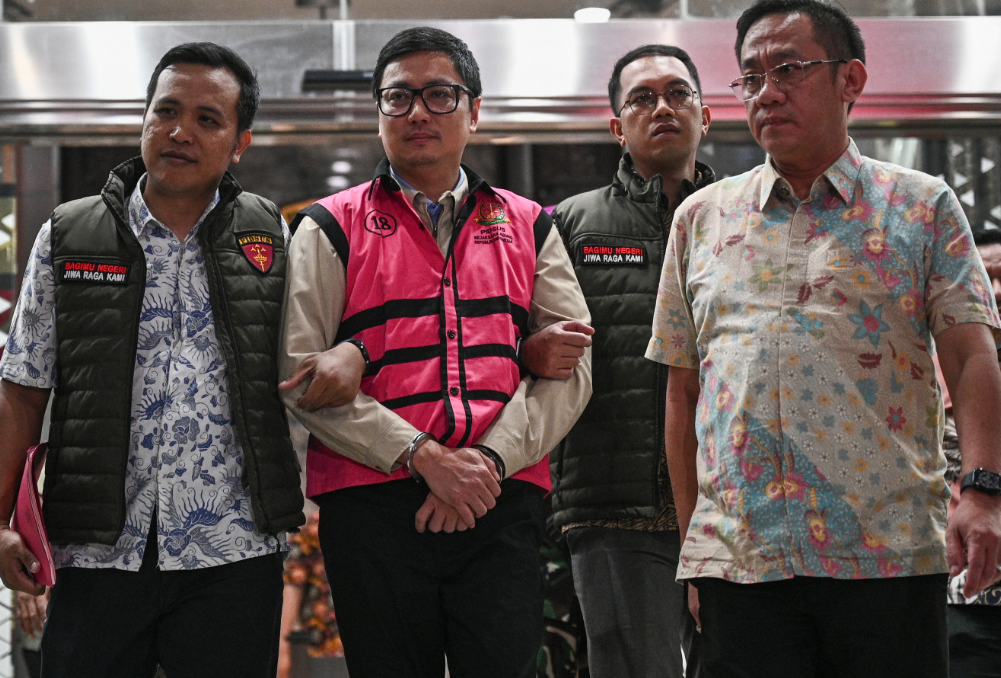
Indonesia's top law enforcement agency has expanded its corruption inquiry into the free nutritious meal initiative, with investigators arresting two additional suspects this week. The Attorney General's Office (AGO) has now detained five people connected to alleged misconduct in the multitrillion-rupiah programme, which aims to provide meals to more than 80 million schoolchildren and pregnant women across the country.
On Friday, AGO authorities apprehended Andri Mulyono, a commissioner at logistics firm PT Yasa Artha Trimanunggal (YAT), on suspicion of involvement in procurement irregularities. Investigators allege that Andri inflated prices on over 21,000 electric motorcycles destined for meal programme kitchens, manipulating costs to reach the Rp 1.03 trillion budget ceiling set by the National Nutrition Agency (BGN). According to Syarief Sulaeman Nahdi, investigation director at the office handling special crimes, the accused obtained unlawful financial advantage through these manipulated purchases.
Earlier in the week, authorities arrested businessman Asep Yusuf Somantri, accused of exploiting connections with former BGN deputy Sony Sonjaya to interfere with partner verification procedures. Investigators contend that Asep leveraged this access to influence kitchen registrations and approve applications even after the official registration deadline had passed. Three BGN executives—former head Dadan Hindayana and deputies Sony Sonjaya and Lodewyk Pusung—were arrested on June 3, just hours after President Prabowo Subianto dismissed them from office.
Finance Minister Purbaya Yudhi Sadewa announced that no additional electric motorcycle purchases will occur in 2026, attributing the approval to miscommunication within the ministry. The motorcycle procurement sparked significant public outrage in April, with critics questioning its relevance to the meal programme's core mission. Investigators are preparing to interview Sony again as they assess his request for justice collaborator status, a move that could reveal connections to over 20 other individuals allegedly implicated in the scandal.
The scandal has intensified public backlash against the programme, which has been plagued by operational difficulties since launching in early 2025. At least 33,000 cases of mass food poisoning have been reported, and growing criticism culminated in a student-led protest on Friday demanding the programme's suspension. Demonstrators labelled it a misguided priority given the nation's deteriorating economic conditions. Government Communications Agency head Muhammad Qodari defended the initiative on Saturday, asserting that implementation challenges are inevitable and that programme officials remain committed to addressing problems while continuing operations aimed at reducing stunting among the population.