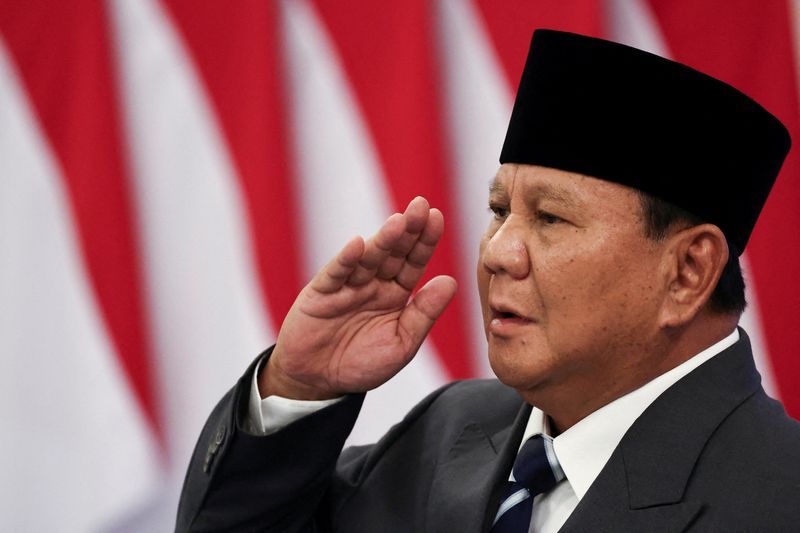
Indonesia is moving forward with plans to weave artificial intelligence throughout its government operations, with a presidential regulation draft laying out how the technology will be embedded in flagship programmes including President Prabowo Subianto's $15 billion free-meal scheme. The initiative forms part of a broader strategy that officials believe could elevate the nation's gross domestic product by 12 per cent, equivalent to roughly $366 billion, by the end of the decade. The draft regulation, which awaits the president's signature, charts a roadmap for ministries and regional governments to adopt AI systems from 2026 to 2029, targeting what the government describes as "economic growth through development, facilitation and use of AI especially in the president's priority programmes."
Indonesia's push into artificial intelligence comes as the country seeks to narrow a significant technology gap with regional peers. Singapore and Malaysia have already established themselves as attractive destinations for global tech investment, drawing billions of dollars from major corporations keen to build infrastructure supporting the expanding demand for cloud computing and AI services. Indonesia's delayed entry into the AI race reflects not only slower policy adoption but also fundamental infrastructure deficits and a relative shortage of skilled workers equipped to develop or implement sophisticated systems.
The regulatory framework has been shaped with input from major technology firms, with Meta Platforms, IBM, and Microsoft all contributing to the draft document. Microsoft has already signalled its commitment to Indonesia's digital transformation, pledging $1.7 billion over several years to expand cloud services and artificial intelligence capabilities across the archipelago. The involvement of these multinational corporations underscores the scale of opportunity Indonesia represents as digital adoption accelerates throughout Southeast Asia.
Within the free-meal programme, one of President Prabowo's signature initiatives, AI will perform a range of functions designed to improve operational efficiency and food safety. The system will analyse regional preferences to customise menus for different populations, continuously monitor kitchen hygiene standards through automated systems, forecast demand to minimise waste, detect administrative irregularities, and cross-reference health data to provide early warning signals for potential public health emergencies. These applications directly address vulnerabilities that have plagued the programme since its launch.
The free-meal scheme has faced persistent scrutiny and controversy, with transparency concerns and implementation failures consistently undermining public confidence. Earlier this month, the head of the programme was dismissed and arrested amid investigations into irregularities. Last year's foodborne illness outbreak that sickened tens of thousands of schoolchildren exposed critical gaps in food safety protocols and emergency response capabilities. These incidents, coupled with broader questions about cost control and value-for-money as Indonesia manages constrained budget resources, have created pressure on officials to demonstrate that government can deliver such large-scale programmes effectively.
However, scepticism about Indonesia's ability to successfully implement an AI-driven strategy remains widespread among technology specialists. Derwin Suhartono, an artificial intelligence professor at Bina Nusantara University in Jakarta, argues that Indonesia lacks the foundational requirements to become a genuine AI developer. The nation faces substantial shortages in critical infrastructure—particularly semiconductor chips and manufacturing capacity—alongside a workforce that has not yet developed the sophisticated skills required for advanced AI work. Suhartono's assessment suggests that Indonesia may remain predominantly a consumer of AI solutions developed and sold by foreign corporations rather than becoming a centre of innovation itself.
Executive-level scepticism extends beyond infrastructure concerns. Despite the detailed roadmap outlined in the draft regulation, critics contend that Indonesia's track record on technological initiatives suggests a gap between ambitious policy rhetoric and practical implementation. The government's capacity to coordinate across multiple agencies, provide sustained funding, and measure outcomes remains unproven at the scale required for nationwide AI adoption. Without addressing these organisational and institutional challenges, even a well-intentioned regulatory framework may fail to deliver tangible results.
Beyond the free-meal programme, the regulation outlines AI applications across Indonesia's health sector, including analysis of health screening data and tuberculosis detection and testing. The automation opportunities highlighted in the draft emphasise potential efficiency gains and cost reductions, suggesting that proponents genuinely believe artificial intelligence can help stretch limited public resources further. These applications represent lower-risk implementations compared to more complex algorithmic decision-making systems, making them potentially more feasible within Indonesia's current technological capacity.
The regulatory framework also introduces a governance dimension aimed at managing the risks accompanying AI adoption. Government bodies will be required to report on artificial intelligence-related dangers, including the misuse of biometric data, violations of intellectual property rights, and the generation of deepfakes. This risk management component reflects growing international awareness that AI systems require robust oversight mechanisms, particularly when deployed in government programmes handling sensitive citizen information.
Financially, the government proposes establishing a "sovereign AI fund" to be administered primarily through Danantara Indonesia, the country's newly created wealth vehicle. Additional measures include fiscal incentives designed to attract AI researchers and mechanisms to address talent shortages through recruitment and training initiatives. These financial commitments signal genuine intent, though questions persist about whether funding levels will prove sufficient for meaningful technology transfer and capability building across the sprawling Indonesian bureaucracy.
The current regulation builds upon groundwork laid in a white paper issued the previous year, demonstrating that Indonesian policymakers have maintained focus on artificial intelligence as a strategic priority. The timing of this regulatory push reflects broader Southeast Asian recognition that artificial intelligence competitiveness will define economic competitiveness over the coming decade. For Indonesia, successfully navigating the transition from policy to implementation could unlock significant economic benefits, but the path forward remains uncertain given existing infrastructure constraints and execution challenges that have historically complicated large-scale government technology initiatives.