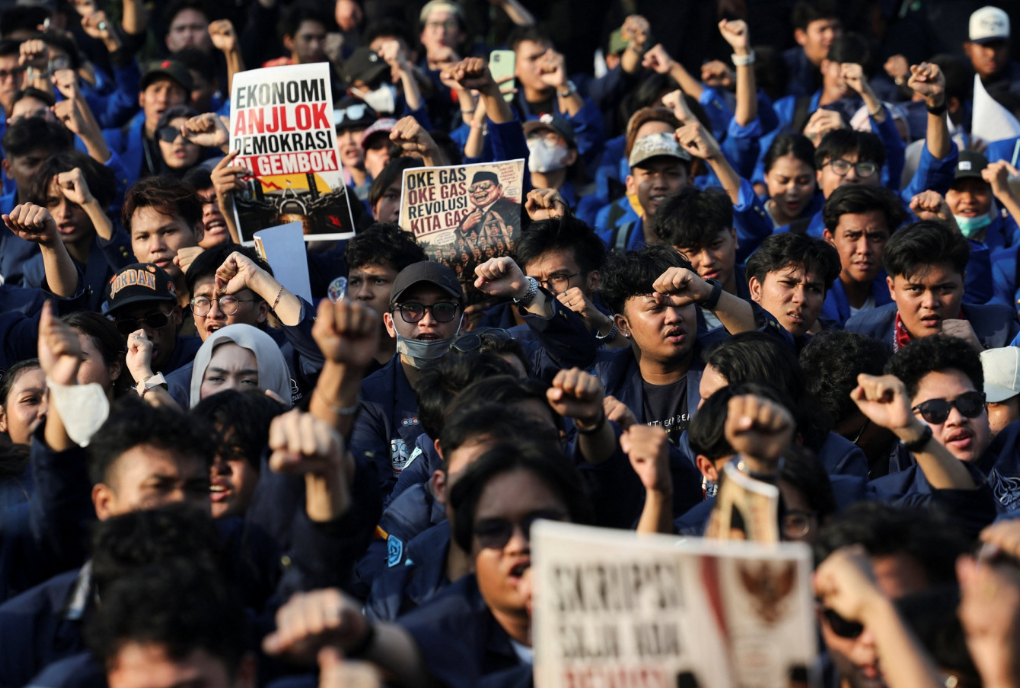
President Prabowo Subianto's ambitious free nutritious meal initiative, launched to address malnutrition and stunting, has unexpectedly become a flashpoint dividing Indonesian society. Across the archipelago, competing rallies reflect fundamental disagreements about government spending priorities, programme effectiveness, and the proper use of state resources during a period of fiscal constraint. The intensity of competing demonstrations in Bali, Jakarta, Batam, and other regions underscores how a well-intentioned social welfare scheme has become entangled in broader anxieties about economic management and corruption.
Students constitute the primary opposition force, viewing the programme through the lens of fiscal responsibility and governance. In Bali, hundreds of university students descended on the regional legislative council building in Denpasar, mounting arguments that the programme's substantial budget allocation contradicts the government's simultaneous pursuit of austerity measures across other sectors. These protesters seek a comprehensive audit by Indonesia's Supreme Audit Agency, reflecting deeper scepticism about whether public money is reaching intended recipients effectively. The appeal to the auditing authority suggests students recognize that opposition rooted merely in ideological objection carries less weight than documented evidence of mismanagement or waste.
The Jakarta demonstrations proved particularly significant in scale and organizational capacity. Thousands of students affiliated with the Indonesian Islamic Student Movement gathered outside parliament on 22 June, following another major rally just three days earlier. The timing and consecutive nature of these protests indicate sustained organizational momentum rather than spontaneous discontent. Beyond the nutritious meal scheme itself, student demands encompassed economic strengthening and improved teacher welfare, positioning the meal programme within a wider critique of government priorities. The involvement of multiple universities—Trisakti, Mercu Buana, Esa Unggul—alongside the Islamic Students Association demonstrated cross-institutional coordination that gave the demonstrations considerable mobilizational weight.
Food safety and corruption scandals have provided concrete justification for escalating criticism. Recent arrests of three National Nutrition Agency officials on corruption allegations transformed the debate from abstract fiscal concerns into questions of criminal accountability. Incidents of food poisoning linked to the programme further undermined public confidence, suggesting implementation gaps between policy design and ground-level execution. These scandals validate student concerns that inadequate oversight accompanies massive budget allocations, particularly troubling when the beneficiaries are vulnerable populations including young children and pregnant women whose health cannot be compromised by unsafe food handling.
The government's response reveals tension between defending flagship policy achievements and acknowledging legitimate concerns. Officials including Communications Agency head Muhammad Qodari have resisted calls for suspension, arguing instead for improvement and efficiency measures. The National Nutrition Agency reduced the overall budget from the initial Rp 335 trillion allocation to Rp 228.4 trillion, suspended distribution during school holidays, and identified 76 schools in affluent areas for exclusion from the programme. These adjustments reflect recognition that the original programme design required recalibration, yet fall short of the comprehensive overhaul students and some analysts demand.
A starkly different constituency has mobilized to defend the programme's continuation, revealing whose interests depend directly on its persistence. In Batam, kitchen workers staged their own rally, emphasizing that the meal initiative provides daily income for approximately 1,500 workers across the city alone. These demonstrations highlight that scaling back distribution—reducing from six to five days weekly and halting operations during school holidays—carries real economic consequences for working-class households. The workers' framing exposes a fundamental equity question: should poor families employed in the programme's delivery infrastructure absorb the costs of reducing spending on a programme designed to serve poor beneficiaries?
Pregnant women, nursing mothers, and toddlers constitute a particularly vulnerable constituency whose advocates challenge the logic of suspending services during school holidays. Since malnutrition operates continuously regardless of academic calendars, restricting meal support to school-based schedules creates nutritional gaps for the youngest children and expectant mothers who require year-round attention. This dimension of the debate reflects genuine tension between fiscal stringency and public health imperatives, particularly for Southeast Asia where childhood stunting remains a persistent development challenge affecting cognitive development and lifetime earning potential.
Agricultural communities and local economies have emerged as unexpected beneficiaries, introducing another layer to the political equation. In Bandar Lampung, residents rallied in support of programme continuation, noting that the scheme absorbs substantial quantities of locally produced commodities including rice, corn, cassava, fruits, and vegetables. Rather than functioning as dead weight on state finances, the programme circulates purchasing power through agricultural sectors, stabilizing commodity prices and providing farmers predictable demand. This agricultural dimension carries particular significance for rural-dependent provinces where price volatility creates farm household income instability. From this perspective, the programme functions simultaneously as nutrition support and agricultural stimulus.
The competing protests reflect divergent visions of what constitutes responsible fiscal management in a middle-income country facing multiple developmental challenges. Student protesters emphasize containing government expenditure and improving macroeconomic stability, operating from an implicit theory that austerity creates conditions for broader economic growth benefiting all citizens eventually. Programme defenders counter that targeted nutritional investment in vulnerable populations generates returns through improved cognitive development, educational outcomes, and future productivity that justify substantial upfront spending. Both frameworks contain economic logic, yet prioritize different constituencies and timeframes.
For Malaysia and other Southeast Asian countries observing Indonesia's experience, the controversy offers instructive lessons about programme design and stakeholder engagement. Large-scale nutritional interventions require not only adequate financing and supply chain competence, but also robust anti-corruption mechanisms, transparent targeting criteria, and structured engagement with affected communities before implementation rather than responding to crises afterward. The arrest of programme officials suggests that institutional capacity for oversight and accountability lagged behind the ambition of budgetary allocation. Replicating Indonesia's model without addressing these governance prerequisites invites similar backlash.
The intensity of competing mobilizations suggests that Indonesia's free meal programme has transcended technocratic policy debate to become a proxy for competing philosophies about state responsibility, economic management, and whose interests government prioritizes. Students articulate a vision emphasizing fiscal discipline and macro-stability; workers defend livelihoods dependent on programme continuation; farmers and agricultural traders champion the rural economic stimulus effects; health advocates stress irreplaceable nutritional benefits for vulnerable children. Reconciling these genuinely competing interests requires neither unconditional programme suspension nor dismissing legitimate concerns about implementation quality and cost-effectiveness, but rather systematic reform addressing corruption risks, improving targeting precision, and maintaining core nutritional support while eliminating inefficiencies.