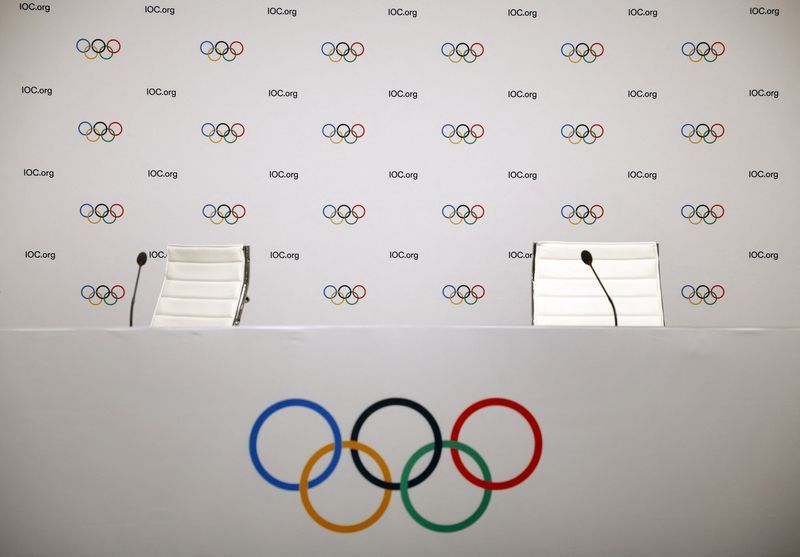
The International Olympic Committee is preparing to examine proposed modifications to the Olympic Charter that would reinforce the principle of political independence within global sport, a decision that carries significant implications for Russian athletic participation and the integrity of competitive frameworks across Southeast Asia and beyond. The proposed amendments, set for consideration on Wednesday in Geneva, would strengthen existing language to affirm that sporting competition must remain insulated from governmental, cultural, economic, or societal pressures, with the IOC positioned as guarantor of this neutrality at all times.
On the surface, the IOC frames these revisions as protective measures designed to shield athletes and competitions from external manipulation and to prevent international sporting events from becoming vehicles for political messaging. The committee argues that reinforcing neutrality language safeguards the Olympic movement's core mission and ensures that athletes compete on merit rather than geopolitical alignment. Yet this seemingly straightforward technical adjustment masks a far more contentious debate about accountability, punishment for state misconduct, and the conditions under which nations should regain full sporting privileges after serious violations.
For critics, including prominent advocacy groups such as Global Athlete, the amendments represent a troubling retreat from principled consequences. Rob Koehler, the organisation's director general, contends that prioritising political neutrality above all other considerations sends a perilous message to the international community. His assertion—that accepting these changes would effectively communicate that "war, systematic doping and repeated violations of the Olympic Charter are no longer barriers to full participation"—captures the core anxiety: that the IOC is constructing legal and philosophical cover to normalise Russian participation without requiring meaningful reform or accountability.
Russia's complex relationship with the Olympic system provides essential context for understanding this debate. Russian athletes have endured sanctions stemming from a state-engineered doping scheme connected to the 2014 Sochi Winter Games, a scandal that fundamentally damaged trust in Russian sporting governance and prompted years of restrictions. The situation intensified when the IOC recommended banning Russian and Belarusian competitors following the 2022 invasion of Ukraine, a decision that reflected the committee's acknowledgment that sport cannot remain truly divorced from geopolitical reality. Subsequently, the Russian Olympic Committee itself faced suspension in October 2023 after it recognised regional Olympic councils in Russian-occupied Ukrainian territories, an action the IOC determined violated both the Olympic Charter and Ukraine's sovereignty.
The trajectory of recent IOC decisions, however, suggests a gradual softening of these positions. In December, the committee approved allowing Russian and Belarusian youth athletes to compete internationally without restrictions, a decision that signalled the beginning of normalisation. Last month, the IOC took a more dramatic step by lifting all restrictions on Belarusian athletes, effectively clearing them to participate in international competitions and Olympic qualification events for Los Angeles 2028. Though the IOC maintained that Russian athletes would not receive similar treatment at that moment, widespread speculation now suggests comparable action could follow within coming months, particularly if the proposed Charter amendments pass.
For Malaysian sports observers and Southeast Asian stakeholders, these developments warrant close attention. The region's athletic bodies operate within the international framework established by the IOC, and precedents set regarding Russia's reinstatement could influence how governance bodies handle future sanctions against other nations for state misconduct or political interference. If the IOC establishes that neutrality language supersedes accountability for doping and territorial violations, it may diminish the credibility of anti-doping regimes and weaken consequences for state-sponsored manipulation across all sports.
The IOC's May review of Russia's anti-doping system and its engagement with ongoing World Anti-Doping Agency investigations indicate that technical compliance issues remain unresolved. Yet the emphasis on Charter neutrality suggests that even incomplete remediation of doping infrastructure might not prevent reinstatement if the IOC determines that political neutrality demands inclusion. This distinction matters: it signals that institutional reform and systemic change may matter less than removing barriers based on political criteria.
Russian officials, predictably, welcome this trajectory. Sports Minister and Russian Olympic Committee Chairman Mikhail Degtyarev stated in April that his ministry and the ROC were undertaking all necessary measures to secure complete restoration of the Russian national team's international status under the Russian flag. President Vladimir Putin himself indicated in April that he anticipated a fresh approach from the IOC's new leadership, a comment suggesting that Moscow views the current directorate as more accommodating than its predecessors and anticipates eventual reinstatement.
Beyond Russia, the Charter amendments include a second significant provision: removal of the fixed list of international sports federations from the Olympic framework. This change grants the IOC substantially greater discretion to shape Olympic programmes based on practical considerations such as operational costs, logistical feasibility, and global marketability. While presented as administrative streamlining, this modification enhances the IOC's power to determine which sports gain Olympic legitimacy, a decision that could advantageously position sports popular in wealthy nations while marginalising competitions in which developing countries excel.
The broader philosophical tension underlying these proposals reflects a genuine debate within the Olympic movement. One perspective emphasises that sport must exist in a realm separate from politics, that athletes should compete regardless of their governments' actions, and that the Olympic system should facilitate participation rather than weaponise inclusion. The opposing view contends that sport cannot meaningfully isolate itself from politics, that serious state misconduct carries sporting consequences, and that the Olympic movement's credibility depends on maintaining standards that apply consistently to all nations.
For Southeast Asia specifically, the precedent matters considerably. Nations across the region have faced varying degrees of international scrutiny regarding governance, doping control, and human rights. If the IOC establishes that neutrality and inclusion trump accountability, it affects how sports bodies throughout Asia evaluate compliance and consequences. Conversely, if the IOC strengthens both neutrality language and accountability mechanisms simultaneously, it provides clearer standards for all Olympic stakeholders.
The Wednesday decision will likely reflect the IOC's current institutional preference. Whether the amendments pass and whether they subsequently facilitate Russian reinstatement will reveal whether the Olympic movement views sport as fundamentally separable from politics or acknowledges that athletic competition inevitably intersects with international relations, state conduct, and questions of justice. The resolution carries implications extending far beyond Russia, shaping how the Olympic system addresses future conflicts between the principle of inclusion and the necessity of accountability.

