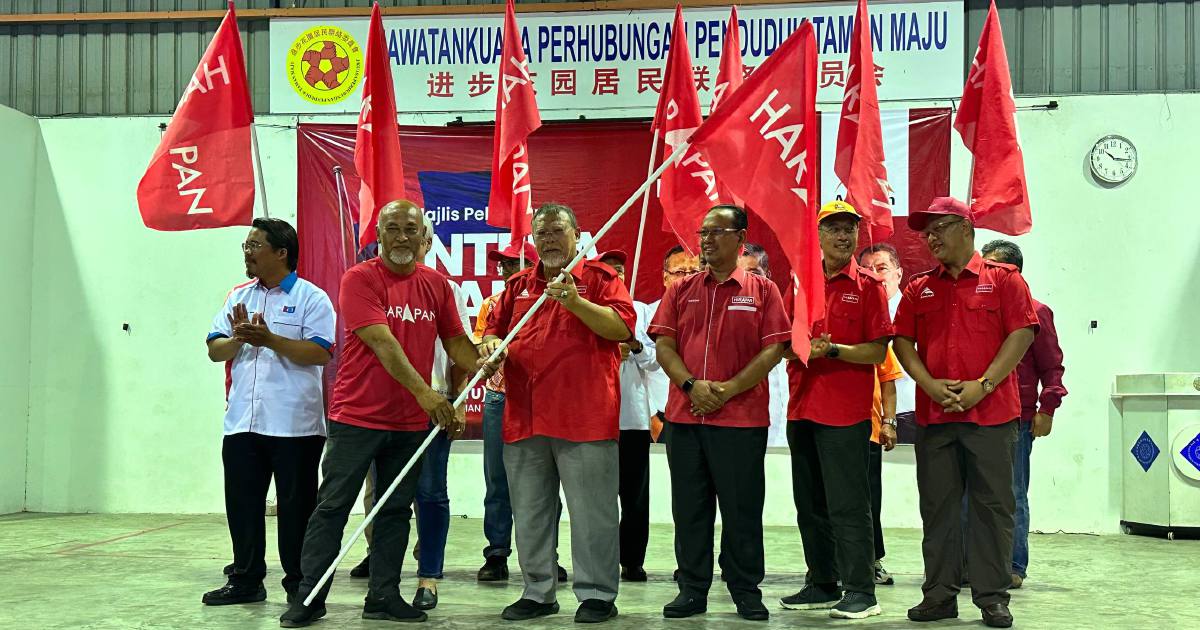
Johor Amanah is banking on a strong showing in the northern region of the state, targeting a minimum of six victories across the 10 state constituencies it is fielding candidates for in the upcoming July 11 state election. The declaration, made in Batu Pahat, reflects the party's determination to consolidate its position within Johor's fractured political landscape and expand its representation in the state assembly.
The northern zone represents a strategic battleground for Amanah, which has been working to build grassroots support amid intense competition from established political machinery. By concentrating electoral resources in this region, the party appears to be adopting a focused geographic strategy rather than dispersing efforts across all available seats. This approach suggests a calculated assessment of where the party holds its strongest constituencies and where voter sentiment appears most receptive to its message.
Amanah's confidence reflects broader currents within the Malaysian opposition landscape. The party, as a component of the Pakatan Harapan coalition, has been positioning itself as an alternative to both the Barisan Nasional government and the Perikatan Nasional bloc. In Johor, where political allegiances have shifted dramatically over recent election cycles, Amanah's emphasis on the northern zone indicates where internal polling and ground assessments suggest the party has viable prospects.
The six-seat target represents meaningful progress for Amanah in a state where it has historically struggled to establish firm footing. Johor remains the country's largest state by area and second-largest by population, yet it has often been dominated by Umno-led coalitions. Any gains here would constitute a significant breakthrough and potentially reshape the state's political arithmetic heading into future elections. The northern zone's characteristics—urban centres, mixed demographics, and a history of competitive contests—make it fertile ground for opposition politics.
Johor's upcoming state election occurs within a broader realignment of national politics. The state remains crucial to Malaysia's overall political balance, given its size and economic importance. Performance here will reverberate nationally, potentially influencing coalition strategies, policy directions, and positioning ahead of any future federal election. Opposition parties view Johor as a potential bellwether, while the ruling establishment treats it as a critical stronghold to defend.
Amanah's electoral strategy in Johor also reflects lessons learned from previous campaigns. The party has gradually built infrastructure and developed candidate rosters capable of contesting competitively. The selection of candidates for the northern zone constituencies likely involved careful deliberation about local factors, incumbent strength, and individual candidate viability. This granular approach contrasts with more ad hoc candidate selection that has occasionally plagued Malaysian opposition parties.
The July 11 date marks a significant moment for Johor politics. State elections provide opportunities for voters to express preferences independent of federal-level contests, and turnout patterns often differ substantially from general elections. Amanah will be banking on higher voter engagement and reduced straight-ticket voting for the ruling coalition—circumstances that typically favour opposition advances. The party's messaging will likely emphasise accountability, governance quality, and responsiveness to local concerns rather than abstract ideological positioning.
Geographic concentration of electoral effort also carries risks. By targeting the northern zone, Amanah implicitly accepts lower prospects elsewhere in the state, potentially ceding seats to competing forces. This trade-off assumes that six northern victories would provide greater value than a more distributed approach yielding fewer total seats but wider geographic representation. The political geometry of Johor's assembly means that even modest gains can significantly alter coalition possibilities and government formation dynamics.
The party's projection reflects confidence among internal leadership, yet translating confidence into actual wins requires coordinated campaigns, effective messaging, and voter mobilisation. Johor's electorate has demonstrated unpredictability in recent cycles, with local issues often trumping national narratives. Amanah's ground game in the northern zone will determine whether its optimism proves justified. The party faces competition not only from the ruling government but also from other opposition forces seeking to consolidate anti-establishment votes.
For Malaysian political observers, Johor's state election offers important indicators about changing voter preferences, the viability of coalition politics, and the strength of opposition momentum outside federal government. A strong Amanah showing in the northern zone could validate the party's strategic positioning within Pakatan Harapan and strengthen its claim to resources and prominence within the coalition structure. Conversely, disappointing results would prompt internal reassessment and potentially advantage rival opposition formations.
The broader implications extend to Southeast Asian politics more generally. Malaysia's competitive electoral environment and coalition-building dynamics are more fluid than many regional counterparts. Johor's state election will provide data points about how opposition parties in developing democracies navigate incumbent advantages while maintaining coalition coherence. The results could influence perceptions of Malaysia's political competitiveness and the viability of genuine multi-party contestation in the region's largest economies.
%22%2F%3E%3C%2Fpattern%3E%3C%2Fdefs%3E%3Crect%20width%3D%22100%25%22%20height%3D%22100%25%22%20fill%3D%22url(%23ph3onqdg)%22%2F%3E%3Crect%20width%3D%22100%25%22%20height%3D%22100%25%22%20fill%3D%22url(%23ph3onqdp)%22%2F%3E%3Ctext%20x%3D%2250%25%22%20y%3D%2250%25%22%20text-anchor%3D%22middle%22%20dominant-baseline%3D%22central%22%20fill%3D%22rgba(255%2C255%2C255%2C0.95)%22%20font-family%3D%22Georgia%2C%20'Times%20New%20Roman'%2C%20serif%22%20font-weight%3D%22700%22%20font-size%3D%22272%22%20letter-spacing%3D%22-0.02em%22%3EWorld%3C%2Ftext%3E%3C%2Fsvg%3E)
%22%2F%3E%3C%2Fpattern%3E%3C%2Fdefs%3E%3Crect%20width%3D%22100%25%22%20height%3D%22100%25%22%20fill%3D%22url(%23ph2wfn9g)%22%2F%3E%3Crect%20width%3D%22100%25%22%20height%3D%22100%25%22%20fill%3D%22url(%23ph2wfn9p)%22%2F%3E%3Ctext%20x%3D%2250%25%22%20y%3D%2250%25%22%20text-anchor%3D%22middle%22%20dominant-baseline%3D%22central%22%20fill%3D%22rgba(255%2C255%2C255%2C0.95)%22%20font-family%3D%22Georgia%2C%20'Times%20New%20Roman'%2C%20serif%22%20font-weight%3D%22700%22%20font-size%3D%22320%22%20letter-spacing%3D%22-0.02em%22%3EIAEA%3C%2Ftext%3E%3C%2Fsvg%3E)
%22%2F%3E%3C%2Fpattern%3E%3C%2Fdefs%3E%3Crect%20width%3D%22100%25%22%20height%3D%22100%25%22%20fill%3D%22url(%23ph1jghhg)%22%2F%3E%3Crect%20width%3D%22100%25%22%20height%3D%22100%25%22%20fill%3D%22url(%23ph1jghhp)%22%2F%3E%3Ctext%20x%3D%2250%25%22%20y%3D%2250%25%22%20text-anchor%3D%22middle%22%20dominant-baseline%3D%22central%22%20fill%3D%22rgba(255%2C255%2C255%2C0.95)%22%20font-family%3D%22Georgia%2C%20'Times%20New%20Roman'%2C%20serif%22%20font-weight%3D%22700%22%20font-size%3D%22320%22%20letter-spacing%3D%22-0.02em%22%3EIran%3C%2Ftext%3E%3C%2Fsvg%3E)