A significant chapter in Johor's agricultural history has closed with the successful distribution of land ownership titles to nearly 28,000 Felda settlers, marking the culmination of a struggle that has spanned decades for many families. The Johor Felda Settlers Land Title Handover Ceremony, held at Dewan Dato' Onn in Kluang, formally transferred ownership documents to 210 recipients from three constituencies: Kluang, Kota Tinggi and Mersing. The event represents a watershed moment for plantation workers whose uncertain tenure has cast a shadow over their livelihoods and their children's futures since the federal land development scheme's inception in the 1980s.
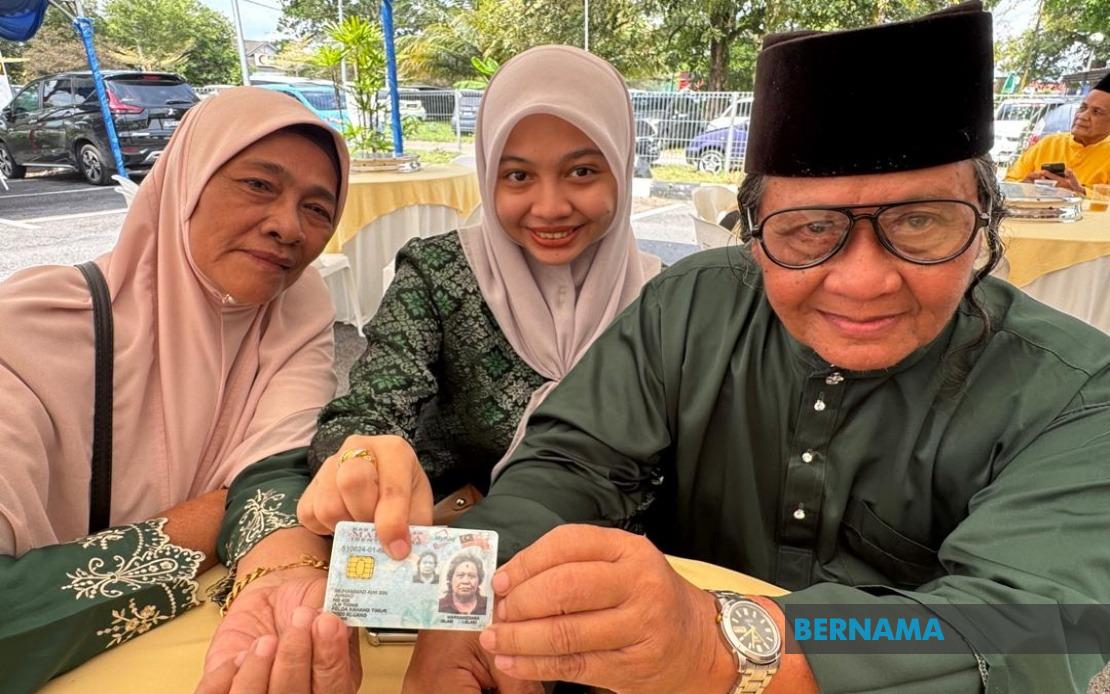
The resolution arrives with particular poignancy for Muhammad Awi Ahmad, a 75-year-old settler from Felda Kahang Timur who received his title on his birthday. Having tended his 4.2-hectare holding for nearly four decades, Muhammad Awi had submitted three separate applications spanning 1990 to 2020 before finally securing approval under the current Johor administration led by Menteri Besar Datuk Onn Hafiz Ghazi. His earlier rejections illustrate the bureaucratic obstacles that have prevented settlers from formalising their relationship with land they have cultivated and improved continuously since the scheme's establishment.
The government's acceleration of the approval process stands out as a tangible policy shift. Where previous applications faced years of delays and eventual rejection, Muhammad Awi's latest submission to the state government moved through the system in approximately twelve months. This represents a fundamental change in administrative approach, suggesting either a prioritisation of settler interests or a streamlining of previously cumbersome procedures that characterised earlier decades.
The multi-generational implications of this breakthrough extend far beyond individual settlers. Norliyani Muhammad Awi, the 25-year-old daughter of a title recipient, articulated the anxiety that has haunted younger settlers who consider the plantation their permanent home rather than a temporary posting. Unlike their grandparents and parents, who maintain traditional connections to ancestral villages, second and third-generation Felda residents lack alternative roots or property elsewhere. Without secured titles, inheritance becomes uncertain and agricultural investment risky, effectively trapping these families in a state of perpetual insecurity despite decades of residence and labour.
The concern Norliyani raised touches on a critical vulnerability in Malaysia's land ownership framework. If unresolved title disputes persist, the land worked by previous generations risks falling into state control or reversion to federal authorities, stripping families of assets they have accumulated through decades of labour. This prospect has represented a genuine threat to settler communities, discouraging capital investment in infrastructure, housing improvements, or agricultural modernisation that might otherwise enhance productivity and profitability.
Mohd Farhan Mohamad's experience reinforces the pattern of extended waiting periods that characterised the old system. The 43-year-old resident of Felda Pasak in Kota Tinggi initially sought to obtain a title for his father Mohamad Masek in 2006, honouring his father's wish to formalise ownership of land cultivated since the 1980s. Nearly two decades passed before approval arrived in 2024, during which time uncertainty clouded his family's agricultural enterprise and succession planning.
The scale of the distribution programme underscores its significance for the state economy. Official figures reveal that 27,639 of 27,642 Felda settlers in Johor who submitted applications have now received ownership titles, representing a completion rate of 99.9 per cent. This near-universal distribution addresses what has effectively been a structural injustice within the federal land development system, where settlers bore the risks of farming without enjoying the security normally conferred by ownership.
For Malaysian policymakers, the Johor experience offers instructive lessons about implementing land reform within existing schemes. The successful completion suggests that administrative bottlenecks rather than legal obstacles prevented earlier distribution, and that political will combined with simplified procedures can resolve longstanding inequities efficiently. The acceleration under the current administration demonstrates that bureaucratic inertia rather than fundamental constraints had previously blocked progress.
The implications extend across Malaysia's broader agricultural sector. Felda settlement schemes operate across multiple states, and similar title disputes likely persist elsewhere. The Johor programme's success provides a template for other state governments to replicate, potentially unlocking the agricultural productivity and intergenerational wealth accumulation that secure ownership enables.
Beyond economic considerations, the resolution addresses fundamental questions of land justice and social stability. Agricultural workers who have invested labour and commitment into specific plots deserve the security that formal ownership provides. The decades-long delay in granting titles represented an unacknowledged but substantial cost to settler families, constraining their ability to plan futures, invest in improvements, or exercise property rights.
The ceremony also carries symbolic weight in demonstrating responsive governance. When state leadership prioritises long-delayed settler grievances and allocates resources to their resolution, it signals that even historically neglected constituencies can achieve policy attention under sufficiently determined administration. This may encourage other marginalised groups to press their claims with greater confidence.
As Malaysian agriculture confronts challenges of demographic change, technology adoption, and climate adaptation, the security provided by these title distributions may facilitate the transition to more sustainable and productive farming practices. Owners feel greater incentive to invest in long-term improvements, adopt mechanisation, diversify crops, or implement conservation measures that secure land value for succeeding generations. The title handover thus represents not merely the conclusion of a historical wrong but the opening of fresh possibilities for agricultural development.