%22%2F%3E%3C%2Fpattern%3E%3C%2Fdefs%3E%3Crect%20width%3D%22100%25%22%20height%3D%22100%25%22%20fill%3D%22url(%23phj7irg)%22%2F%3E%3Crect%20width%3D%22100%25%22%20height%3D%22100%25%22%20fill%3D%22url(%23phj7irp)%22%2F%3E%3Ctext%20x%3D%2250%25%22%20y%3D%2250%25%22%20text-anchor%3D%22middle%22%20dominant-baseline%3D%22central%22%20fill%3D%22rgba(255%2C255%2C255%2C0.95)%22%20font-family%3D%22Georgia%2C%20'Times%20New%20Roman'%2C%20serif%22%20font-weight%3D%22700%22%20font-size%3D%22272%22%20letter-spacing%3D%22-0.02em%22%3EJohor%3C%2Ftext%3E%3C%2Fsvg%3E)
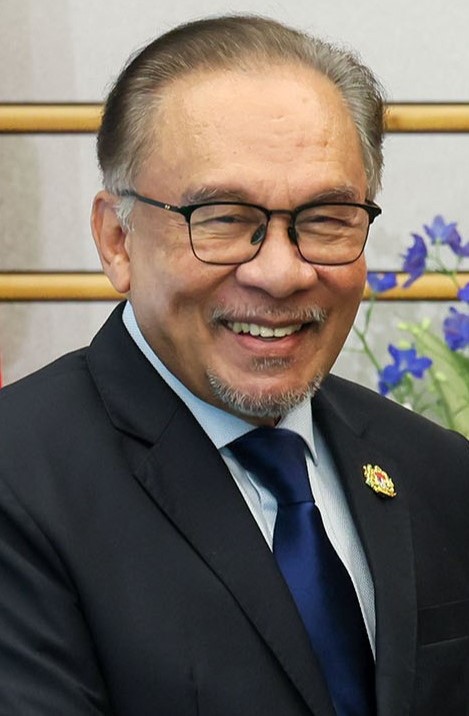
Prime Minister Datuk Seri Anwar Ibrahim met with the Regent of Johor, Tunku Mahkota Ismail, in a session that highlighted the enduring partnership between Malaysia's federal leadership and one of its most economically significant states. The audience, granted at the Regent's initiative, represents a customary but substantive engagement between the two levels of governance, reinforcing political stability in a period when state-federal coordination has become increasingly critical to national development.
Johor's position within Malaysia's political and economic landscape makes such interactions particularly significant. As the nation's industrial and manufacturing hub, and a vital commercial gateway to Singapore and beyond, the state's policies and governance directly influence not only regional prosperity but also Malaysia's broader economic trajectory. The meeting between Anwar and Tunku Mahkota Ismail therefore carries implications that extend well beyond ceremonial protocol, touching on practical matters of infrastructure, investment, and resource allocation that affect millions of Malaysians.
The emphasis on close ties between Putrajaya and Johor underscores the Pakatan Harapan-led federal government's commitment to collaborative federalism. In the Malaysian system, the Regent holds constitutional significance beyond ceremonial functions, and a warm audience granted to the Prime Minister signals institutional harmony at the highest levels. This is particularly relevant given Malaysia's recent political history, which has seen tensions between different tiers of government complicate policy implementation and investment decisions.
For Johor specifically, strong relations with federal leadership translate into tangible benefits. State governments that maintain good standing with Putrajaya tend to secure preferential access to federal funding schemes, infrastructure projects, and business development initiatives. The current Johor administration has been pushing ambitious economic diversification plans, and backing from the Prime Minister's office facilitates smoother navigation of bureaucratic processes and faster approval of key projects.
The timing of the meeting also carries domestic political weight. Malaysia continues to grapple with inflationary pressures, subdued business sentiment, and the need to attract high-value foreign investment. When federal and state leadership appear united in their vision and approach, it sends reassuring signals to investors concerned about policy inconsistency or political fragmentation. Multinational corporations considering expansion into Malaysia often factor in governance stability when making location decisions, making such symbolic endorsements more than merely ceremonial.
Johor has traditionally played a moderating influence in Malaysian politics, and its leadership's positive engagement with the federal government helps maintain the social contract between different political constituencies. The state has diverse communities and economic interests—from manufacturing workers to agricultural producers to service sectors—and ensuring that their representatives at both state and federal levels work in concert reduces the risk of policy whiplash that could destabilize local economies.
From a Southeast Asian perspective, Malaysia's internal stability matters considerably. The region faces complex challenges ranging from supply chain vulnerabilities to geopolitical pressures, and Malaysia's role as a relatively stable, open economy depends significantly on maintaining cohesive governance. When major Malaysian states and the federal government demonstrate alignment, it bolsters confidence in the nation's ability to pursue consistent regional policies and participate effectively in multilateral arrangements.
The audience also reflects broader trends in how Malaysia's traditional institutions interact with elected leadership. The constitutional monarchy system places emphasis on consultation and mutual respect between hereditary rulers and elected officials. When such interactions occur with evident warmth and regularity, they reinforce the legitimacy of both institutions and demonstrate that Malaysia's dual system of governance—which sometimes appears unwieldy—can function cooperatively in practice.
Looking forward, the strength of the Johor-Putrajaya relationship will likely influence how effectively the nation can implement major policy initiatives. Proposed reforms in areas such as taxation, land use, industrial regulation, and environmental management often require state-level cooperation to succeed. A Regent and Prime Minister who maintain regular, cordial engagement are better positioned to navigate the inevitable disagreements that arise when balancing federal and state interests.
For Malaysian investors and businesses, the reaffirmation of close ties between federal and state leadership in Johor carries practical advantages. Companies seeking to establish or expand operations in the state can proceed with greater confidence that policy frameworks will remain stable and that the state government will have adequate federal support for implementing complementary policies. This reduces business uncertainty, a factor that particularly matters for capital-intensive sectors like manufacturing and infrastructure development.
The meeting also serves an important function in signalling to other Malaysian states the value of maintaining constructive relations with Putrajaya. In a federal system, some degree of competitive tension between centre and periphery is natural and even healthy, but when that tension escalates into confrontation, it typically results in slower development, delayed project approvals, and reduced investor confidence. By demonstrating how productive engagement works, the Johor-federal dynamic sets a template that other states might emulate.
As Malaysia moves through what economists describe as a critical juncture in its development cycle, where the nation must either achieve a genuine productivity-based growth model or risk stagnation, the capacity of different levels of government to work cohesively becomes paramount. The audience between Anwar and Tunku Mahkota Ismail, though ceremonial in form, represents a substantive affirmation that such cohesion exists where it matters most—in the relationship between Putrajaya and the state that anchors Malaysia's economy.