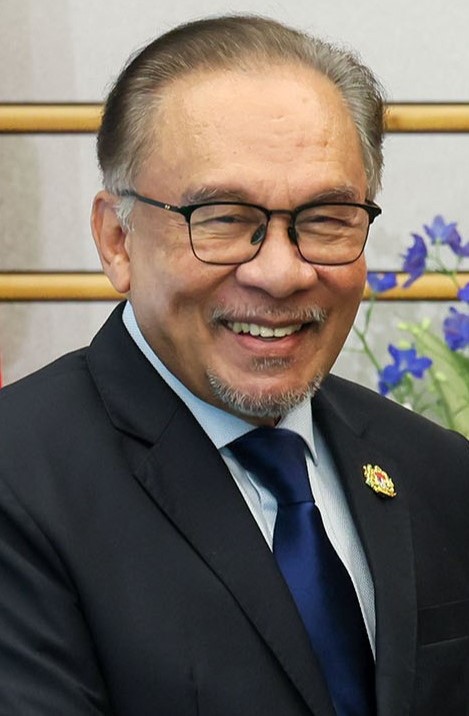
Pakatan Harapan has moved to dispel growing perceptions that Johor has been sidelined by the Federal Government, countering such narratives with figures showing the state has benefited from substantial development spending during Prime Minister Datuk Seri Anwar Ibrahim's time in office. The coalition's defence of its track record in the state comes as it seeks to reinforce its credentials ahead of elections and address mounting political pressure from critics who have questioned the equitable distribution of federal resources across the country.
According to coalition representatives, Johor has received RM14.6 billion in federal allocations since Anwar took office, a significant sum that the government argues demonstrates commitment to the state's development priorities. This figure represents a clear rebuttal to opposition voices and rival political camps that have sought to portray the current administration as indifferent to Johor's needs or skewed in favour of other states. The specific quantum of funding signals an attempt to move beyond vague assurances and ground the discussion in concrete numbers that can be debated and scrutinised.
The contentious question of federal resource allocation has emerged as a flashpoint in Malaysian politics, with states governed by non-PH administrations frequently alleging that they receive less funding than their PH-ruled counterparts. Johor, despite its economic importance and large population, has occasionally featured in such complaints, though the state's political complexion—controlled by an Islamic-based administration—adds layers of complexity to federal-state relations. The coalition's proactive disclosure of funding figures suggests awareness that leaving such claims unchallenged could erode public confidence in the government's impartiality.
The RM14.6 billion allocation encompasses various development projects and infrastructure initiatives across Johor's districts, ranging from transportation networks to education facilities and healthcare infrastructure. Such diversity in spending reflects the federal government's stated aim to address multiple development challenges simultaneously, though observers have noted that the actual quality and implementation timeline of these projects remains a separate question from the nominal allocation figures. The manner in which funds are deployed—and whether promised projects materialise within reasonable timeframes—often matters as much to voters as the initial budgetary commitment.
Johor's economic significance as Malaysia's second-largest state by GDP and its strategic location at the southern tip of Peninsular Malaysia make it a critical consideration in federal spending strategies. The state hosts major industrial zones, port facilities, and serves as a crucial entry point for trade flows to and from Singapore. Underinvestment in Johor's infrastructure would have ripple effects across the broader Southeast Asian economy, making the state's development a matter of national interest rather than mere regional parochialism. This broader context strengthens the government's argument that adequate federal allocation to Johor aligns with national economic objectives.
Political analysts suggest that Saifuddin's emphasis on the RM14.6 billion figure is designed to counteract narratives that have gained traction in Johor's political discourse. The state, traditionally a stronghold for various ruling coalitions, has experienced shifting political alignments in recent years, with voters becoming increasingly scrutinous about delivery on development promises. By quantifying the federal government's financial commitment, the coalition aims to reframe the conversation around concrete investment rather than abstract assurances or party political rhetoric.
The disclosure also comes within a broader context of Pakatan Harapan attempting to consolidate its political position across Malaysia's diverse states. Since the 2020 general election, the coalition has had to manage complex relationships with state administrations of different political stripes, balancing national resources while negotiating federalism's constitutional boundaries. In states where PH does not hold sway, demonstrating fair and equitable federal spending becomes a delicate exercise in demonstrating governmental neutrality whilst simultaneously defending fiscal decisions that political opponents invariably question.
However, the effectiveness of such financial arguments in swaying voter sentiment depends significantly on visible on-the-ground outcomes. Development allocations that are announced but delayed, or projects that remain incomplete, generate public disillusionment and undermine credibility. Johor residents, like Malaysians elsewhere, tend to judge governments based on tangible improvements to infrastructure, services, and economic opportunities within their communities. A billion-ringgit highway or industrial park that actually functions matters more politically than accounting entries in federal budgets.
Looking forward, Pakatan Harapan's emphasis on Johor spending figures suggests the coalition recognises the state as politically contested territory where federal performance data can meaningfully influence electoral outcomes. The coalition's willingness to articulate specific allocations indicates both confidence in its track record and acknowledgment that such statistics form part of the political conversation in a democracy where resource distribution and territorial fairness remain perennial concerns among voters.