A Kenyan High Court judge has found Health Minister Aden Duale in contempt for continuing oversight of a disputed American-backed Ebola quarantine facility despite explicit judicial orders to suspend the project. Judge Patricia Nyaundi delivered the finding on Monday, citing Duale's failure to comply with suspension directives issued on May 28 and June 2. The ruling marks a significant escalation in what has become one of East Africa's most polarising public health disputes, pitting government biosecurity interests against growing concerns over national sovereignty and local opposition.
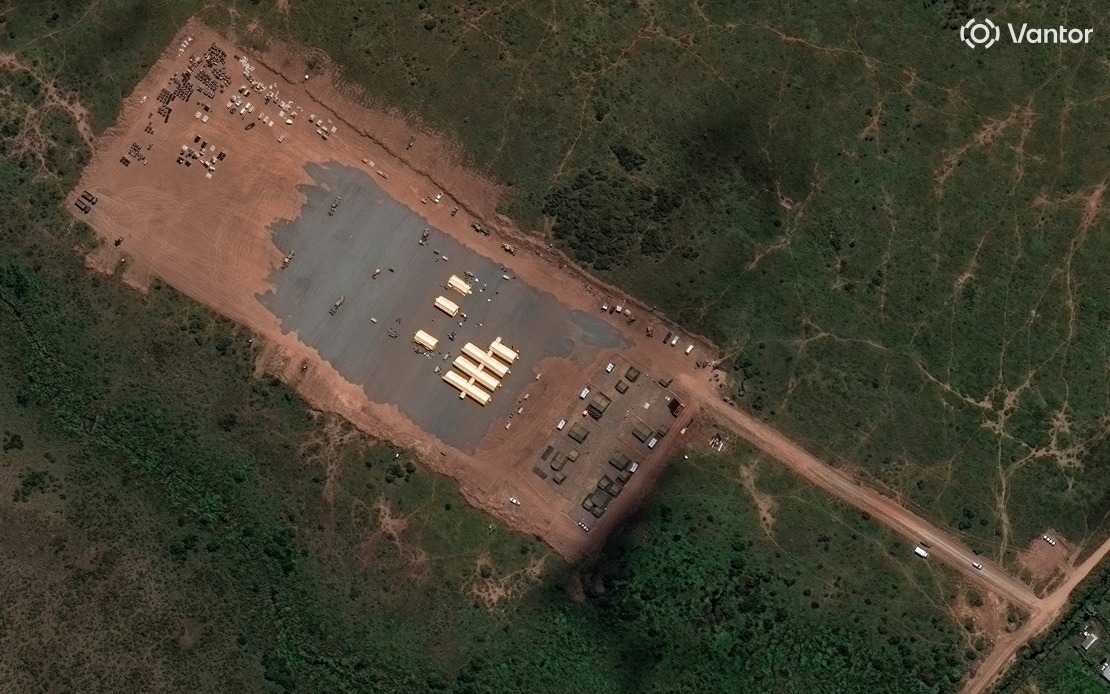
The contempt finding centres on construction activities at Laikipia Air Base near Nanyuki, approximately 200 kilometres north of Nairobi, where Kenya has been developing a 50-bed isolation and quarantine facility. The installation is officially designated to house American citizens potentially exposed to Ebola during disease response operations linked to outbreaks in the Democratic Republic of the Congo and neighbouring regions. Yet the facility's establishment has proven far more contentious than a straightforward public health infrastructure project, becoming entangled in questions about foreign military presence, constitutional transparency, and community consent in Kenya.
Judge Nyaundi's statement left little ambiguity about her position on Duale's conduct. She emphasised that by commissioning ongoing construction, the minister demonstrated continuing contempt of court orders, an infraction that would attract formal sanctions. The judge ordered Duale to appear personally before the court on Tuesday for mitigation arguments and sentencing, signalling that consequences for non-compliance would follow. This judicial intervention reflects broader institutional tensions within Kenya's governance structures, where courts have increasingly asserted independence in scrutinising executive decisions that lack transparent public deliberation.
The origins of the dispute trace to a petition filed by the Katiba Institute, a constitutional rights organisation that questioned the facility's legal and procedural foundations. The institute argued that the project raised substantive constitutional concerns, presented unresolved public health implications, and circumvented transparency and community participation requirements that should accompany major infrastructure decisions affecting local populations. Their case succeeded in securing the initial suspension, suggesting courts found merit in claims that proper governance safeguards had been bypassed.
President William Ruto's public revelation that he had approved the facility following a direct request from United States President Donald Trump intensified the controversy significantly. Ruto framed the arrangement as continuation of Kenya-US health cooperation, yet the disclosure appeared to acknowledge that the decision originated from external rather than purely domestic strategic considerations. For critics and opposition figures, this admission transformed the facility from a regional disease-control measure into a symbol of foreign influence over Kenyan decision-making, raising questions about whether such consequential choices should require greater legislative scrutiny and public consultation.
Government supporters of the project advance pragmatic biosecurity arguments that resonate with regional realities. Officials contend that Kenya, functioning as East Africa's principal transport, diplomatic and commercial nexus, faces legitimate heightened Ebola exposure risks and must maintain robust preparedness infrastructure. From this perspective, developing isolation capacity serves Kenya's own public health interests regardless of initial American involvement. The US Embassy in Nairobi has similarly maintained that the facility poses negligible community risk and constitutes a reasonable element of collective regional disease surveillance and response capability.
Yet these arguments have failed to overcome local and broader public scepticism about the project's true scope and long-term implications. Laikipia County residents have mobilised sustained protests against the facility, demonstrating deep anxiety about untransparent decision-making affecting their region. Demonstrations have turned violent, with police, witnesses and human rights monitors documenting at least three deaths during protest-related incidents. This death toll underscores the intensity of local opposition and suggests that grievances extend beyond technical concerns about epidemiological preparedness to encompass fundamental questions about whose voices matter in decisions affecting communities.
For Malaysian and Southeast Asian observers, Kenya's experience offers instructive parallels regarding the governance challenges posed by international health cooperation. The region has similarly navigated proposals for foreign-backed disease surveillance and quarantine infrastructure, often amid limited public transparency or parliamentary debate. Kenya's unfolding situation demonstrates how insufficient domestic consensus-building and consultation can transform ostensibly technical public health measures into flashpoints for broader anxieties about sovereignty, foreign influence and governmental accountability. The judicial intervention here reflects courts' role in enforcing constitutional transparency standards when executives proceed without adequate legitimation.
The contempt finding also highlights institutional friction within Kenya's governance apparatus. Executive agencies, facing international health security pressures and foreign government requests, may prioritise rapid implementation over elaborate consultation processes. However, courts increasingly scrutinise whether such expedited approaches comply with constitutional requirements for transparency and community participation. This tension between urgent security imperatives and procedural legitimacy represents a recurring challenge across democracies attempting to balance rapid response capabilities with institutional accountability.
Aden Duale's impending court appearance will test whether the judiciary can enforce meaningful consequences against high-ranking officials for contempt, an outcome that could reverberate across Kenya's administrative culture. If sentencing proceeds, it would establish that even ministerial rank does not exempt officials from court orders, potentially strengthening judicial authority over executive action. Conversely, if consequences prove modest or symbolic, the finding would signal that executive defiance of judicial directives carries limited practical costs, potentially emboldening future instances of non-compliance.
The broader ramifications extend to Kenya's Ebola preparedness trajectory and regional health security architecture. Should the facility's construction remain suspended, Kenya's biosecurity posture shifts, potentially affecting disease response capabilities across East Africa. If construction ultimately resumes, it would vindicate executive discretion but at the cost of deepened public mistrust and legitimacy deficits. Neither outcome represents pure success, reflecting the fundamental challenge of establishing public health infrastructure amid insufficient consensus about its necessity, scope and governance.