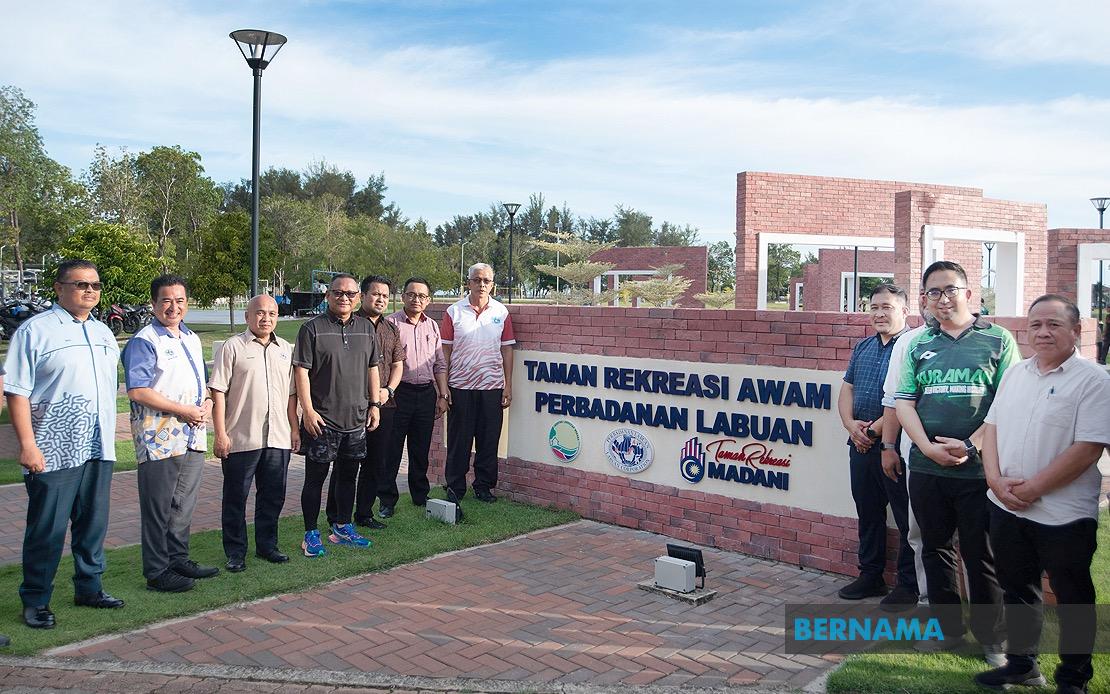
The federal territory of Labuan has taken a significant step towards improving public health infrastructure with the official opening of the Labuan Public Recreation Park at Tanjung Purun on June 24. The project represents a substantial investment in community wellness, backed by RM495,382 in funding channelled through the National Landscape Department under the Ministry of Housing and Local Government (KPKT) as part of the broader Madani Recreation Park initiative designed to enhance recreational spaces across Malaysia.
Labuan Corporation chief executive officer Rithuan Ismail articulated the underlying philosophy driving the development, emphasising that the park serves as more than just a recreational venue. Rather, it functions as an inclusive community hub deliberately engineered to accommodate residents of all ages and fitness levels, simultaneously promoting physical wellbeing whilst strengthening the social fabric that binds Labuan's population together. The facility was deliberately positioned in the heart of the downtown area to maximise accessibility for the broadest possible cross-section of the community.
The transformation of the site from its previous incarnation as the LDA Field—a largely underutilised public space—required careful planning and strategic selection. Labuan Corporation identified the location as optimal based on several convergent factors: its central downtown position offered natural convenience for residents, established road access and public transport connections ensured high foot traffic potential, the available land dimensions proved adequate for comprehensive recreational programming, and critically, the absence of complicated land ownership disputes meant the project could proceed without protracted legal entanglement.
The prior condition of the space underscored the necessity for intervention. Rithuan noted that inadequate lighting had rendered the area inhospitable during evening hours, when residents might otherwise be inclined to exercise. The original vegetation, comprising ageing casuarina trees, had deteriorated to the point where they presented genuine safety hazards to visitors. Combined with sparse recreational amenities, these deficiencies had conspired to keep the space perpetually underutilised despite its strategically valuable location in the town centre.
The upgraded facility now incorporates several key features designed to cater to diverse recreational preferences and age groups. A welcoming entrance garden sets an inviting tone for visitors. The centrepiece is an 800-metre jogging track that provides a defined pathway for runners and walkers, with the distance sufficient for meaningful cardiovascular exercise without requiring users to navigate public streets. Scattered throughout the park are concrete seating areas offering shaded respite points for those requiring breaks, whilst newly installed outdoor fitness gym equipment extends the facility's utility beyond cardio enthusiasts to strength training practitioners.
The evening period has emerged as a particularly popular time for park usage, suggesting that improved lighting alongside expanded recreational options has successfully addressed one of the location's previous limitations. The facility is already establishing itself as a destination of choice for families seeking safe, accessible spaces for joint recreational activities, fitness-focused individuals pursuing structured exercise routines, and casual visitors seeking outdoor relaxation options.
Recognising that the initial development represents a foundation rather than a completed endpoint, Labuan Corporation has announced plans for further enhancements scheduled for completion by year-end. Three additional courts are under construction, specifically designed to accommodate pickleball and sepak takraw—a traditional Southeast Asian sport combining elements of badminton, volleyball and martial arts. These additions will broaden the facility's appeal to organised recreational groups and competitive players whilst maintaining its inclusive character for casual participants.
For Malaysian urban planners and local administrators observing developments in Labuan, the project offers instructive lessons in public space regeneration. The commitment of federal funding through KPKT's Madani initiative signals Kuala Lumpur's seriousness about distributing quality-of-life improvements beyond peninsular urban centres. Federal territories often face distinctive governance and resource challenges relative to state-administered areas, making visible investment in public amenities particularly significant for resident satisfaction and economic vitality.
The park's emphasis on accessibility and inclusivity reflects evolving best practices in community health infrastructure. By deliberately designing for multiple user demographics and fitness levels simultaneously, Labuan has avoided creating specialist facilities that serve narrow population segments whilst remaining irrelevant to broader constituencies. This inclusive approach aligns with public health frameworks emphasising that community-wide physical activity requires removing barriers to participation across age, fitness and socioeconomic spectrums.
However, the success of such facilities ultimately depends upon sustained community stewardship and institutional commitment. Rithuan's appeal for public cooperation in maintaining facility conditions acknowledges a frequent challenge with public infrastructure in tropical Southeast Asian contexts: the combination of heavy rainfall, high humidity and intensive sun exposure can rapidly degrade even modern materials if maintenance protocols are neglected. Social norms requiring users to actively protect shared facilities rather than viewing them as externally maintained resources represent crucial cultural elements determining long-term functionality.
Labuan's Tanjung Purun park development also reflects broader regional patterns wherein federal territories and smaller urban centres increasingly compete to attract and retain residents by offering lifestyle amenities previously concentrated in larger metropolitan areas. As Malaysia pursues more distributed economic development and population decentralisation, public recreational infrastructure becomes a competitive differentiator distinguishing quality-of-life propositions across different locations.
The project carries particular resonance for Southeast Asian urban planners grappling with accelerating urbanisation whilst maintaining liveable community environments. Public recreation spaces represent relatively cost-efficient mechanisms for improving health outcomes, reducing non-communicable disease prevalence, and fostering social cohesion—outcomes that dense urban development strategies might otherwise jeopardise through privatisation of recreational space.